Sleeper Pod Airline for Overnight Flights
Flying overnight is one of the most uncomfortable travel experiences because passengers are forced to sleep sitting upright in cramped seats that were never designed for real rest. While premium cabins solve the problem, they remain inaccessible for most travelers. A Sleeper Airline replaces traditional seating with compact capsule-style bunks, allowing every passenger to lie flat during overnight flights while maintaining similar passenger capacity through stacked sleeping pods. The experience transforms a red-eye flight into a true overnight hotel where travelers wake up rested instead of exhausted. As airlines search for new premium experiences and capsule hotels continue proving consumers are comfortable with compact sleeping spaces, the timing is right to rethink airplane interiors entirely. Instead of arriving after six hours of broken sleep in a reclining seat, passengers simply climb into their private sleeping pod, fall asleep after takeoff, and wake up at their destination.
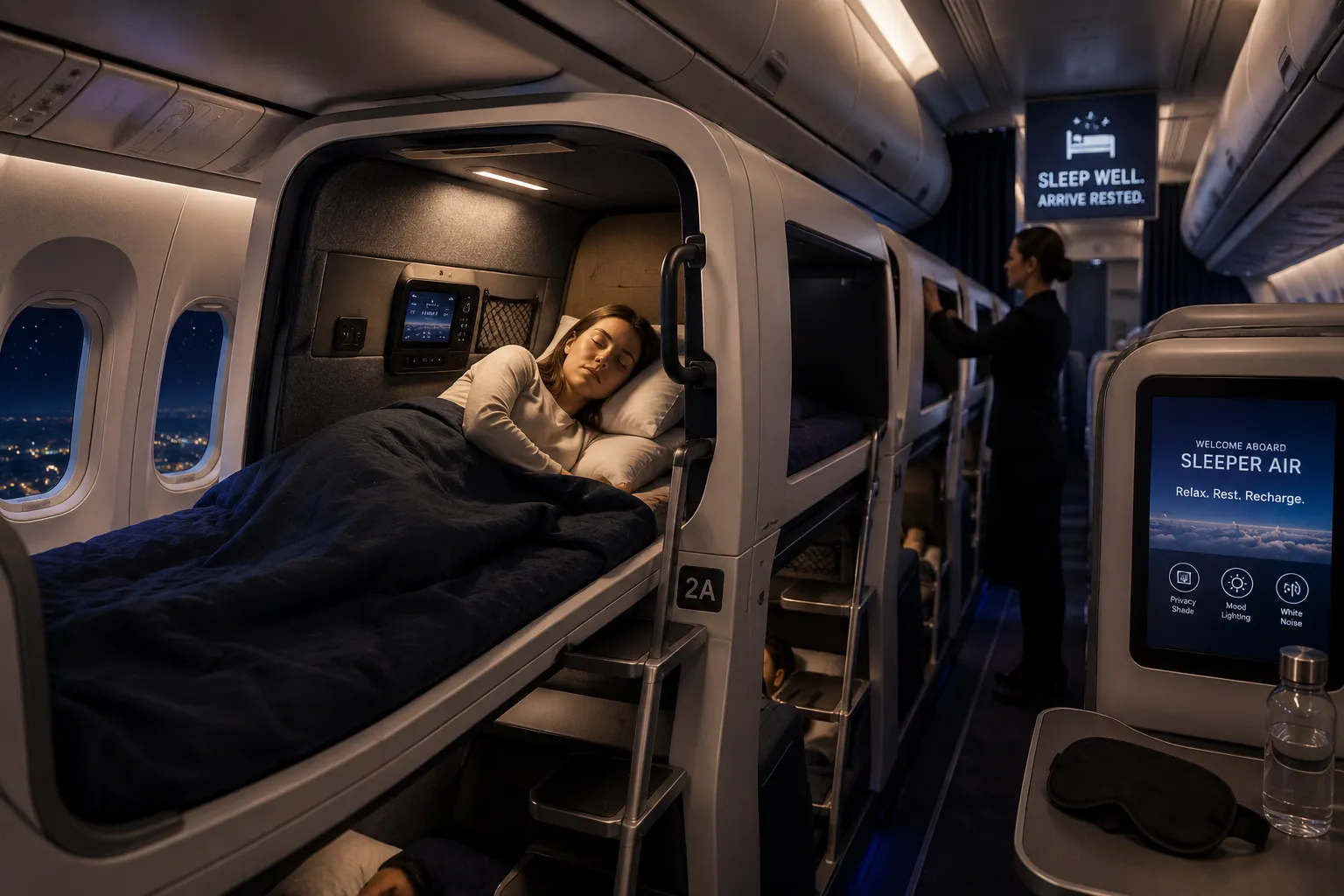
Description
No additional description provided.
The Pitch
The compelling part is that overnight air travel is one of the few consumer experiences where people routinely pay hundreds of dollars to lose a night of sleep. The hidden cost of a red-eye is not the ticket; it is the ruined first day, the hotel night booked just to recover, the meeting taken while foggy, or the vacation morning spent exhausted. A company that sells real sleep is not just selling comfort. It is converting wasted travel time into usable life.
Airlines have spent decades segmenting passengers by inches of legroom, meal quality, and lounge access, but the true scarce commodity on an overnight flight is horizontal space. That creates an unusual opening: a sleeper format could feel radically better without needing the extravagance of business class. If compact bunks preserve enough density, the product can occupy a space between economy and lie-flat premium cabins that barely exists today. The breakthrough is not luxury; it is making the one feature people actually need on a night flight available to far more travelers.
This would also change how people think about route timing. A normal red-eye is tolerated because it saves daytime hours, but it often borrows that time back through fatigue. A reliable sleep flight would make overnight travel genuinely productive: leave after dinner, arrive rested, start the day. That could increase demand on routes where travelers currently choose daytime flights, avoid short international trips, or add buffer nights because they do not trust their bodies to function after arrival.
The business is especially interesting because planes are already treated as transportation, restaurants, cinemas, offices, and shops, but almost never as hotels, even when the passenger’s actual goal is to sleep. Hotels monetized compact private rest with capsule rooms because people will trade space for privacy and horizontal comfort when the job is clear. Overnight aircraft have the same job, but with a captive block of time and no competing use case after lights out.
If it worked, the company would not merely be a nicer airline. It would define a new category of travel inventory: the overnight room that happens to move at 500 miles per hour. That is a powerful reframing, because it competes less with other seats than with the entire ritual of recovering from bad travel.