Simulated Shopping and Consumption Platform
For decades, businesses have monetized the act of buying. Very few have monetized the desire to buy. Millions of people browse Zillow without moving, build fantasy shopping carts without purchasing, mock-draft sports teams, create vacation itineraries they never take, and design homes they never build. The South Korean “FoodNeverComes” site is an early example of a broader behavior: consumers increasingly seek the emotional reward of consumption without the financial commitment. This startup creates a platform where users can experience the anticipation, discovery, customization, tracking, and reward loops of purchasing products, meals, travel, homes, or experiences without actually spending money. Brands pay for participation, consumer research, and behavioral insights while users receive entertainment, rewards, and social competition. The opportunity exists because rising prices make actual consumption more difficult while digital experiences continue to improve. Entire industries have been built around simulated ownership and simulated competition; simulated consumption may be the next category.
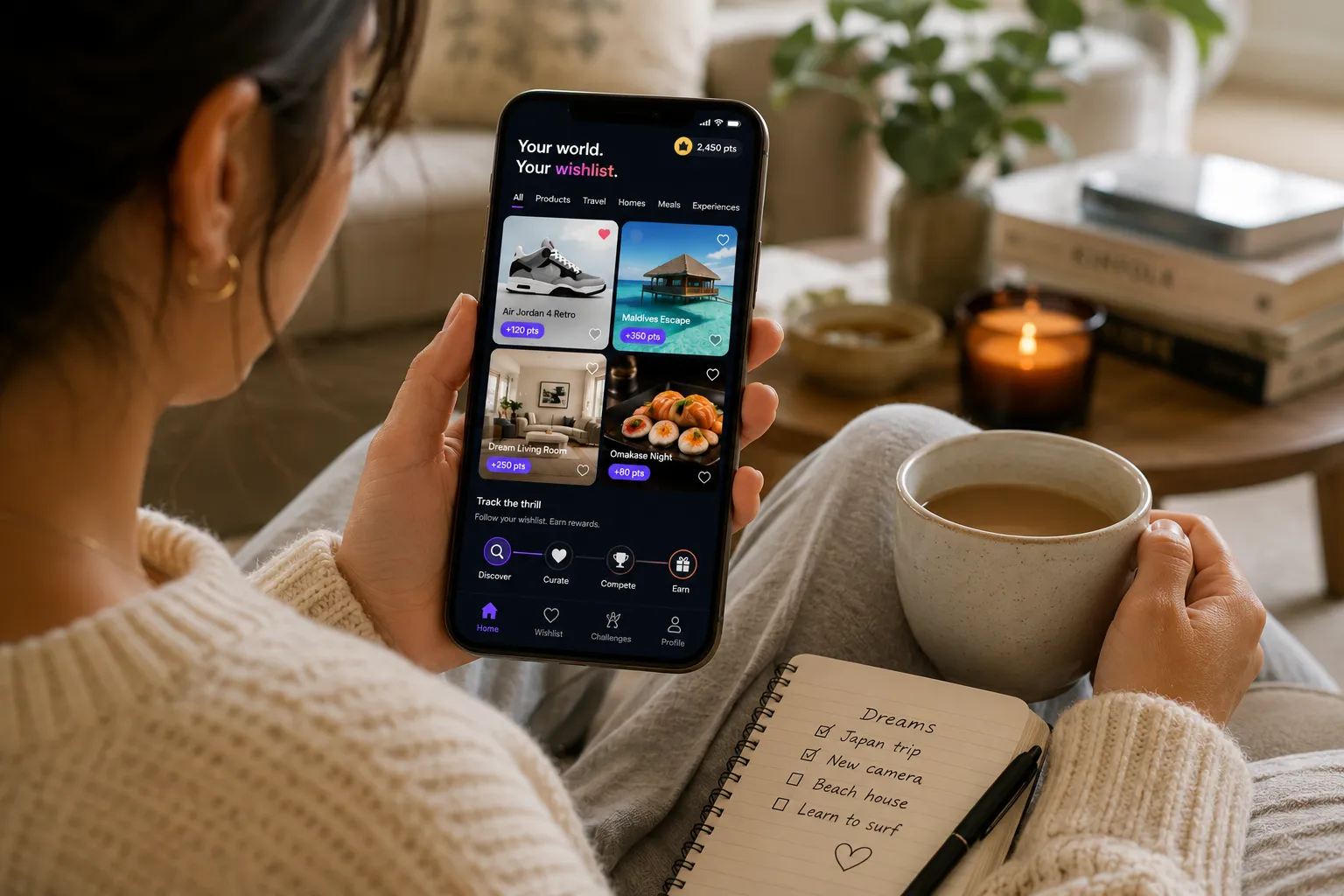
Description
No additional description provided.
The Pitch
A person may buy a sofa once every decade, but they can imagine redecorating their apartment every Sunday night. They may take one vacation a year, but compare hotels, neighborhoods, restaurants, and flight times dozens of times before that. Commerce businesses usually see only the final transaction, but the richest signal may live in the rehearsal: the paths not taken, the tradeoffs considered, the identity being tried on.
The strange thing about modern aspiration is that it has already become a leisure activity. Browsing homes, menus, outfits, cars, or trips is not always failed shopping; sometimes it is the point. People use possible purchases as a way to regulate mood, imagine alternate lives, and participate in culture. A business that treats this behavior as entertainment rather than abandoned intent could capture time that currently leaks across ecommerce sites, social platforms, spreadsheets, screenshots, and notes apps without belonging to any one of them.
Brands would care because simulated consumption can reveal a truer version of demand than purchases alone. Actual buying is distorted by budgets, timing, stock, household negotiations, and fear of regret. In a simulation, people can expose preferences before they are filtered by affordability. That creates a useful middle layer between advertising and sales: not “did this person click?” or “did this person buy?” but “what did they almost become?” For categories with long consideration cycles or high emotional content, that may be more valuable than another panel survey or focus group.
The business also benefits from a counterintuitive economic pattern: as real consumption becomes more expensive, the fantasy of consumption becomes more active, not less. Luxury, travel, housing, dining, and lifestyle goods do not lose cultural power when they become less accessible; they often become more browsed, discussed, saved, and simulated. The platform would be selling brands access to aspiration at scale while giving users a way to enjoy the emotional part of consumption without the bill.
The deepest opportunity is to build a new kind of commercial media where intent is playful. Shopping sites are optimized for conversion, which makes them impatient with people who are not ready to buy. Social platforms are optimized for attention, which makes product desire noisy and performative. A simulated-consumption platform could sit between the two: structured enough to generate valuable preference data, but entertaining enough that users return even when they have no intention of purchasing anything at all.