Simplified Service Box for Seniors' Daily Needs
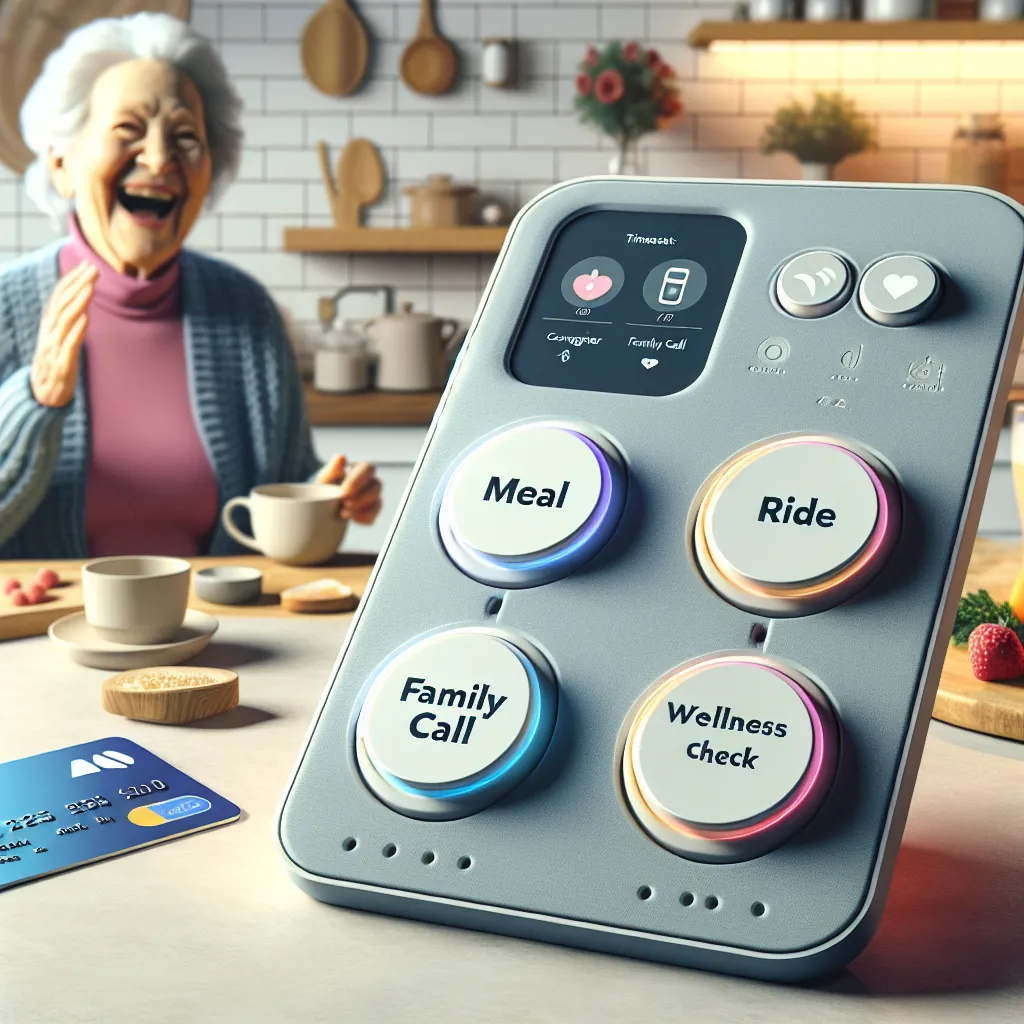
Most people in their late 70s and 80s can't easily order a meal or a ride from a phone, the apps are too small, the menus too deep, and the daughter who calls three numbers every Tuesday to schedule mom's ride is the actual operating system. A countertop box with four big buttons — meal, ride, family call, wellness check that pulls money straight from the debit card seniors get through their insurance plan would close that gap without putting an app between the user and the service. About half of Medicare Advantage plans now offer flex cards (debit cards loaded with insurance benefits), and a third of those let members spend on groceries, rides, and home help and after federal rules tightened in 2026, plans are scrambling to prove members actually use what they're given. The first version could be a four-button counter device with a caregiver dashboard that shows what got pressed and when.
Description
No additional description provided.
The Pitch
In recent years, technology has increasingly permeated our daily lives, offering convenience and efficiency at our fingertips. However, for a significant portion of our population—especially those in their late 70s and 80s—this digital transition hasn't been as seamless. Many seniors find modern apps difficult to navigate due to small interfaces and complex menus. This often results in reliance on family members to perform simple tasks like ordering a meal or scheduling a ride. The solution to this issue could revolutionize the way seniors interact with essential services, providing them with independence while alleviating the burden on their caregivers.
Seniors today often face challenges in accessing essential services due to technological barriers. The inability to easily navigate standard apps can lead to frustration and can be time-consuming, impacting their quality of life. Additionally, family members often step in to assist, effectively becoming the primary operators for their senior loved ones. This scenario not only limits the independence of seniors but also places an additional responsibility on their families.
A potential solution lies in the creation of a simple, user-friendly device that addresses these challenges. Imagine a countertop box with four large buttons, each designated for a specific service: ordering a meal, booking a ride, making a family call, and initiating a wellness check. This device would streamline the process, eliminating the need for complicated app interactions. Moreover, it would integrate directly with the debit cards provided by insurance plans, offering a seamless transaction process.
The target market for this product is vast and growing. Approximately half of Medicare Advantage plans now offer flex cards, which are debit cards loaded with insurance benefits. A third of these plans allow members to spend on everyday essentials like groceries, rides, and home help. With changes in federal regulations taking effect in 2026, these plans need to demonstrate that members are actively utilizing these benefits. A device tailored to facilitate easy usage of these funds would align perfectly with industry needs.
The initial product can be a four-button countertop device coupled with a caregiver dashboard. This dashboard would track the usage of the device, offering insights into what services were accessed and when. This provides family members and caregivers with peace of mind, knowing that their loved ones are utilizing the services they need.
To quickly develop and launch this product as a Minimum Viable Product, several tools and technologies could be employed. Rapid prototyping solutions could be used to design the physical device, while software development kits (SDKs) could help create the underlying software. Cloud-based platforms can support the caregiver dashboard, ensuring data is accessible and secure. For connectivity, existing APIs of service providers could be leveraged to facilitate seamless integration.
A go-to-market strategy would focus on partnerships with Medicare Advantage organizations and other insurance providers, emphasizing the device's ability to ensure that senior members effectively utilize their benefits. Moreover, collaborations with senior care organizations and communities could help in promoting and distributing the product. Marketing efforts should emphasize the device's simplicity, ease of use, and ability to provide seniors with enhanced autonomy.
The business model would primarily revolve around a subscription service. Customers would pay a nominal monthly fee, which covers device maintenance, software updates, and access to the caregiver dashboard. Insurance providers may also subsidize or fully cover this cost to ensure compliance with federal regulations and to enhance member satisfaction.
In conclusion, the development of a simple, intuitive device tailored for seniors has the potential to greatly improve their interaction with essential services. By prioritizing ease of use and accessibility, this product can empower seniors, reduce the burden on their families, and align with the broader objectives of Medicare Advantage plans.