Silent Refactoring as a Service for Legacy Systems
Many companies still run on legacy software systems—think banks, hospitals, and manufacturing firms—built in outdated languages or frameworks. Refactoring this code is risky, expensive, and time-consuming, often requiring teams of senior developers. “Silent refactoring as a service for legacy systems,” though it's marked “too technical” and quickly skipped. But the opportunity is real. With advances in AI code understanding, it’s now possible to quietly analyze, restructure, and modernize codebases without altering functionality. This could be a godsend for CTOs who can’t justify multi-year migrations but need to future-proof their stack. Imagine an AI tool that plugs into an old Java system, rewrites modules into modern frameworks, and flags dependencies—all without breaking production. While tools like GitHub Copilot help developers write new code, no widely adopted product exists to refactor entire systems silently and safely. The problem is massive. The tech is emerging. This startup needs to exist.
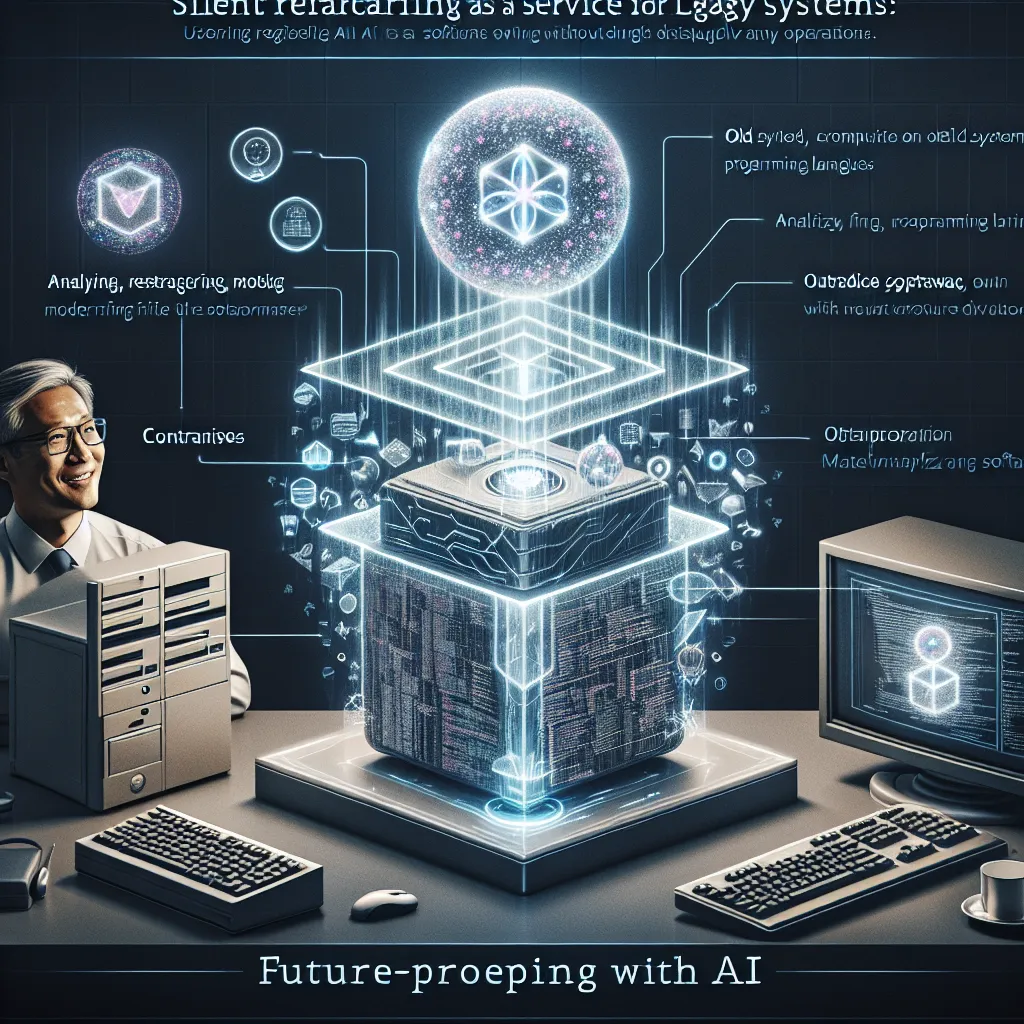
Description
No additional description provided.
The Pitch
In many vital industries such as banking, healthcare, and manufacturing, legacy software systems continue to operate on outdated technologies. These systems are written in languages or frameworks which have not kept pace with modern advancements, making maintenance and updates cumbersome and risky. Often, the underlying code requires serious refactoring to integrate new features or improve performance and security; however, this is a costly, time-consuming, and error-prone process that typically requires extensive expert intervention.
**Problem**
Businesses reliant on these legacy systems face significant hurdles. Updating or refactoring the underlying codebase can disrupt operational stability and the user experience. Additionally, the high costs, substantial time investment, and risk of data loss or downtime make it unfeasible for many companies to modernize these systems efficiently. As a result, many organizations continue to depend on outdated technology, which hinders their ability to scale, adapt to new market conditions, and maintain competitive edges.
**Solution**
With the advent of AI and machine learning technologies, specifically those capable of understanding and generating code, there is a unique opportunity to offer “Silent Refactoring as a Service.” This service will use AI tools to analyze, restructure, and modernize legacy codebases quietly, without interrupting the ongoing functionalities and operations. The AI-driven solution will seamlessly integrate with existing systems, translate old code modules into modern, efficient frameworks, and manage dependencies without manual oversight, effectively reducing the risk and cost associated with traditional refactoring methods.
**Product Details**
- **AI Refactoring Engine**: Uses advanced machine learning algorithms to understand and transform legacy code into modern programming languages and frameworks. - **Integration Layer**: Hooks into existing systems without disrupting them, operating quietly in the background. - **Dependency Management**: Automatically detects and manages dependencies within the code to ensure that updates do not break existing functionalities. - **Compliance and Security**: Ensures that all refactoring respects the necessary compliance standards and enhances security protocols. - **User Dashboard**: Provides insights into the refactoring process, progress tracking, and highlights potential areas of improvement within the codebase.
**Tools for MVP Development**
- **GitHub Copilot**: Leveraged for the initial AI model training to understand code semantics and syntax. - **OpenAI Codex**: In-depth training of AI models to handle more complex refactoring tasks. - **Cloud Services (AWS/Azure/GCP)**: For scalable and secure hosting of the AI services and customer data. - **Docker & Kubernetes**: Ensuring the application is scalable and maintainable across different environments. - **CI/CD Tools (Jenkins, CircleCI)**: To automate the testing and deployment process ensuring continuous improvement and integration of the software.
**Go-to-Market Strategy**
- **Initial Target Market**: Focus on industries most impacted by legacy systems, such as finance, healthcare, and manufacturing. - **Content Marketing**: Positioning as thought leaders through blogs, whitepapers, and webinars explaining the importance of modernizing legacy systems and the role of AI. - **Partnerships**: Form alliances with IT consultancy firms and legacy system providers to tap into their customer bases. - **Free Trial & Demonstration**: Offering a free trial period or a demonstration version to let potential clients witness the immediate benefits of using the service.
**Business Model**
- **Subscription-Based**: Monthly or annual subscription fees based on usage volume and complexity of the systems. - **Tiered Pricing**: Different pricing tiers depending on the size of the client's codebase, desired features, and level of support. - **Professional Services**: Offering expert consultations and custom solutions for more complex refactoring projects, charged at a premium.
This combination of advanced technology leveraging AI and a clear strategic approach to market entry and revenue promises not only to address a real and pressing problem but also positions the startup for growth and success in a niche yet extremely vital market space.