Shared Concierge Medicine for Communities
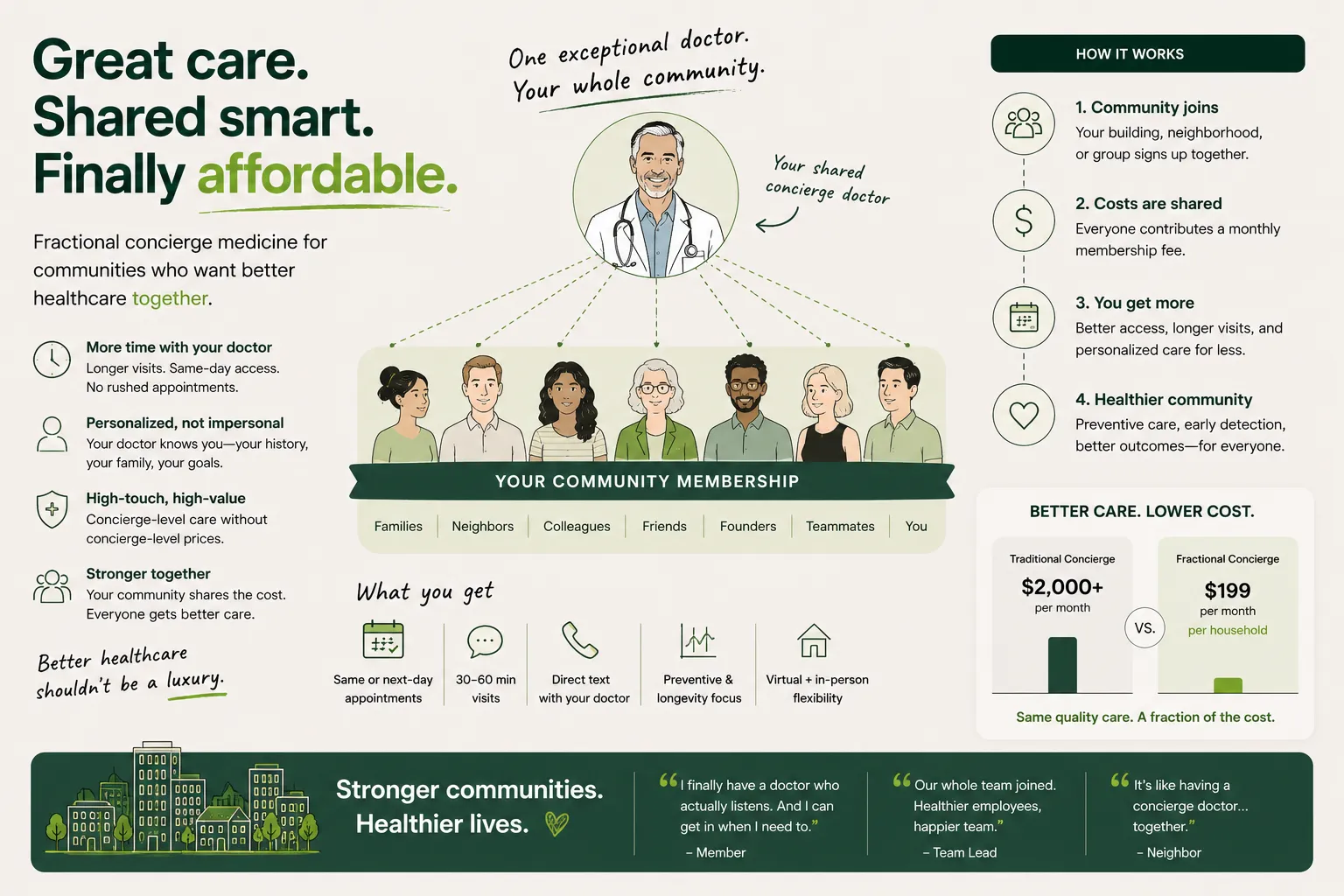
Concierge medicine delivers dramatically better care but remains inaccessible because individuals pay thousands of dollars annually for direct physician access. This startup lets neighborhoods, employers, apartment buildings, or founder communities collectively subscribe to concierge physicians, dramatically lowering costs while preserving longer appointments and personalized care. Think Costco for concierge healthcare. Rising physician burnout, telemedicine adoption, and community purchasing models make shared concierge care far more practical than it was even five years ago. Imagine everyone in your apartment building sharing access to one concierge practice for less than a traditional gym membership.
Description
No additional description provided.
The Pitch
Concierge care is expensive mostly because access is sold one household at a time. The doctor’s time is scarce, but the purchasing model makes that scarcity look even worse than it is. A building, workplace, or tight community already has enough people to smooth demand across a group, turning what feels like a luxury retainer into something closer to shared infrastructure. The same physician relationship that is absurdly costly for one family can become plausible when bundled into the places people already belong.
The deeper shift is that healthcare trust is local, but healthcare administration has become impersonal. People do not merely want faster appointments; they want a clinician who knows their context before something goes wrong. Communities are unusually good containers for that kind of relationship because they add continuity and accountability that a generic telehealth marketplace cannot provide. A doctor attached to a building or neighborhood is not just more convenient; they become part of the social fabric, closer to a school nurse or family doctor than an app-based transaction.
This also aligns with what many physicians are trying to escape. The traditional system forces doctors to maximize visits, documentation, and billing complexity, while concierge models let them practice with more time and fewer intermediaries. A shared model could preserve the professional appeal of concierge medicine without requiring each doctor to serve only the wealthiest patients. That matters because the supply side is not just a labor pool; it is a burned-out profession looking for a more humane way to work.
The business becomes especially interesting because the buyer may not always be the individual patient. Apartment buildings compete on amenities, employers compete on retention, and communities compete on belonging. Healthcare access is far more emotionally valuable than another lounge, perk, or wellness app, yet it can be packaged in the same budget category: a shared benefit that makes membership in a place feel tangibly safer. The product is not only medical access; it is the feeling that someone has quietly removed one of adulthood’s most aggravating frictions.
If it worked, it would sit in a rare middle ground between luxury medicine and institutional healthcare. It would not need to replace insurance or hospitals; it would make the front door to care calmer, more personal, and more predictable. That is a powerful wedge because many of healthcare’s worst experiences begin before treatment starts: not knowing whom to call, waiting too long, repeating your story, and feeling alone inside a system that technically serves you.