Semantic AI-Powered File System for Easy Retrieval
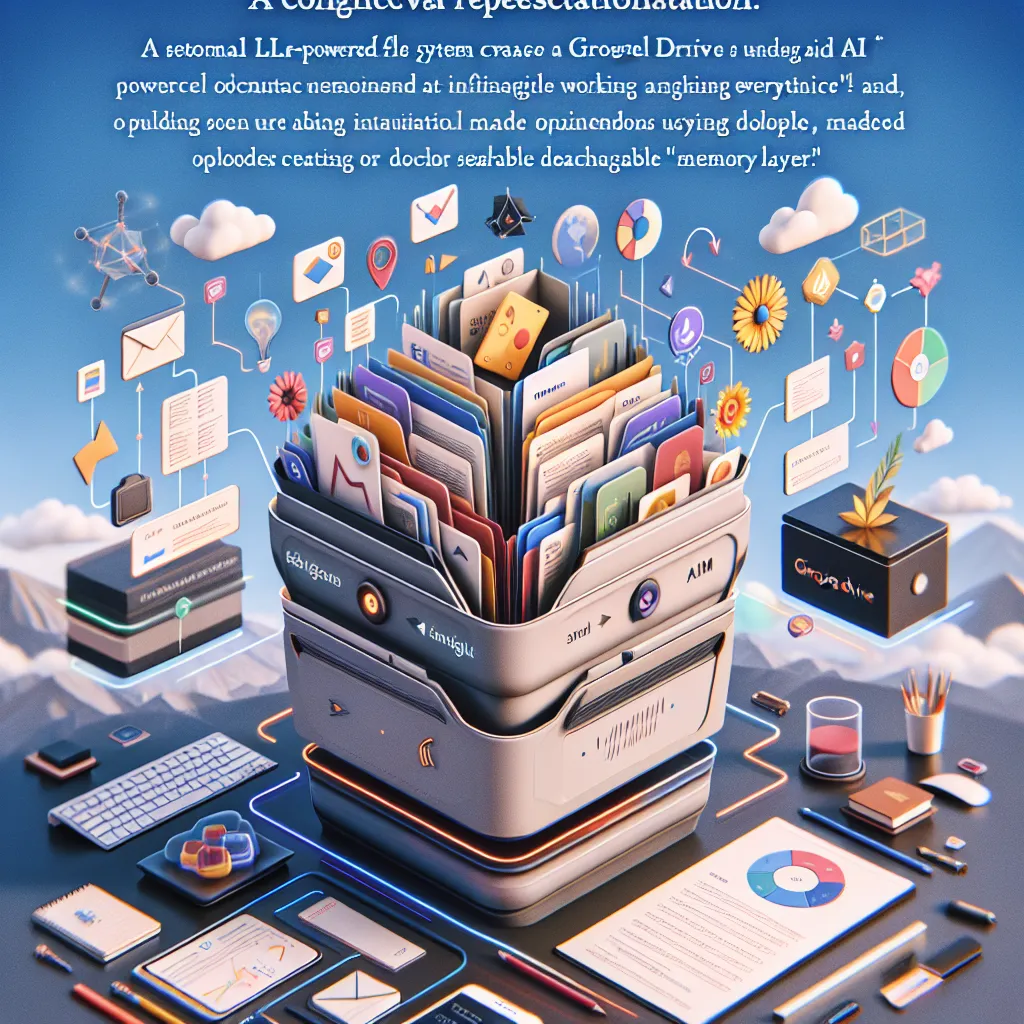
Most people spend more time searching for files than creating them. Whether it’s “final_final_v3.pdf” or some obscure folder path you can’t remember, traditional file systems are a cognitive burden. And with everything scattered across Google Drive, local folders, Dropbox, and emails, managing your digital life becomes a part-time job. The solution? A semantic LLM-powered file system that organizes and retrieves documents by meaning, not metadata. Instead of filenames and folder structures, it uses natural language and contextual memory — just ask: “Show me the PDF of that paper I used in my YouTube video on PTX 6 months ago.” Or “Pull up the deck I made about user churn for that VC pitch last winter.” No tagging. No sorting. Just ask like a human. This idea taps into a huge trend: AI as an interface layer for our chaotic digital lives. As an example, imagine a Chrome extension and desktop app that indexes everything you’ve seen, made, or uploaded — from Notion docs to random downloads — and creates a searchable “memory” layer. Files become conversations.
Description
No additional description provided.
The Pitch
In today's digital era, the sheer volume of files and documents we accumulate is staggering. Our digital lives are filled with a vast array of files scattered across various platforms - Google Drive, local folders, Dropbox, emails, and more. As a result, finding the right file often feels like searching for a needle in a haystack. The traditional file naming conventions and folder hierarchies, which haven't evolved much since the early days of personal computing, are proving inadequate. They've become a cognitive burden, taxing our mental energy and wasting valuable time. The experience of searching for files is so cumbersome that it feels like a part-time job.
**Problem**
The core issue lies in the way current file systems organize and retrieve information. They rely heavily on metadata like filenames and folder structures, which are not intuitive and can easily get out of hand. It's common to end up with files like final_final_v3.pdf or to forget the specific folder path where a document was stored. The problem is exacerbated as our digital footprints expand across multiple platforms and devices, making it increasingly difficult to manage and recall information efficiently.
**Solution**
The solution is a semantic, language model-powered file system that reimagines how we interact with our digital information. This innovative system organizes and retrieves documents based on meaning rather than traditional metadata. By utilizing natural language processing and contextual memory, files become accessible through simple, conversational queries. Want to find the PDF paper you referenced in a YouTube video six months ago? Just ask: Show me the PDF of that paper I used in my YouTube video on PTX 6 months ago. Need the presentation deck for a past VC pitch? Simply say: Pull up the deck I made about user churn for that VC pitch last winter. No more tagging or pre-sorting required.
**Product Details**
Imagine a Chrome extension and desktop application that integrates with all your digital platforms. These tools would index every document, file, or note you've interacted with — from Notion documents to random downloads — and create a comprehensive, searchable memory layer. The interface would be as simple as carrying out a conversation, with the system leveraging advanced language models to provide contextually relevant results.
The key product features include: - Seamless integration with major cloud services and local storage. - A conversational interface that understands natural language queries. - Automatic indexing and contextual tagging without user intervention. - Cross-platform synchronization and availability. - A robust privacy and security framework to protect user data.
**Tools for MVP Launch**
To launch this as an MVP, consider leveraging existing platforms and tools that streamline development and deployment: - Utilize language models like OpenAI's GPT or Google's BERT to power the semantic search functionality. - Incorporate APIs from major cloud storage providers to facilitate seamless integration. - Use frameworks like Electron to develop cross-platform desktop applications. - Implement a robust backend with services like AWS or Firebase for scalable data processing and storage.
**Go-to-Market Strategy**
The GTM strategy could include: - Target early adopters in tech, academia, and creative industries who deal with large volumes of digital information and are open to AI-powered solutions. - Launch a beta program with selected users to gather feedback and iterate quickly on the product. - Partner with cloud service providers and productivity tools for cross-promotion. - Develop educational content and webinars to showcase the product's capabilities and demonstrate the future of digital file management.
**Business Model**
Adopt a freemium model to attract a broad user base while offering premium subscriptions for advanced features: - The free tier can include basic search and indexing functionalities with a limited integration scope. - The premium tier may offer additional features such as enhanced storage options, advanced security controls, priority customer support, and integration with bespoke enterprise solutions.
By transforming digital file searches into intuitive conversations, users can reclaim time and reduce mental clutter, allowing them to focus on what truly matters. With this seamless, innovative approach, navigating through your digital life becomes as simple as holding a conversation.