Self-Hiding Remote for Healthier Viewing Habits
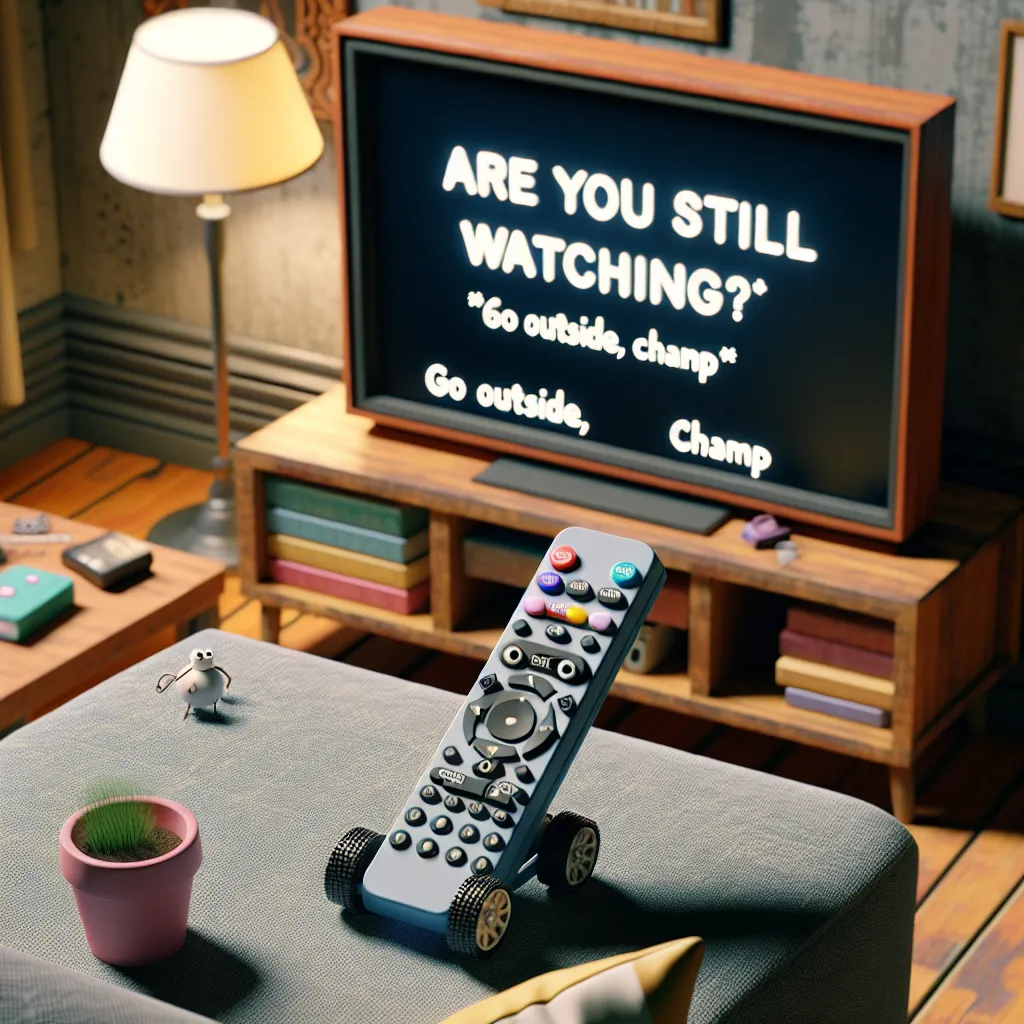
Binge-watching is too easy, and we only realize we’ve gone too far when Netflix asks, “Are you still watching?” The problem is screens hijack self-control. The solution is a self-preserving remote that hides or locks itself after you exceed a set limit — making continued watching just inconvenient enough to break the spell. It uses tiny wheels or a retractable latch to scurry away under a couch, texting you a reminder like “Go outside, champ.” Example: after your 6th consecutive episode of The Office, the remote locks and slides itself into a secret compartment, forcing you to stand up and decide whether this is worth crawling around on the floor for. A playful nudge toward healthier viewing habits — guilt replaced by goofy friction.
Description
No additional description provided.
The Pitch
For anyone passionate about tackling the modern challenge of excessive screen time, the development of an innovative and playful device could be an engaging opportunity. Let's explore the concept, the problem it addresses, the proposed solution, and how someone can bring this idea to life.
In today's digital age, binge-watching has become second nature. Streaming services like Netflix, Hulu, and others provide endless content, making it all too easy to lose track of time. This convenience, however, often leads to excessive screen time, impacting productivity, social interactions, and even physical health.
The issue arises from the persuasive design of digital platforms that expertly captivate attention and diminish self-control. Many users find themselves immersed in back-to-back episodes, barely noticing the hours slip away until a streaming service intervenes with, Are you still watching? At this moment, a fleeting sense of guilt might emerge, but the path of least resistance usually prevails, leading to further viewing.
To combat this, a creative solution proposes a self-preserving remote control that physically limits screen time through a mix of gentle intervention and amusing disruption. This remote would operate on a simple premise: after a predetermined number of episodes, it becomes inactive and strategically positions itself out of reach. By deploying tiny wheels or a retractable latch, it can discreetly slide into a hidden compartment or underneath furniture, prompting physical action from the user.
This quirky approach introduces a playful friction in the viewing experience. For instance, after watching six consecutive episodes of a favorite series, the remote might lock itself and send a friendly text reminding the viewer to take a break — “Go outside, champ.” This nudge encourages healthier viewing habits, replacing feelings of guilt with an amusing challenge.
To develop this concept into a tangible product, let's consider the necessary components and tools. Firstly, building a prototype would require microcontrollers such as Arduino or Raspberry Pi for automating movement and communication functions. Additional elements would include a motor mechanism for movement, sensors for detecting inactivity, and connectivity tools for sending notifications.
For rapid development and testing, 3D printing can be used to create custom casing and compartments for the internal components. Open-source software can facilitate programming and integration of the various elements, allowing for iterative testing and refinement.
To bring this product to the market successfully, a lean go-to-market strategy is essential. The initial phase should focus on launching a minimum viable product to gather feedback from early adopters. Crowdfunding platforms like Kickstarter or Indiegogo can be instrumental in generating interest and securing funding while simultaneously validating demand.
The business model can revolve around both direct sales and potential partnerships. While direct sales through online platforms would target tech-savvy consumers and early adopters, partnerships with streaming services could provide an avenue for bundled offerings, positioning the remote as a complementary accessory for subscribers seeking healthier viewing habits.
In summary, this concept blends humor and innovation to encourage more mindful screen time. By engineering a device that nudges users to take breaks in a fun way, there's potential to transform binge-watching into a more balanced and intentional activity.