Self-Healing Soft Robots for Space Exploration
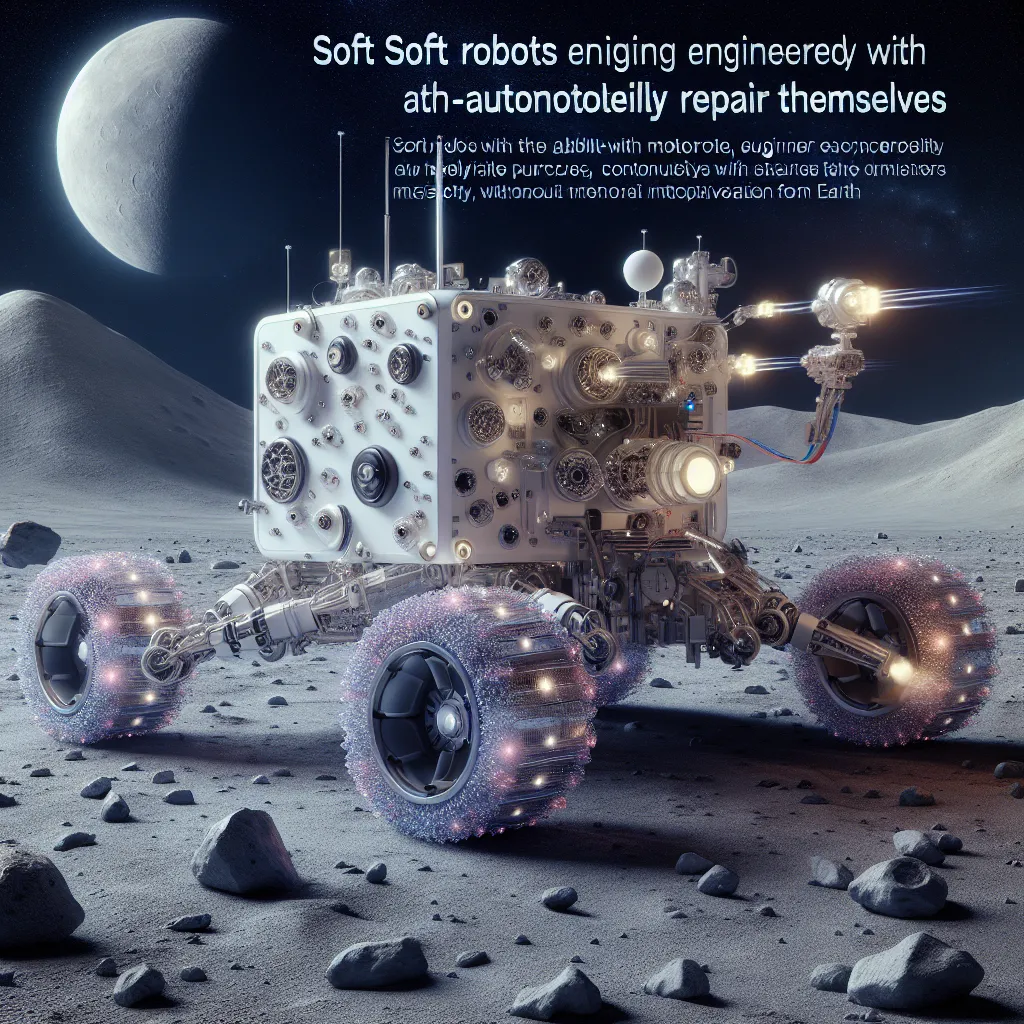
Space exploration demands robots that endure radiation, micro-meteoroids, and temperature extremes. Damage repair is impossible remotely, risking mission failure. Solution: Engineer soft robots using self-healing muscles that autonomously patch punctures or tears, maintaining operability under space conditions. Why now: With renewed lunar and Mars missions, durable autonomous systems are a necessity. Soft robotics and self-healing polymers have matured, but not merged for space-grade exploration tools. Example: A lunar rover with soft, flexible appendages survives meteorite micro-impacts, with self-healing muscles repairing tears and keeping the mission active without intervention from Earth.
Description
No additional description provided.
The Pitch
The resurgence of interest in lunar and Mars exploration has brought to the forefront the need for robust and reliable robotic systems. These missions face extreme challenges: intense radiation, micro-meteoroid impacts, and drastic temperature fluctuations. Traditional robots, built with rigid structures, are vulnerable to these harsh conditions. Damage to such systems can render missions unsuccessful, as remote repairs are virtually impossible. This presents a critical problem for space exploration as humanity ventures further into the cosmos.
### Problem
Space exploration equipment is currently limited by its inability to withstand and adapt to the unpredictable challenges encountered in extraterrestrial environments. The smallest puncture or tear from a micro-meteoroid can critically damage a robot, halting missions and leading to significant financial and opportunity losses. Current materials and structural designs do not adequately address the need for durability and adaptability in space.
### Solution
The integration of soft robotics with self-healing polymers offers a promising solution. By engineering robots with flexible, self-healing muscles, we can create systems that autonomously patch punctures and tears. This innovation would maintain operability under extreme space conditions, dramatically increasing the reliability and longevity of space missions. This approach not only enhances mission success rates but also expands the potential for more complex and longer-term operations on other celestial bodies.
### Product Details
The proposed system involves a lunar rover equipped with soft, flexible appendages made from advanced self-healing polymers. Key features include:
- **Self-Healing Capabilities**: The use of materials that automatically repair damages such as tears and punctures without human intervention. - **Flexibility and Adaptability**: Soft robotics allow for more natural and versatile movements, aiding in navigation over uneven and unpredictable terrain. - **Durability and Resilience**: Engineered to endure radiation exposure and extreme temperature variations.
### Tools for MVP Launch
To swiftly enable the development and testing of this innovative concept, several tools and platforms can be utilized:
- **Materials R&D**: Collaboration with institutions specializing in polymer science to develop space-ready self-healing materials. - **Simulation Software**: Use of advanced simulation tools to model environmental conditions and stress-test robot designs. - **Prototyping Facilities**: Access to fabrication labs for building and iterating on rover prototypes with flexible designs. - **Testing Environments**: Partnerships with space agencies for access to controlled testing sites mimicking lunar or Martian conditions.
### GTM (Go-To-Market) Strategy
1. **Partnership with Space Agencies**: Secure collaborations with NASA, ESA, and private space companies to integrate these systems into future missions. 2. **Showcase Prototype Success**: Conduct demonstrations in simulated space environments to prove functionality and durability. 3. **Educational Collaborations**: Work with universities and research labs to further innovation and development, expanding the talent pool and research contributions.
### Business Model
1. **B2G (Business to Government) Contracts**: Initially focus on securing government contracts to incorporate these self-healing robots in official space missions. 2. **Licensing and Patents**: Develop proprietary technologies around self-healing materials and flexible robotics to license to other manufacturers and industries. 3. **Expansion to Related Markets**: Explore applications in industries facing extreme conditions, such as underwater exploration or hazardous environments on Earth.
In summary, the merging of self-healing polymers with soft robotics represents a breakthrough in addressing the challenges of space exploration. By focusing on adaptability, resilience, and autonomy, this innovative solution can pave the way for more reliable and successful missions, contributing significantly to the advancement of human space exploration endeavors.