Self-Healing, Edible Mycelium Packaging: Sustainable Innovation
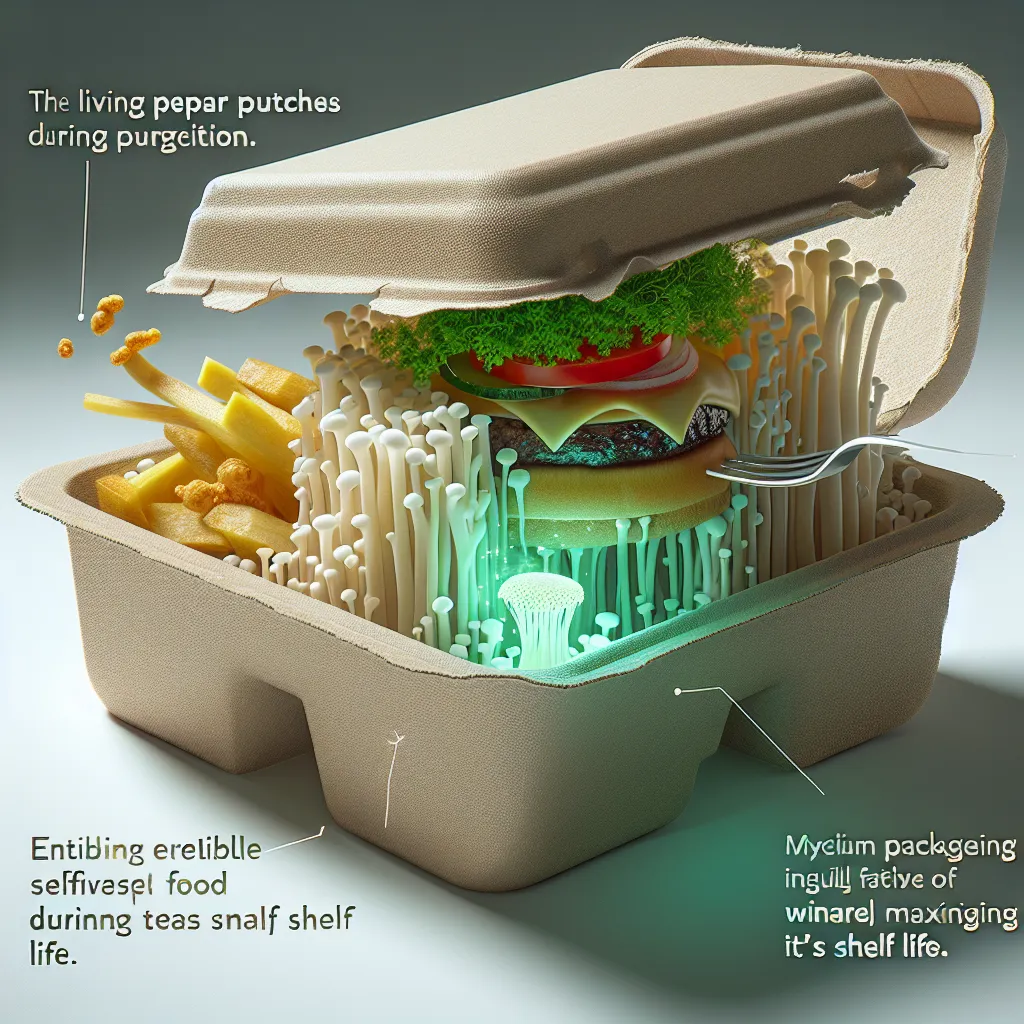
Most biodegradable and edible packaging degrades passively, leaving food vulnerable to damage during transit. The problem is that sustainable materials often lack durability and shelf-life compared to plastics. Imagine packaging made from living mycelium that can self-repair small tears and punctures in real-time, keeping food safe while being edible and biodegradable. Advances in mycelium biofabrication now allow growth modulation and healing. Why now? Consumers and regulators demand plastic-free solutions, and food delivery is booming. Example: A meal delivery service could wrap food in a living, edible shell that seals itself if damaged, extending shelf life without waste — customers could eat the packaging or compost it safely. No commercial solution today offers living, self-healing, edible packaging — this could set a new standard in sustainability.
Description
No additional description provided.
The Pitch
In recent years, there has been a growing demand for sustainable packaging solutions as both consumers and regulators increasingly emphasize the need for eco-friendly alternatives to traditional plastics. The food delivery industry, in particular, faces a unique challenge: how to protect goods during transit while minimizing environmental impact. Current biodegradable and edible packaging options tend to fall short due to a lack of durability and reduced shelf-life compared to their plastic counterparts. However, a revolutionary concept of using living mycelium as packaging material presents a potential breakthrough solution.
Backstory: Mycelium is the root-like network of fungi, known for its resilience and ability to grow and repair itself. Advances in biofabrication have allowed scientists to modulate mycelium growth to address specific needs, such as enhancing durability and self-repair capabilities. By leveraging these qualities, mycelium packaging could offer a groundbreaking alternative to conventional materials, delivering both environmental benefits and enhanced functionality.
Problem: Existing biodegradable and edible packaging options degrade passively, which leaves food vulnerable to damage during transit. This lack of robustness results in increased spoilage and waste, creating a significant challenge for industries reliant on reliable packaging. Sustainable materials often cannot match the protective qualities and shelf-life offered by traditional plastics, posing a significant barrier to widespread adoption.
Solution: Imagine a packaging solution that actively protects its contents through self-repairing capabilities. Mycelium-based packaging offers this potential by using living networks to address small tears and punctures in real-time, effectively sealing itself and ensuring the safety and freshness of the food. This innovative approach not only reduces waste but also enhances the overall sustainability of packaging by enabling consumers to either consume or compost the packaging safely.
Product Details: - Material: Living mycelium engineered for durability and edible properties. - Features: Self-repairing, biodegradable, and edible; enhances food safety and extends shelf-life. - Use Cases: Meal delivery services where packaging doubles as an edible component, reducing waste and improving the consumer experience. - Unique Selling Proposition: The first commercial solution offering living, self-healing, edible packaging.
Tools for MVP Launch: To develop a Minimum Viable Product (MVP) of mycelium-based packaging, consider utilizing the following tools: 1. Biofabrication Lab: Access to a facility equipped for fungal cultivation and material testing. 2. Material Science Experts: Collaboration with scientists specializing in mycelium growth and biofabrication. 3. Packaging Design Software: Tools for creating packaging prototypes and determining optimal structural properties. 4. Sustainability Assessments: Services to evaluate the environmental impact and verify compostability and edibility.
Go-To-Market (GTM) Strategy: 1. Target Market: Focus on environmentally conscious consumers and businesses in the food packaging and delivery sectors. 2. Partnerships: Collaborate with meal delivery services and sustainability-focused retailers to pilot the product. 3. Marketing Campaigns: Highlight the unique benefits of mycelium packaging through digital marketing, emphasizing sustainability and innovation. 4. Demonstrations: Host live demonstrations at industry events and trade shows to showcase the self-repair capabilities and edibility of the packaging.
Business Model: 1. Direct Sales: Offer the packaging directly to food delivery services and retailers on a subscription or bulk purchase basis. 2. Licensing: License the technology to packaging manufacturers to expand market reach. 3. Custom Solutions: Develop tailored packaging solutions for specific client needs, such as luxury or specialty food providers seeking unique packaging options.
Conclusion: The introduction of mycelium-based packaging represents a significant step forward in sustainable packaging solutions. By addressing the durability and functionality challenges of current biodegradable options, it holds the potential to set a new standard in the industry. As consumer demand for environmentally friendly products continues to grow, now is the perfect time to pioneer this innovative technology and lead the charge toward a plastic-free future.