Self-Healing Bio-Compatible Muscles for Medical Robotics
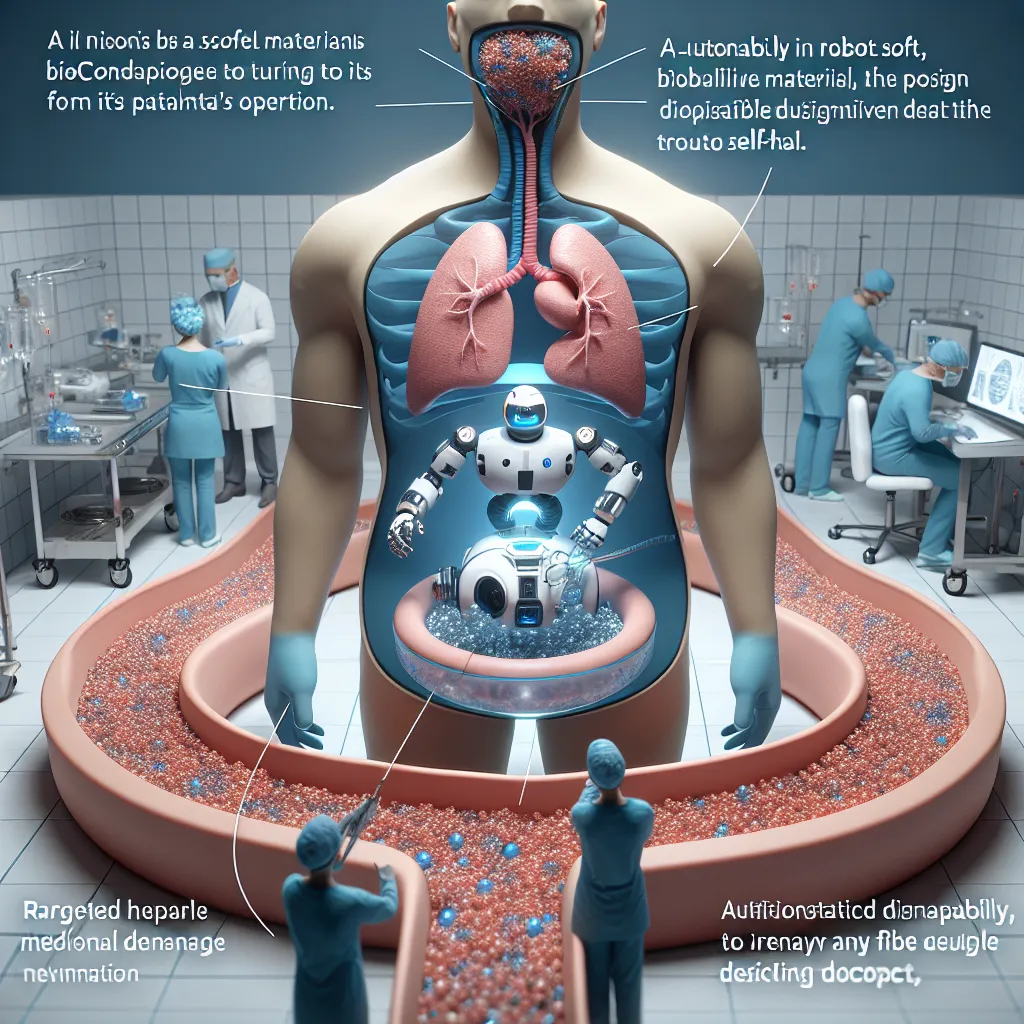
Medical robots for surgery or drug delivery rely on rigid or toxic materials unsuitable for internal use. Solution: Develop soft, bio-compatible artificial muscles that self-heal, allowing for safer, longer-lasting surgical robots and internal drug-delivery bots. Why now: As minimally invasive surgery advances and medical robotics become smaller, the need for biocompatible, durable actuation is growing. No one has integrated fully self-healing, bio-safe muscle tech yet. Example: A pill-sized robot that navigates the digestive tract to deliver targeted medication, repairing any muscle fiber damage autonomously during transit.
Description
No additional description provided.
The Pitch
Interest is growing around the development of medical robots for surgical applications and drug delivery. Traditional robots rely heavily on rigid, mechanical components or toxic materials that are often unsuitable for internal use, limiting their efficacy and safety. The challenge here is to innovate and create soft, bio-compatible artificial muscles that can self-heal. Such advancements would provide a safer and more durable solution for surgical robots and internal drug-delivery systems.
The need for this technology is becoming increasingly pressing. As the field of minimally invasive surgery advances, and medical robotics are required to become smaller and more efficient, the demand for biocompatible and durable actuation technology is growing. Despite the evident need, the market has yet to see the integration of fully self-healing, bio-safe muscle tech.
A compelling example of how this technology might be applied is the concept of a pill-sized robot. This device could be designed to navigate the digestive tract and deliver targeted medication. Its innovative self-healing muscles would mean that any damage sustained to the robot’s muscle fibers during transit could be autonomously repaired, ensuring the device remains functional throughout its mission and beyond.
To turn this vision into a reality, an aspiring developer can focus on the following components:
1. **Backstory and Problem Exploration**: Traditional surgical and drug delivery robots, with their rigid structures and reliance on potentially harmful materials, are not viable for all medical applications. This creates a gap in the market where softer, more biocompatible solutions are needed.
2. **Proposed Solution**: The development of soft, bio-compatible artificial muscles capable of self-repairing any damage they sustain during use. This will lead to more reliable and safer medical robots.
3. **Product Details**: The focus product would be a self-healing, pill-sized robot designed to navigate internal body systems. Its soft and biocompatible design ensures it can perform its function safely, and its ability to autonomously repair itself ensures durability and reliability.
4. **Tools for MVP Development**: - **Material Science Tools**: Invest in research and development tools focused on biocompatible materials and self-healing polymers. Collaboration with material science laboratories or researchers could be beneficial. - **Prototyping Kits**: Use advanced prototyping kits to create early models of the artificial muscle and robots, allowing for iterative testing and development. - **Simulation Software**: Employ simulation software that models internal body environments to predict robotic interactions and functionality before physical testing.
5. **Go-To-Market Strategy**: - **Partnerships with Medical Device Firms**: Collaborate with established players in the medical device industry to leverage distribution networks and customer bases. - **Pilot Testing with Healthcare Institutions**: Conduct pilot programs in collaboration with hospitals or research institutions to validate technology effectiveness and safety. - **Industry Conferences and Exposures**: Showcase technology at medical innovation conferences and exhibitions to attract investment and interest from potential partners.
6. **Business Model**: - **B2B Sales Model**: Sell directly to hospitals and medical institutions needing cutting-edge robotic surgical and drug delivery technologies. - **Licensing and Partnerships**: Consider IP licensing to larger medical device companies, allowing them to incorporate the technology into their offerings. - **Continuous Innovation and Updates**: Offer ongoing improvements and updates to serve the evolving needs of the healthcare industry.
By focusing on these elements, an innovator in this space can efficiently launch a minimum viable product, secure strategic partnerships, and develop a defensible position within the medical robotics market.