Self-Funding Growth Engine for Early-Stage Businesses
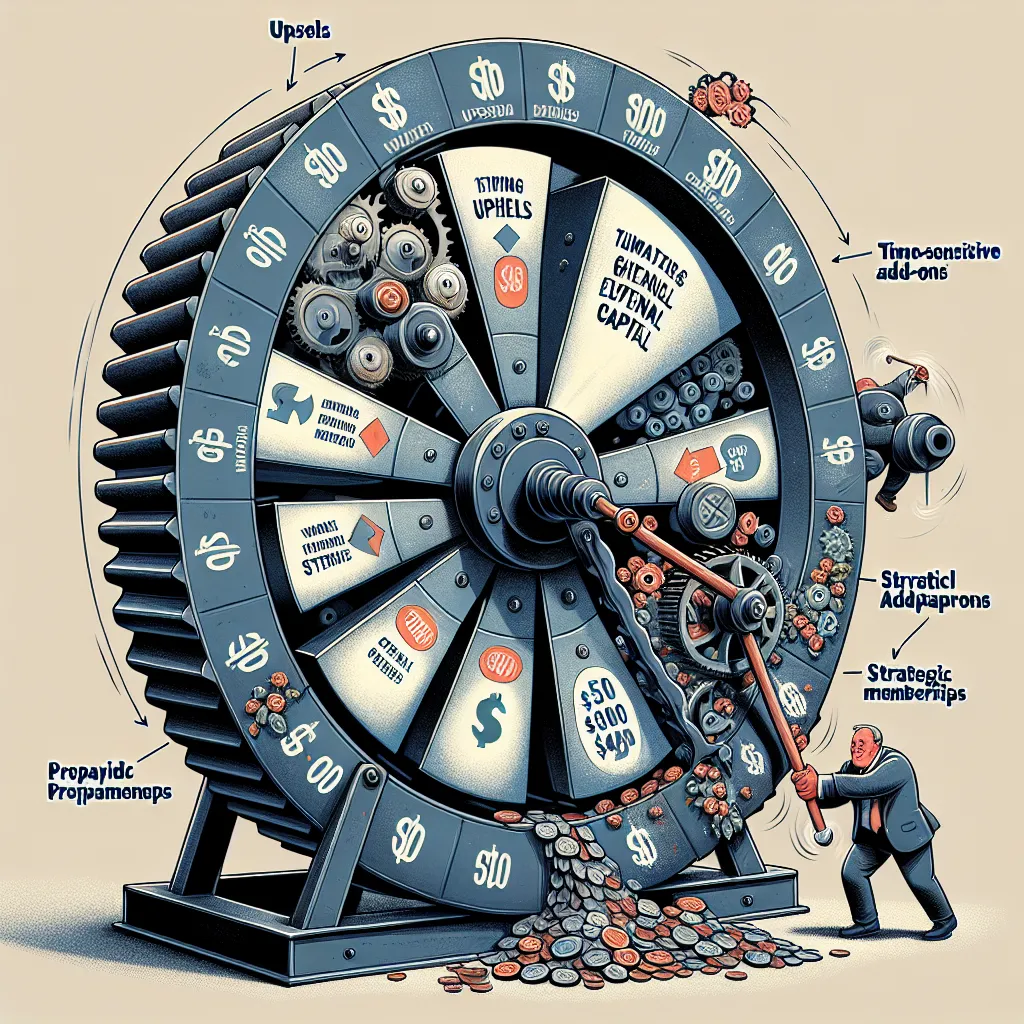
Early-stage companies often depend on outside capital to scale—but what if customers could fund growth? This engine helps structure offers so that the revenue from each new customer covers more than just their acquisition and fulfillment—it also pre-funds the next. Using upsells, time-sensitive add-ons, and strategic prepayment discounts, a business can turn each sale into a growth flywheel. A gym selling a $500 challenge upsell, $200 in supplements, and $2,000 pre-paid memberships recoups $1,000+ from $50 in CAC, funding future acquisition. This model builds compounding growth without external capital.
Description
No additional description provided.
The Pitch
For early-stage companies looking to scale rapidly, the traditional path often involves securing outside capital through investors or loans. However, an innovative approach allows customers themselves to become the driving force behind growth. This strategy involves structuring product and service offers in a way that not only covers customer acquisition costs but also funds the acquisition of future customers. By using targeted upsells, strategic time-sensitive offers, and prepayment discounts, businesses can create a self-sustaining, customer-funded growth engine.
II. Identifying the Problem
Many startups face significant challenges in securing funding to support their growth ambitions. Investor funding can be difficult to obtain, competitive, and often comes with relinquishing equity. Loans, on the other hand, can impose financial burdens through interest and repayment schedules. Additionally, relying on external capital may lead founders away from focusing on customer satisfaction and product refinement, potentially stalling growth.
III. The Proposed Solution
Instead of relying on external capital, companies can tap into their existing and potential customers as a reliable source of growth capital. This is achieved by designing a product and sales strategy that maximizes immediate cash flow from customer interactions, thereby recouping acquisition costs and pre-funding future growth.
IV. Product Details and Implementation
1. Upsells and Add-Ons: Increase the initial sale amount by offering complementary products or services. For instance, a gym could sell a fitness challenge as an upsell, thereby increasing immediate revenue.
2. Time-Sensitive Offers: Create urgency with limited-time discounts or offers, encouraging quick purchase decisions that boost cash flow.
3. Prepayment Discounts: Incentivize customers to pay for memberships or services upfront by offering them discounted rates, which secures future revenue while providing immediate capital.
Example: A gym sells a comprehensive package including a $500 upsell for a fitness challenge, $200 worth of supplements, and a $2,000 pre-paid annual membership. This structure can generate over $1,000 from a $50 customer acquisition cost, thereby reinvesting in acquiring new customers.
V. Tools for Effortless Launch
Businesses can employ a range of digital tools and platforms to facilitate this model, including:
- CRM Systems: Tools like HubSpot or Salesforce can manage customer relationships and track sales. - E-commerce Platforms: Shopify or WooCommerce can handle the sale of upsells and time-sensitive offers. - Marketing Automation: Services such as Mailchimp or Marketo to automate communication and promotional campaigns. - Payment Processing: Stripe or PayPal for seamless handling of prepayments and transactions.
VI. Go-to-Market (GTM) Strategy
1. Target Customer Segmentation: Identify key customer demographics and behaviors to tailor offers effectively. 2. Digital Marketing: Leverage social media marketing, content marketing, and online ads to reach potential customers. 3. Partnerships and Alliances: Collaborate with complementary businesses to enhance product offerings and reach. 4. Feedback Loops: Mainstream customer feedback to refine offerings and increase the appeal of upsells and bundles.
VII. Business Model
This growth engine transforms the business model into a self-funding loop:
1. Customer Acquisition: Leverage targeted marketing to bring in potential customers. 2. Capitalization on Sales: Maximize value from each sale through strategic upselling and compelling offers. 3. Reinvestment: Direct the revenue generated towards acquiring new customers, scaling growth without needing external investment.
VIII. Conclusion
This customer-driven growth approach flips the conventional growth model on its head by transforming customers into both clients and investors. It not only aligns growth with actual market demand but also preserves equity and reduces financial risks. For early-stage companies, this model offers a potentially transformative pathway to achieve sustainable and exponential growth.