Secure Destruction Service for Branded Collectibles
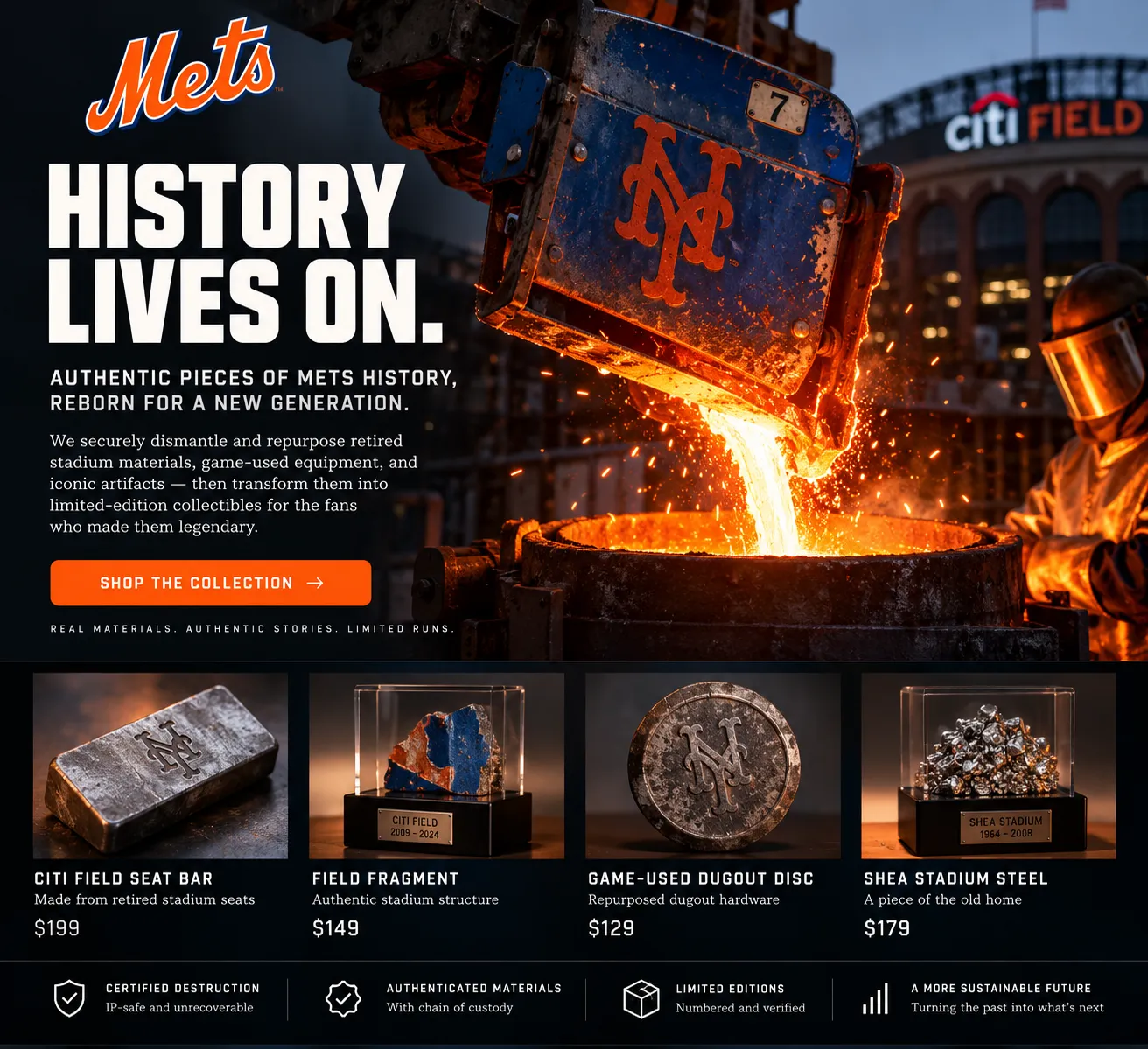
Companies destroy prototypes, retired hardware, and confidential products every day to keep valuable IP out of competitors’ hands. The problem is that all of that material usually becomes expensive waste, even when fans would happily pay to own a piece of the story. Build a secure destruction service that melts, shreds, or dismantles sensitive products, certifies the IP as unrecoverable, then turns the remnants into numbered, authenticated collectibles sold on behalf of the brand. This works now because companies are increasingly turning product launches, failures, retirements, and behind-the-scenes moments into content, while fans are paying more for limited-edition artifacts with a real story attached. Imagine an automaker destroying a secret prototype and turning the metal into 5,000 authenticated desk sculptures, or a robotics company melting retired humanoids into numbered bars for collectors. That’s a product that needs to exist.
Description
No additional description provided.
The Pitch
This reframes corporate waste as narrative inventory. The valuable thing is not the scrap metal, plastic, silicon, or carbon fiber; it is the fact that the material was once close to something people cared about but were never allowed to touch. Most branded merchandise is manufactured after the fact to simulate meaning. Here, the meaning already exists, and the business is simply preserving it in a safe form.
The unusual advantage is that destruction and scarcity are naturally aligned. A company already needs to prove that sensitive material is gone, while collectors assign value to objects that cannot be recreated. Most limited editions are artificial because the maker could always produce more. These artifacts are scarce for a more interesting reason: their source material was finite, controlled, and permanently transformed. The certificate matters not because it says “authentic,” but because it proves there is no second chance.
It also gives companies a way to tell stories they normally have to bury. Failed prototypes, obsolete devices, recalled designs, abandoned concepts, and retired internal hardware often contain the most emotionally rich chapters of a company’s history, but legal and competitive concerns keep them invisible. Turning them into inert artifacts creates a strange middle ground between secrecy and disclosure: the public can own evidence that something existed without gaining access to the thing itself.
The business works especially well because it sits at the intersection of compliance and fandom, two markets that rarely touch. The destruction budget is already justified by risk reduction, while the collectible market can offset or even exceed that cost. That changes the internal conversation. What was once a necessary expense becomes a controlled cultural event, one that legal, security, marketing, and community teams can all understand for different reasons.
The deepest insight is that modern brands are accumulating physical history faster than they know how to preserve it. As products become more secretive, more engineered, and more culturally followed, the objects left behind gain a kind of relic value. A secure process that can convert dangerous artifacts into harmless ones would let companies monetize not just what they make, but what they almost made, what they retired, and what they had to destroy.