Seamless Home Efficiency with AI Orchestrator
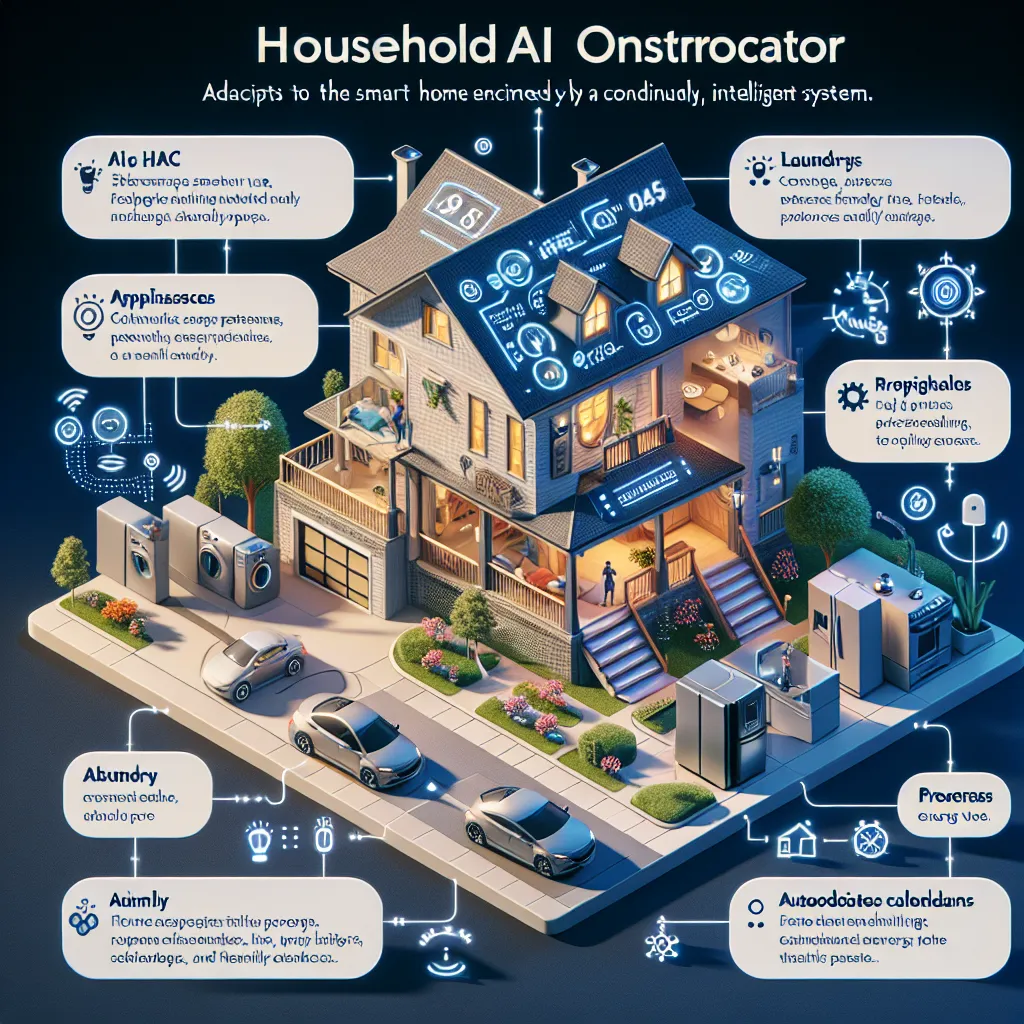
Most homes today are filled with fragmented smart devices — thermostats, fridges, speakers — but they don’t work together intelligently. Managing everything manually feels no different from old-school home living, just with more apps. The solution is a Household AI Orchestrator: a cross-device, context-aware system that continuously optimizes home energy use, schedules, appliances, and family logistics without human intervention. Unlike today’s siloed smart homes, this AI would learn from the household’s behavior — adjusting HVAC based on sleep patterns, prepping appliances before use, and coordinating calendars automatically. Why now? With 50% of U.S. households using AI and energy grids straining under demand, a centralized, learning system is overdue. For example, a family’s Household AI could detect an unusually hot day and pre-cool the home off-peak, shift laundry to the cheapest time block, and schedule errands around traffic — saving time, energy, and money without any user prompts.
Description
No additional description provided.
The Pitch
In many modern homes, the presence of smart devices such as thermostats, fridges, and speakers has become increasingly common. However, these devices often operate in isolation, lacking the capability to interact intelligently with each other. As a result, homeowners find themselves managing each device manually, using multiple apps that ultimately do not alleviate the complexity of home management. This scenario feels reminiscent of traditional home living, only with an increased digital footprint.
Introducing an innovative concept: the Household AI Orchestrator. This is a cross-device, context-aware system designed to seamlessly integrate and optimize various home functions. By learning from the unique behaviors and preferences of the household, this AI-driven platform can autonomously adjust energy usage, manage appliance schedules, and coordinate family activities, all without the need for direct human intervention. Unlike the disconnected nature of today’s smart devices, this orchestrator assesses household patterns to make informed adjustments—such as regulating the HVAC system according to sleep patterns, preparing appliances when needed, and synchronizing calendars automatically.
The relevance of such a solution is particularly significant today. With a substantial percentage of households in the United States adopting AI technologies and energy grids experiencing heightened demand, the absence of a centralized and adaptive system is increasingly apparent. For instance, imagine a household where the AI can identify an impending heatwave and pre-cool the home during non-peak hours, shift laundry tasks to more economical time frames, or plan errands to avoid traffic congestion. These capabilities not only enhance convenience but also promote energy efficiency and cost savings without requiring active user input.
To bring the Household AI Orchestrator to life, one might pursue the following strategy:
1. Development Tools and MVP Launch: - Utilize platforms such as Arduino or Raspberry Pi for prototyping the hardware components, and machine learning frameworks like TensorFlow or PyTorch for developing the AI model. - Leverage cloud services such as AWS IoT or Google Cloud IoT to enable seamless connectivity between devices. - Launch a minimal viable product focusing on key functionalities such as energy management and appliance scheduling. Collect user feedback to iterate and improve the system.
2. Go-to-Market Strategy: - Target early adopters within the tech-savvy community who already own multiple smart devices. - Partner with homebuilders and smart device manufacturers to integrate the AI system as a bundled offering in new homes. - Launch a grassroots marketing campaign through tech events and forums to build initial interest and credibility.
3. Business Model: - Offer a subscription-based model with tiered plans based on household size and number of connected devices. - Provide a free basic version with an option to purchase premium features like enhanced analytics and custom integrations. - Explore partnerships with energy providers for potential rebates or discounts to users who reduce their energy footprint.
By implementing this approach, the Household AI Orchestrator can fundamentally transform how homes operate, creating a more cohesive and intelligent living environment that prioritizes efficiency and simplicity.