Scalable DAO-Based Universal Basic Income Platform
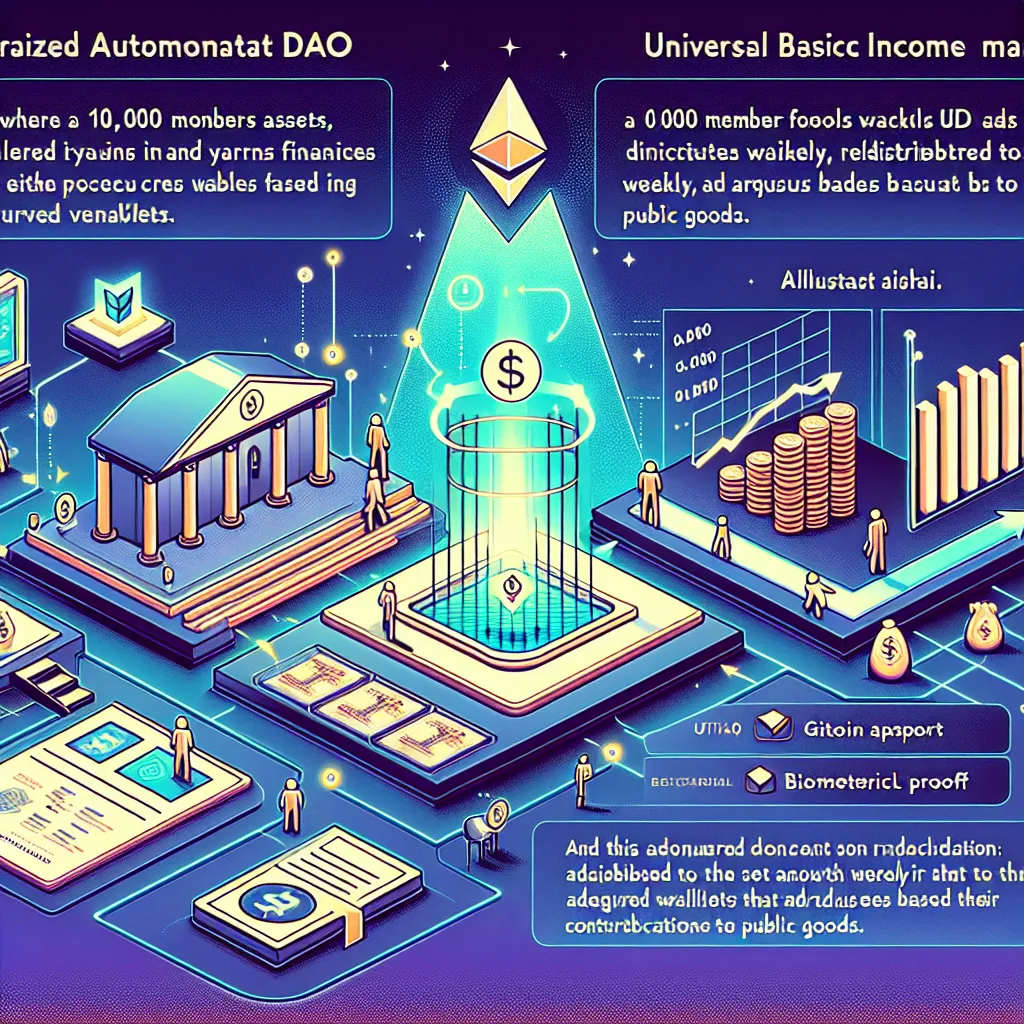
Universal Basic Income trials fail from bureaucracy and lack of sustainability. This DAO enables a programmable, on-chain UBI funded by yield from staked assets, taxes on ecosystem transactions, or inflation models. It distributes micro‑payments to verified wallets via Gitcoin Passport or biometric proof. Why now? RetroPGF, L2 yield farming, and new identity layers enable scalable targeting and funding. Example: A 10,000-member UBI DAO pools ETH, earns yield via Lido, and redistributes $5/week to each verified member, auto-adjusted based on participation and contribution to public goods.
Description
No additional description provided.
The Pitch
Universal Basic Income (UBI) is a concept that has gained significant attention as a potential solution for economic inequality, poverty, and the challenges posed by automation. However, traditional UBI trials have often struggled with issues such as bureaucratic red tape and a lack of sustainable funding mechanisms. This has led to a rethinking of how UBI can be effectively implemented, leveraging emerging technologies to overcome these hurdles.
In this context, a Decentralized Autonomous Organization (DAO) presents a novel opportunity to create a programmable, on-chain UBI system. This approach allows for the establishment of a continuous and sustainable funding model. The funding could be sourced from the yield generated by staked assets, taxes on transactions within the ecosystem, or through controlled inflation models. The DAO structure ensures transparency and reduces administrative overhead, which can often burden traditional UBI initiatives.
The system distributes micro-payments to verified wallets, ensuring that only eligible participants receive the UBI. Verification is achieved through platforms like Gitcoin Passport or through biometric proof, enhancing the security and reliability of the distribution process. The recent developments in Retroactive Public Goods Funding, Layer-2 yield farming, and innovative identity layers make this an opportune time to deploy such a system. These advancements enable scalable targeting and funding, thus increasing the feasibility of widespread implementation.
As an example, consider a UBI DAO with 10,000 members. The members pool their assets, such as Ethereum, into the DAO. These assets are then staked using platforms like Lido, which generate yield. The yield is then redistributed to members as a UBI payment. Each verified member could receive a base amount, such as $5 per week. This amount can be auto-adjusted based on their participation in and contributions to public goods, ensuring that the distribution is equitable and rewarding of community involvement.
To build this DAO successfully, several components and tools are essential. Firstly, a smart contract platform like Ethereum is needed to ensure secure and automated transactions. Tools like Aragon or DAOstack can facilitate the creation and governance of the DAO. Yield generation can be managed through decentralized finance platforms such as Lido or Aave. For identity verification, using Gitcoin Passport or similar platforms ensures that the system can confirm user eligibility efficiently.
Launching this as a Minimum Viable Product (MVP) involves setting up a small-scale pilot with committed members to test the mechanics of the UBI distribution and yield generation. A focused Go-To-Market (GTM) strategy would revolve around engaging with communities that are already familiar with blockchain and DAO ecosystems. Initially targeting crypto-savvy individuals and public goods contributors can foster an early adopter base.
The business model can be structured around a small percentage fee on yield generated from staked assets or transaction taxes within the ecosystem, ensuring the DAO's sustainability. Additionally, strategic partnerships with platforms in the broader crypto and fintech industries can enhance visibility and trust. As the DAO demonstrates success in delivering UBI, it can expand and scale its membership and funding sources, progressively enhancing the impact of the UBI system.
In essence, this concept leverages blockchain technology to provide an innovative solution that addresses the traditional limitations of UBI, setting the stage for more equitable financial systems.
---