Rugged Medical Patches for Emergency Biologic Delivery
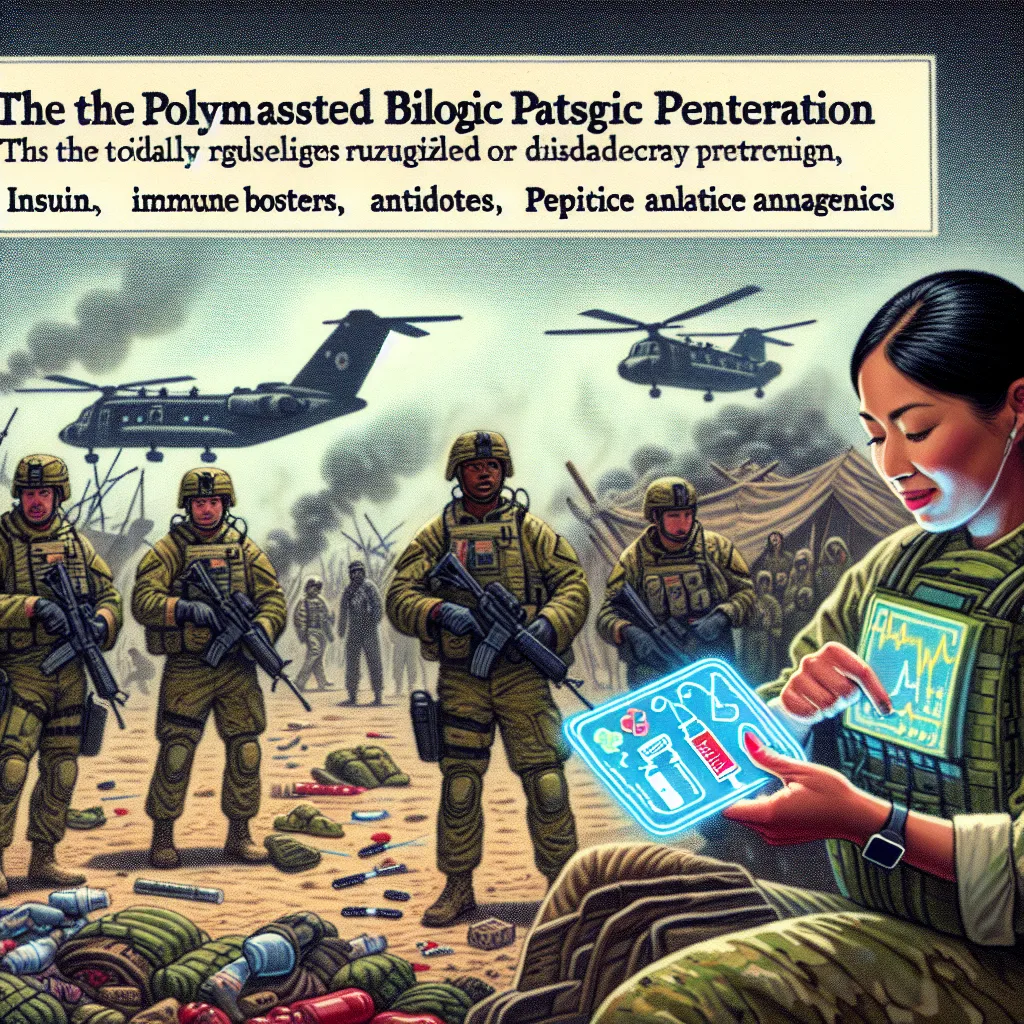
During combat or disaster relief, medics can’t safely administer biologics at scale—cold-chain limits, needle shortages, and contamination risks all constrain care. With new polymer-assisted biologic penetration, a startup could build ruggedized, shelf-stable medical patches (insulin, antidotes, immune boosters, peptide analgesics) that soldiers or responders can self-apply without training. The “why now” is that true biologic transdermal transport wasn’t feasible until the recent insulin-cream data. A soldier experiencing battlefield hyperglycemia could slap on an insulin patch mid-mission instead of relying on injections that require sterile environments.
Description
No additional description provided.
The Pitch
In high-stakes scenarios like combat zones or disaster relief operations, the ability to deliver timely medical care is critical. One significant challenge faced by medics and healthcare providers in these situations is the safe and efficient administration of biologic medications, such as insulin and immune boosters. These medications often require stringent cold-chain logistics, adequate needle supplies, and sterile environments, which are difficult to maintain in such unpredictable and harsh conditions. This limitation can severely constrain the effectiveness of care provided and can mean the difference between life and death.
However, recent advances in polymer-assisted biologic penetration have opened up new possibilities for transdermal delivery—administering medications through the skin. Prior to these developments, transdermal delivery of biologics was largely unattainable due to the complexity and size of biologic molecules. Recent studies, particularly those involving insulin in a cream form, have demonstrated the potential for these substances to be delivered effectively through the skin. This breakthrough heralds a unique opportunity for innovation in delivering life-saving medicines under challenging conditions.
Envision a startup that designs and manufactures ruggedized, shelf-stable medical patches capable of delivering crucial biologics such as insulin, antidotes, immune boosters, and peptide analgesics. These patches would be designed for individuals who find themselves in combat situations or disaster zones and could be self-administered without any formal medical training. By just applying a patch, soldiers experiencing conditions like battlefield hyperglycemia could quickly stabilize their health in the midst of a mission, without relying on injection-based solutions that require sterile equipment and environments.
The solution revolves around the synthesis and incorporation of advanced polymers that facilitate the penetration of biologics through the skin barrier effectively and safely. The patches would be created to withstand extreme environmental conditions, ensuring their usability without the need for refrigeration and maintaining their efficacy until application.
To develop and launch a Minimum Viable Product (MVP), the venture would require access to advanced laboratories for initial research and testing, polymer science expertise, and partnerships with medical device manufacturers. Key tools will include prototyping platforms for medical devices, facilities for beta testing in controlled environments, and collaborations with military and disaster response organizations to gather feedback and iterate rapidly.
For a Go-To-Market (GTM) strategy, direct engagement with military organizations and humanitarian agencies would be essential. Demonstrations of the patch technology in military training environments and disaster simulations would help build credibility and demand. The GTM plan could also involve collaborations with organizations focused on diabetes management and emergency medical response to broaden the application scope of the patches.
The business model could involve direct sales to military and disaster relief organizations, licensing the technology to existing medical device companies, and potential consumer sales through partnerships with pharmacies and healthcare providers for civilian use in less extreme environments. Subscription-based models for continuous supply and advancements in patch technology could also be considered, ensuring clients always have access to the latest and most efficient patches.
By leveraging cutting-edge polymer science and focusing on usability and practicality, this new venture stands to revolutionize the administration of biologics in environments where traditional methods fail, ultimately saving lives and enhancing the effectiveness of medical interventions in critical situations.