Rugged Autonomous Units for Defense Operations
Modern defense is shifting toward autonomous units deployed in hostile, disconnected environments—but they still rely on fragile, centralized systems. That’s a liability. This startup builds rugged, self-powered edge AI units with mesh networking and encrypted communication for unmanned systems. It enables drones, rovers, and sensors to operate collaboratively without the cloud. Think Starlink meets Raspberry Pi meets battlefield-grade durability. In a real-world example, a border patrol unit could deploy these to monitor remote terrain autonomously for weeks, even in GPS- or power-denied zones.
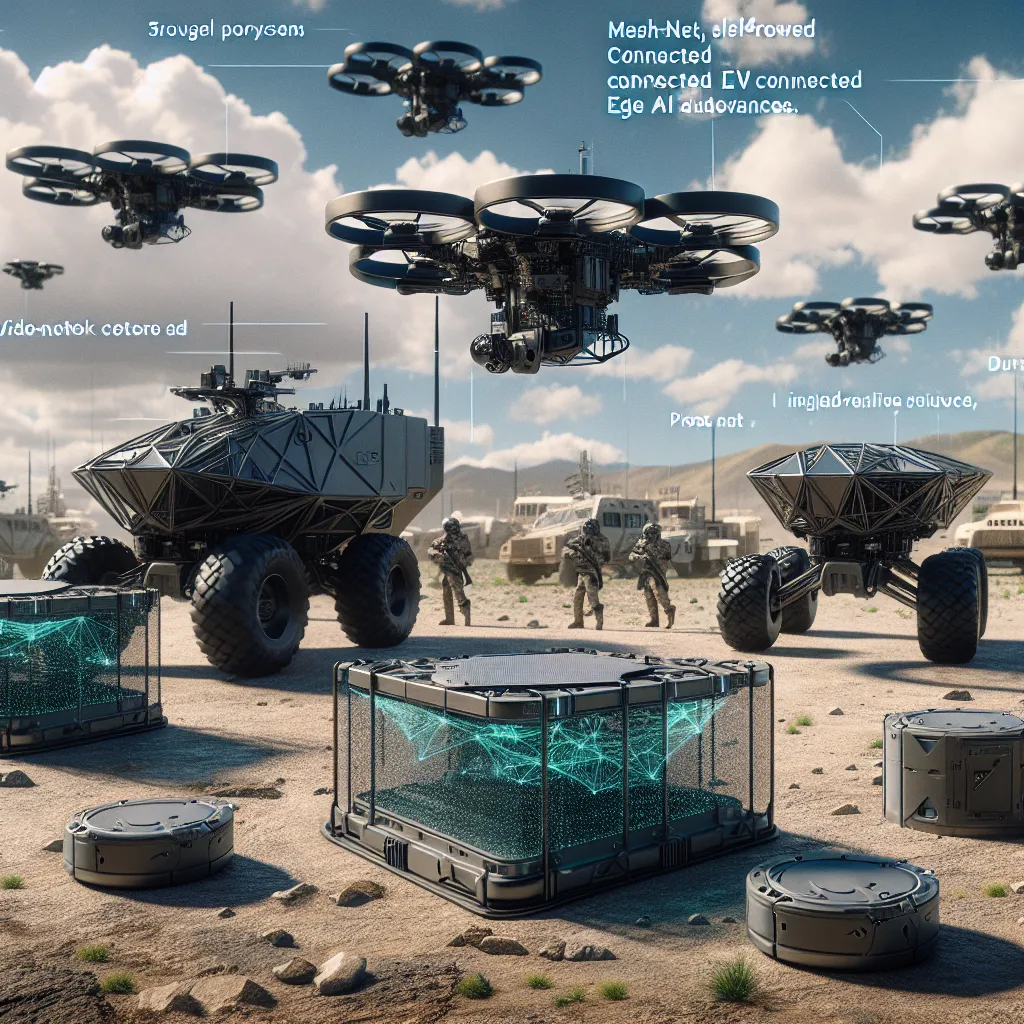
Description
No additional description provided.
The Pitch
The landscape of modern defense is evolving rapidly, with a growing focus on deploying autonomous units in environments that are both hostile and disconnected. A significant challenge in this transformation is the reliance on centralized systems, which remain vulnerable to disruption. This document outlines an innovative solution designed to overcome these hurdles by introducing rugged, self-powered edge AI units capable of operating collaboratively without centralized infrastructure.
Backstory: In recent years, military operations and border security have increasingly depended on advanced technologies such as drones, rovers, and sensors. Traditionally, these devices have relied on centralized cloud systems for data processing and communication. However, in contested environments where access to GPS or stable power supply is compromised, this centralization poses a critical vulnerability. The need for a robust, autonomous solution that can function independently in such conditions has never been more pressing.
Problem Statement: The primary problem lies in the reliance on fragile, centralized systems to manage and communicate with unmanned units in the field. This dependence becomes a liability in scenarios where connectivity is limited or entirely disrupted, hindering the effectiveness of defense operations and potentially placing lives at risk.
Solution: The solution involves the development of rugged, self-powered edge AI units equipped with mesh networking capabilities and encrypted communication technologies. These units can be deployed to enable drones, rovers, and sensors to work autonomously and in collaboration, even in environments that are GPS- or power-denied. By leveraging a combination of Starlink-like communication technology, Raspberry Pi computing power, and battlefield-grade durability, these units can ensure continuous operation in any situation.
Product Details: - **Rugged Design**: Built to withstand harsh environments and physical impacts. - **Self-Powered Units**: Incorporating solar panels and advanced battery systems for uninterrupted power supply. - **Edge AI Capabilities**: Onboard processing for machine learning and decision-making without the need for cloud resources. - **Mesh Networking**: Enabling seamless communication between units over extended distances without relying on centralized infrastructure. - **Encrypted Communication**: Ensuring secure data transmission, resistant to interception and tampering.
Tools for MVP Development: - **Hardware Platforms**: Utilize Raspberry Pi for prototyping powerful yet compact computational capabilities. - **Solar Technology**: Integrate state-of-the-art photovoltaic cells for energy independence. - **Networking Software**: Develop or adapt existing mesh networking solutions to facilitate reliable connectivity. - **AI Frameworks**: Implement open-source frameworks such as TensorFlow Lite or PyTorch Mobile for on-device AI processing. - **Encryption Protocols**: Employ robust, industry-standard encryption methods to secure communications.
Go-to-Market (GTM) Strategy: 1. **Target Audience**: Engage government defense agencies and private military contractors as initial clients. 2. **Pilot Programs**: Conduct field tests with select early adopters to demonstrate effectiveness in real-world scenarios. 3. **Partnerships**: Collaborate with technology providers and defense integrators to broaden reach and enhance product offerings. 4. **Thought Leadership**: Publish white papers and present at defense and technology conferences to showcase innovation. 5. **Marketing Campaigns**: Focus on the unique ability to operate in disconnected, hostile environments, emphasizing security and independence.
Business Model: - **Direct Sales**: Initially target government contracts and large defense organizations. - **Subscription Model**: Offer ongoing software and support services on a subscription basis. - **Licensing**: License the technology to other industries requiring autonomous systems in remote locations, such as oil and gas or environmental research. - **Custom Solutions**: Provide tailored solutions for specific client needs, ensuring flexibility and adaptability of the product.
Conclusion: By developing and deploying these rugged, self-powered edge AI units, the solution not only addresses a significant vulnerability in modern defense but also sets a new standard for the autonomy, security, and reliability required in future operations. This initiative represents a critical step forward in how unmanned systems are integrated into defense strategies, offering unmatched operational capabilities in challenging environments.