Revolutionizing Remote Physical Learning through 3D
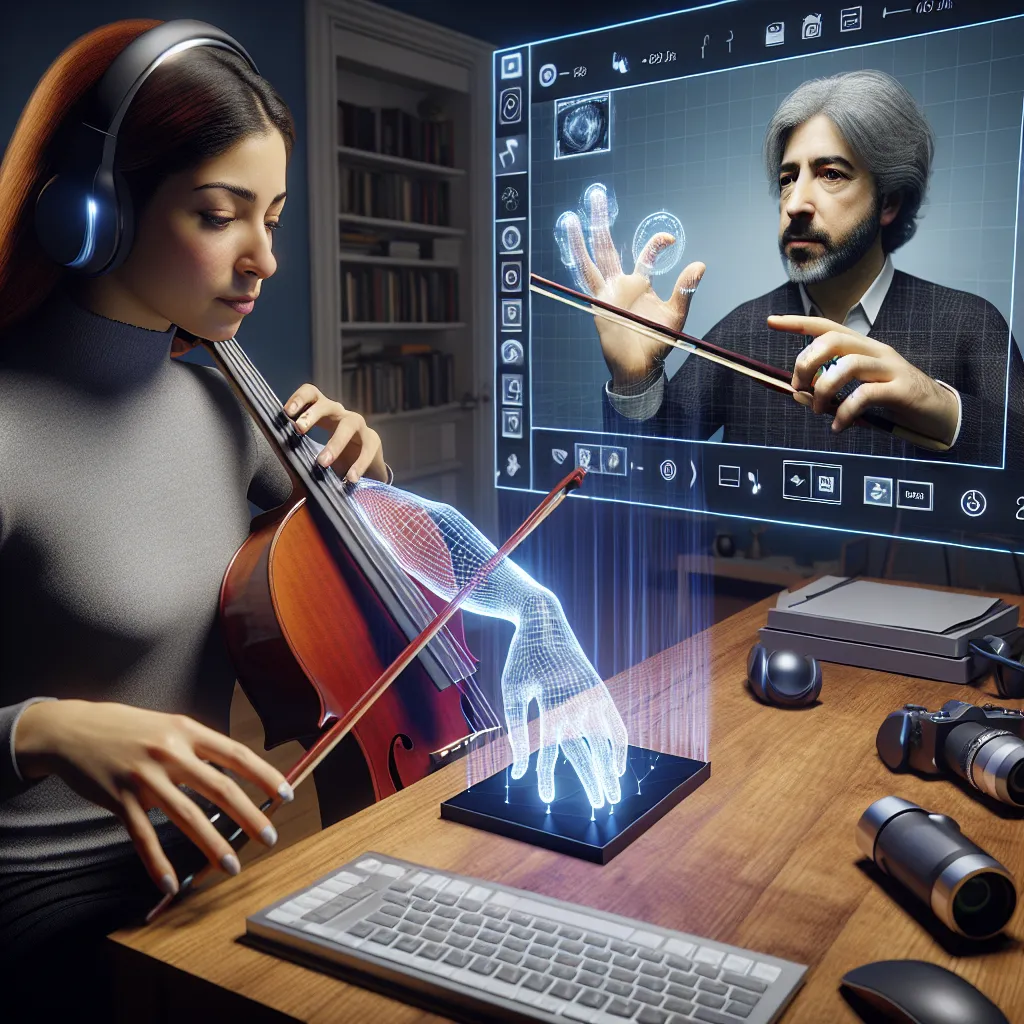
Remote learning for physical activities like fitness, dance, and music lacks interactivity and body awareness. Most rely on flat video and crude feedback. The solution is a spatial computing SDK that turns webcams, LIDAR, or Vision Pro devices into real-time 3D learning interfaces — enabling feedback on posture, timing, and coordination. Why now? Apple Vision Pro, Quest 3, and browser-based spatial SDKs just hit mainstream. Example: A cello student sees a ghost-hologram of correct hand positioning overlayed on her real cello while her instructor’s gestures are shown in shared space.
Description
No additional description provided.
The Pitch
In recent years, remote learning for physical activities has gained significant popularity. The fitness industry has transformed with online classes, dance studios now reach broader audiences, and music instruction has evolved through digital platforms. Despite these advancements, one significant drawback undermines the full potential of remote learning: the lack of interactivity and real-time feedback, especially in activities that require precise body movements and positioning. Traditional methods rely heavily on pre-recorded videos and text-based feedback, often resulting in a disconnect between instructor and student.
#### Identifying the Problem
The existing remote learning platforms for physical activities often fall short in providing:
- Real-time interaction and feedback - Accurate body awareness and coordination cues - Engaging and immersive learning experiences
These drawbacks can lead to improper posture, incorrect technique, and reduced motivation for learners, ultimately hindering progress in physical skills development.
#### Proposed Solution
The solution is a spatial computing SDK designed to transform standard webcams, LIDAR, or advanced devices like the Apple Vision Pro, into powerful real-time 3D learning interfaces. This innovation will facilitate:
- Live feedback on posture and movements, allowing learners to adjust instantaneously - Overlays of correct techniques in a shared visual space, enhancing understanding - Immersive and engaging environments to boost motivation and retention
#### Product Details
The proposed product leverages cutting-edge spatial computing technology to deliver a seamless remote learning experience. Key features include:
- **3D Motion Tracking**: Utilizes device cameras or sensors to capture and analyze movements. - **Real-Time Feedback**: Offers immediate guidance on posture and technique through visual or audio prompts. - **Shared Virtual Space**: Allows instructors and students to interact within a unified spatial environment. - **Cross-Platform Compatibility**: Works with various devices, including desktops, tablets, and emerging headsets like Apple Vision Pro and Quest 3.
#### Tools for Easy MVP Launch
To swiftly bring this concept to life as a Minimum Viable Product, consider employing:
- **Open-source Spatial SDKs**: Utilize readily available SDKs to reduce development time. - **WebRTC**: Integrate real-time communication protocols to ensure low-latency interactions. - **AR Development Tools**: Use platforms like Unity for building engaging augmented reality interfaces. - **Cloud-based Analytics**: Implement analysis tools for tracking user engagement and effectiveness.
#### Go-To-Market Strategy
To effectively introduce this product to market, the following strategies can be employed:
1. **Targeted Marketing**: Focus initially on niche markets like music and fitness instruction where detailed feedback is crucial. 2. **Influencer Partnerships**: Collaborate with professionals in fitness, dance, and music to showcase the benefits of the platform. 3. **Freemium Model**: Offer basic functionality for free to attract users, with premium features available through subscription. 4. **Community Building**: Foster an online community for users to share experiences, tips, and feedback.
#### Business Model
The business model should focus on sustainability and scalability, including:
- **Subscription Plans**: Offer tiered pricing based on feature access and usage frequency. - **Partnership Programs**: Collaborate with educational institutions and training centers. - **Enterprise Solutions**: Provide customized solutions for studios and academies seeking to enhance their remote offerings. - **Data Licensing**: Utilize anonymized user data for enhancements while maintaining privacy standards.
By addressing the current gaps in remote learning for physical activities, this spatial computing solution aims to revolutionize the way we engage with and learn complex physical skills remotely. This initiative not only fulfills the needs of today’s digital learners but also sets the stage for future innovations in educational technology.