Revolutionizing Real-World Search with Semantic Tech
People search the internet with increasing precision, but we still search physical spaces—museums, offices, airports, grocery stores—like it’s 1995. There’s no unified interface to ask spatial questions like: “Where’s the quietest corner in this terminal with an outlet and a view?” “Show me all the art from the 1600s here, starting with the most controversial.” “What aisle has the healthiest granola under $5?” This startup would build a spatial-semantic search layer for real-world environments. Using indoor mapping APIs, LLM-driven search, and sensor or partner integrations, it lets users query any space in natural language. Stores, venues, and public buildings can license the agent interface, which continuously learns from behavior, sensors, and layout updates. This wasn’t possible before because semantic search couldn’t integrate with real-time, location-specific, structured and unstructured spatial data. But with LLMs, vector embeddings, and agentic interfaces—plus the falling cost of mapping—the physical world is finally searchable like the web.
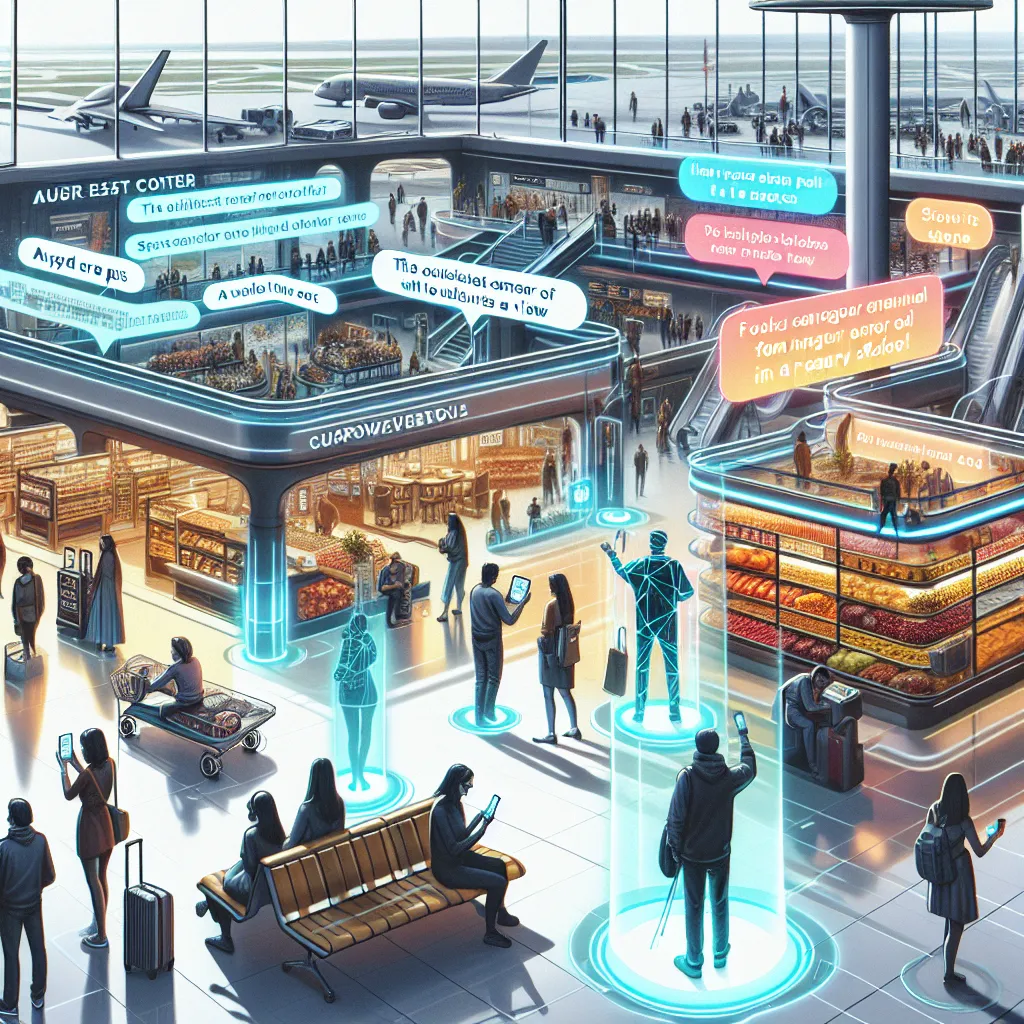
Description
No additional description provided.
The Pitch
In an age where digital search is instantaneous and precise, the physical world remains cumbersome to navigate. Imagine a world where you could interrogate any physical space with the same ease and specificity as a Google search. From locating the quietest corner of an airport with an outlet and a view to finding all art pieces from the 1600s in a museum, the way we interact with physical spaces is ripe for disruption.
### The Challenge
Today's physical spaces are traversed much like they were decades ago. Whether wandering through a museum, searching for a specific product in a supermarket, or navigating a sprawling airport, the lack of an intuitive search interface makes these experiences inefficient and outdated. There's no seamless way to acquire spatial information or achieve specificity akin to digital searches, primarily due to the disconnect between real-time, location-specific data and semantic search technologies.
### The Solution
Envision a spatial-semantic search layer designed for real-world environments. Through a synergistic use of indoor mapping APIs, language model-driven search capabilities, and sensor or partner integrations, this innovation enables users to query physical spaces using natural language. It provides storefronts, venues, and public buildings with a dynamic interface that continuously adapts using data from user behavior, sensors, and layout alterations.
### Product Details
- **Core Technology**: Utilizing advanced language models, vector embeddings, and mapping technologies to enable natural language queries within physical spaces. - **Integrations**: Seamlessly connect with APIs for indoor mapping, sensors for real-time data, and databases of structured and unstructured spatial information. - **Adaptive Learning**: The system evolves through continuous feedback, drawing from user interactions and environmental changes to improve accuracy and relevance. - **User Interface**: Accessible on mobile and wearable devices, offering an intuitive and responsive environment for spatial search. - **Licensing Model**: Businesses and public spaces can license the technology, allowing them to enhance their visitor experiences significantly.
### MVP Launch
- **Lean Development**: Begin with a basic version focusing on a specific use case—such as navigating a large public building or airport—to refine the technology and gather user feedback. - **Partnerships**: Collaborate with a select group of venues and public spaces to pilot the technology, using their environments as test beds to iterate and improve. - **User Testing**: Conduct extensive user studies to understand pain points and optimize user experience.
### Go-to-Market Strategy
- **Target Market**: Approach high-traffic environments first—like airports, museums, and large retail centers—where user need is most pronounced. - **Strategic Alliances**: Partner with indoor mapping and sensor technology companies to create a robust ecosystem supporting seamless integration. - **Marketing Campaigns**: Showcase the technology's ability to enhance visitor experience through case studies, demos, and industry events to build awareness and attract more clients.
### Business Model
- **Subscription Licensing**: Implement a recurring revenue model where spaces pay a subscription fee to access and use the technology. - **Tiered Pricing**: Offer different pricing levels based on the size of the space, the complexity of data, and feature access. - **Additional Revenue Streams**: Explore partnerships with advertisers for targeted promotions within spaces, leveraging anonymized data insights.
This venture has the potential to revolutionize how humans interact with the physical world, making it as searchable and intuitive as the digital space. Through cutting-edge technology, strategic partnerships, and a focus on user experience, this startup aims to transform spatial navigation forever.