Revolutionizing Office Workflows with Vertical AgentOS
In fields like commercial real estate, grant writing, or insurance brokering, professionals spend 50–70% of their time on redundant workflows—copying data between tools, chasing approvals, generating reports, or crafting custom communications. Most SaaS platforms solve only one piece of this puzzle, forcing users into fragmented, repetitive behavior. A Vertical AgentOS combines AI agents, browser automation, and API-level integrations into a compound software platform that deeply understands industry context. It acts like a digital employee: “Pull the client summary from Salesforce, draft the renewal proposal in Word, and send a status update on Slack.” With the rise of OpenAI Assistants, browser-native automation, and SaaS integrations, this is finally buildable. Imagine a grant writer saying, “Summarize the latest foundation report, update our CRM, and prep a grant draft.” No product today merges deep vertical knowledge with autonomous execution. This isn’t a point tool—it’s the OS for modern office work.
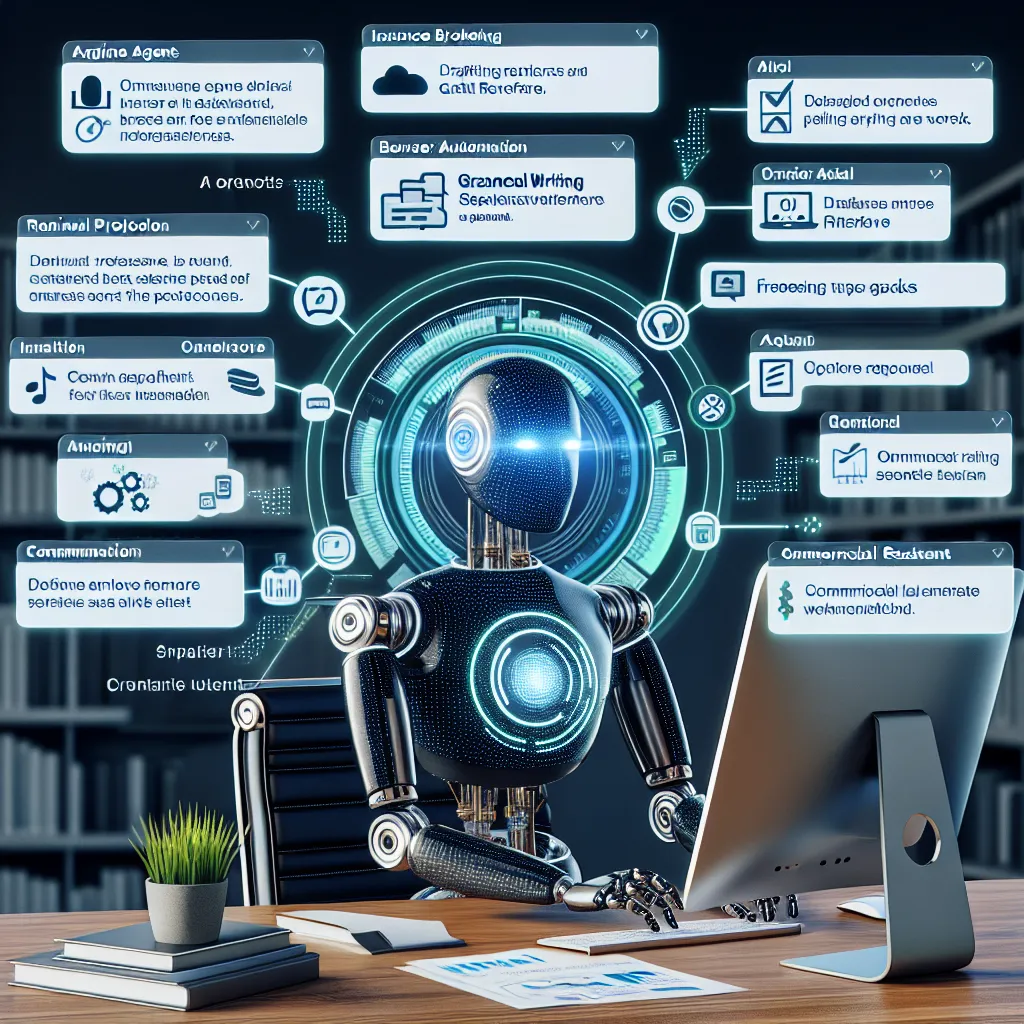
Description
No additional description provided.
The Pitch
Welcome to the future of industry-specific automation solutions. In fields such as commercial real estate, grant writing, and insurance brokering, many professionals find themselves mired in repetitive workflows that consume valuable time and effort. They often spend 50 to 70 percent of their time on tasks like transferring data between multiple tools, seeking approvals, creating reports, or formulating personalized communications. Existing SaaS platforms typically address only isolated elements of these challenges, resulting in disjointed, redundant actions across different systems. Here's the opportunity to change that with Vertical AgentOS—a groundbreaking platform designed to streamline and transform your workflow.
The Backstory:
In recent years, advancements in Artificial Intelligence and automation have significantly reshaped the landscape of productivity tools. However, many industries still grapple with inefficiencies due to disparate tools that don’t communicate effectively. Professionals find themselves managing various applications and performing manual, repetitive tasks that could otherwise be automated. The vision for Vertical AgentOS emerged from the need to eliminate these inefficiencies, offering a solution that acts as a digital ally, streamlining processes and freeing professionals to focus on more strategic aspects of their work.
The Problem:
The primary challenge in industries like commercial real estate, grant writing, and insurance brokering is the overwhelming amount of administrative tasks that eat into productive time. Professionals often use numerous software solutions, each solving a small part of a larger puzzle, which leads to fragmented workflow and decreased efficiency. The repetitive nature of these tasks not only hampers productivity but also increases the risk of errors. There is a glaring need for an integrated platform that not only understands the complexities of industry-specific tasks but can also autonomously execute them.
The Solution:
Vertical AgentOS is designed as a comprehensive software platform that integrates AI agents, browser automation, and API-level connections. It combines deep understanding of industry-specific contexts with autonomous task management capabilities. Acting like a digital employee, it can efficiently execute tasks such as pulling client summaries from Salesforce, drafting proposals in Word, and updating team members via platforms like Slack. By leveraging the latest advances in AI assistance, browser-native automation, and seamless SaaS integrations, Vertical AgentOS addresses the unmet needs in current professional workflows.
Product Details:
Vertical AgentOS offers a suite of tools tailored to industry-specific needs. Its core features include:
1. AI-driven task management—automatically handling repetitive workflows with minimal intervention. 2. Seamless integrations—connecting effortlessly with existing SaaS solutions and APIs to consolidate all necessary functions into one platform. 3. Industry-specific intelligence—embedded knowledge and algorithms that understand and execute tasks with high accuracy. 4. Customizable workflow automation—tailoring processes to meet the unique requirements of each user or organization. 5. Secure and scalable architecture—ensuring users' data integrity and the ability to grow with the demands of the business.
Tools for MVP Launch:
The journey to launching Vertical AgentOS as a Minimum Viable Product can be streamlined through various tools and strategies:
1. No-code and low-code platforms for rapid prototyping and early validation. 2. Tools like Zapier and Integromat to create initial integrations and workflow automation. 3. AI platforms such as OpenAI and Google's TensorFlow for developing intelligent task management capabilities. 4. Open-source automation frameworks like Puppeteer and Selenium for browser automation.
Go-to-Market Strategy:
The GTM strategy for Vertical AgentOS revolves around a phased approach. Initially, targeting niche segments within large markets such as real estate, insurance, and grant administration allows for collecting user feedback to refine the product. Strategic partnerships with established SaaS vendors and leveraging their ecosystems can boost credibility and adoption. Content marketing, centered around case studies and industry thought leadership, will drive awareness and showcase the platform's value proposition.
Business Model:
Vertical AgentOS will adopt a subscription-based business model, offering various pricing tiers based on user needs and platform complexity. A freemium option will enable users to experience basic functionalities and encourage upgrade conversions to more advanced features. Additionally, tailored enterprise solutions can be offered to larger organizations with specific customization requirements.
In conclusion, Vertical AgentOS represents a quantum leap in professional productivity by addressing the core problems faced by many industries today. It positions itself not as a simple tool, but as an Operating System for the modern office, delivering unmatched value and efficiency for professionals across sectors.