Revolutionizing Hiring with Skill Forecast Markets
Hiring remains a guessing game. Resumes, interviews, and referrals often fail to predict on-the-job success, leading to costly mis-hires. The solution: a decentralized skill forecast market where internal teams or trusted outsiders stake on how a candidate will perform. Those who predict correctly are rewarded once performance data comes in, creating skin in the game and surfacing overlooked talent. The trend is that prediction markets are maturing, and companies are desperate for better hiring signals in a world of remote work and AI-screened applications. Example: A startup could let a company run a private market predicting which sales candidates will hit quota; those who bet accurately gain tokens, while the company gets sharper hiring insights.
Description
No additional description provided.
The Pitch
In the complex world of recruitment, hiring decisions often feel more like educated guesses than precise calculations. Despite the reliance on resumes, interviews, and referrals, these traditional methods frequently fail to accurately predict a candidate's success, resulting in costly mis-hires that can significantly impact a company's performance and culture.
At the heart of this problem is the inability of conventional hiring practices to provide reliable insights into a candidate's future performance. Whether it's the limitations of static resumes or the subjective nature of interviews, companies are left with an incomplete picture, struggling to identify true potential in a rapidly evolving job market.
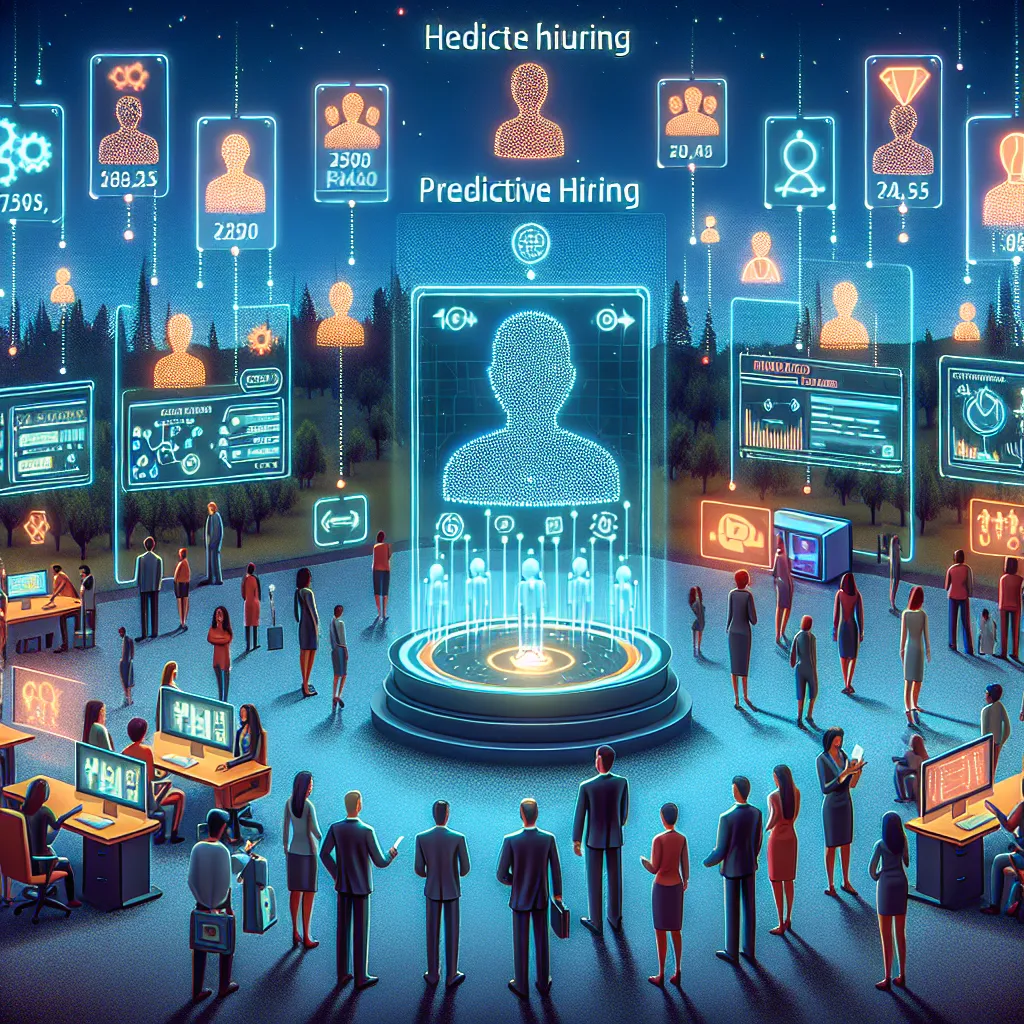
Introducing a potential solution: a decentralized skill forecast market. This innovative approach involves creating a prediction market where internal teams or trusted external stakeholders can stake a claim on how they believe a candidate will perform. Participants in this market predict outcomes related to specific job performance indicators, and those whose predictions prove accurate are rewarded with incentives once performance data is verified. This mechanism introduces a tangible incentive for accurate predictions, fostering a more dynamic and insightful evaluation process that uncovers talent that might otherwise be overlooked.
The rise of prediction markets in other sectors and the growing appetite for data-driven decision-making make this a timely solution in the recruitment industry. With the increasing prevalence of remote work and the integration of AI in screening applications, companies are desperate for more reliable hiring signals. A decentralized skill forecast market can fulfill this need by providing a collaborative platform where multiple perspectives contribute to sharper hiring insights.
To illustrate, imagine a startup offering a private market for companies to predict which sales candidates are most likely to meet or exceed quotas. Those who correctly anticipate success are rewarded with digital tokens, creating a system where accurate forecasting is both recognized and incentivized. This way, companies gain access to predictive data that can refine their hiring process, while participants are motivated to provide useful insights.
For those interested in building this platform, here are some key components and tools that could facilitate its launch as a Minimum Viable Product (MVP):
1. **Blockchain Technology**: Utilizing blockchain can ensure transparency, security, and immutability in the prediction and reward process.
2. **Smart Contracts**: Automate the reward distribution to participants based on the outcomes, ensuring fair and timely transactions without intermediaries.
3. **Data Analytics Tools**: Incorporate analytics to evaluate historical data on participant predictions and candidate performance, enhancing the accuracy and credibility of the market.
4. **Web and Mobile Development Frameworks**: Use frameworks like React or Angular for web applications and React Native or Flutter for mobile applications, allowing easy user interface development and testing.
5. **User Incentive Design**: Develop a tokenomics model that outlines how participants earn, use, and trade tokens within the platform.
The Go-To-Market (GTM) strategy could involve:
- **Targeting Early Adopters**: Focus on industries with high turnover rates or performance-driven metrics like tech startups and sales organizations.
- **Building Strategic Partnerships**: Collaborate with HR technology providers and recruitment agencies that seek more effective solutions for their clients.
- **Content Marketing and Thought Leadership**: Establish authority in prediction markets and innovative hiring practices through blogs, whitepapers, and speaking engagements.
- **Pilot Programs**: Introduce the platform through pilot tests with select companies to gather testimonials, refine features, and build case studies.
Regarding the business model, the platform could operate on a subscription basis for companies, offering tiered pricing based on the number of open positions or the breadth of the market they wish to access. Alternatively, a commission-based model could be established, where a percentage of the rewards is retained by the platform for each successfully predicted outcome.
By addressing the core challenges of traditional hiring and leveraging the power of a decentralized skill forecast market, this solution has the potential to revolutionize the recruitment landscape, offering a more nuanced and effective approach to identifying and nurturing talent.