Revolutionizing Energy Efficiency with DC-Only Buildings
Modern buildings waste enormous amounts of energy converting electricity back and forth between AC and DC even though solar panels, batteries, servers, LED lighting, and electronics all natively operate on DC. The idea is to design DC-only commercial buildings where power flows directly from solar and batteries to devices without conversion losses, complexity, or redundant infrastructure. This becomes viable now because nearly every major energy input and output in modern buildings is already DC-based, making AC a legacy intermediary. An office campus could eliminate inverters entirely, reduce losses, simplify wiring, and lower operating costs while increasing resilience during grid outages.
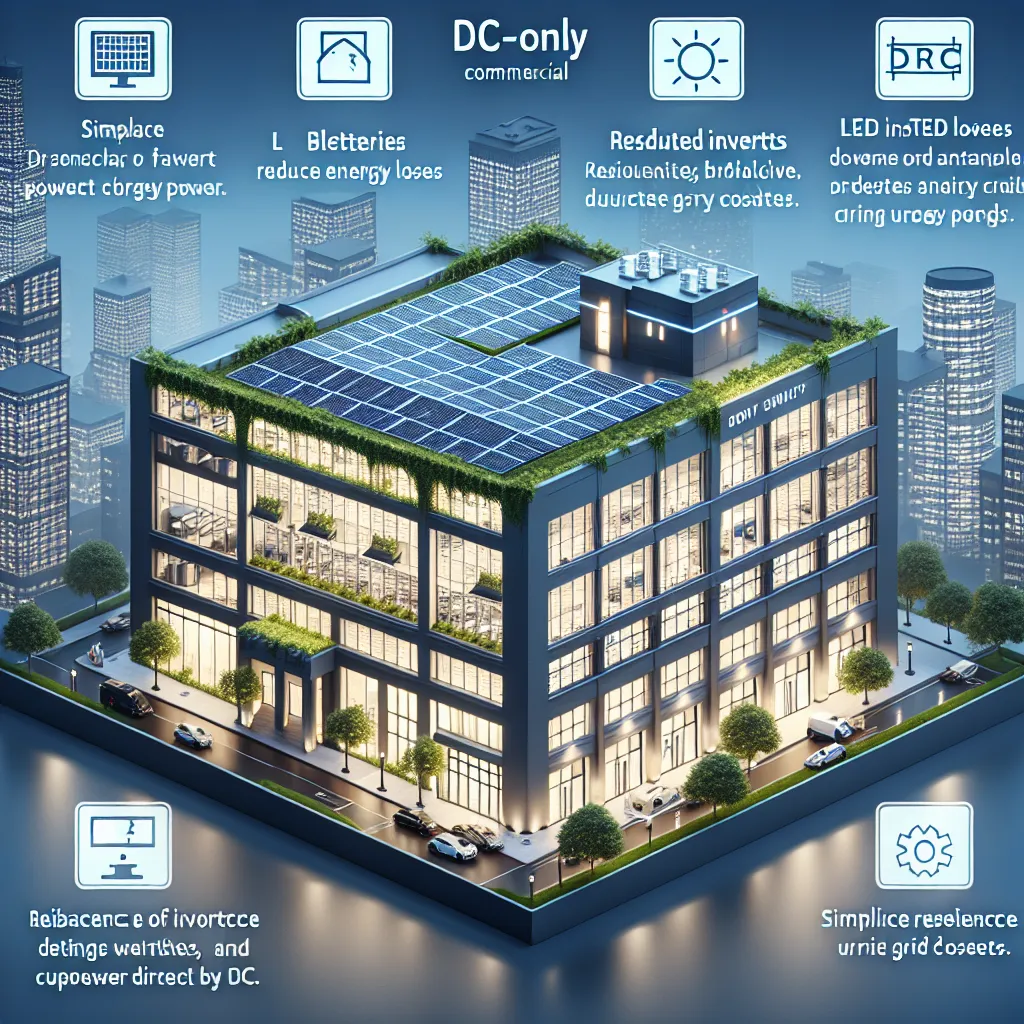
Description
No additional description provided.
The Pitch
In the realm of modern architecture and infrastructure, there is a largely unnoticed yet significant inefficiency that persists in the energy systems of commercial buildings. Despite the advancements in technology and shifts toward renewable energy sources, buildings predominantly operate on alternating current (AC) systems. This requirement leads to a substantial energy waste when converting electricity between AC and direct current (DC), the form used by many contemporary devices and systems. With solar panels, batteries, servers, LED lighting, and most electronics being natively DC-based, it's clear that AC has become an unnecessary intermediary.
Problem Statement:
Modern commercial buildings are plagued by energy inefficiencies due to the AC-DC conversion requirements. This conversion leads to energy losses, complicates infrastructure, and increases costs. Despite the ubiquity of DC-compatible technologies within office environments, the framework hasn't adapted to maximize these efficiencies. Consequently, organizations are faced with higher operating costs, complexity in electrical design, and lower resilience in the face of grid outages.
Proposed Solution:
The envisioned solution is designing and constructing DC-only commercial buildings. By eliminating the need for AC systems, buildings can directly harness energy from solar panels and batteries to power DC-equipped devices. This model drastically reduces conversion losses, simplifies electrical infrastructures, lowers operational costs, and enhances energy resilience during grid failures.
Product Details:
1. **DC-Optimized Infrastructure**: Employ a power delivery network that solely supports DC, removing all AC components such as inverters and transformers.
2. **Integrated Renewable Sources**: Use solar panels and battery systems to create a self-sufficient energy loop, reducing dependency on external grid power.
3. **DC-Powered Devices**: Equip the facility with DC-powered lighting, servers, and electronics to ensure compatibility and maximize efficiency.
4. **Smart Energy Management System**: Implement advanced energy management systems that can dynamically adjust power distribution based on usage patterns and availability.
5. **Scalable Design**: Allow for modular and scalable additions to the power infrastructure as technology and tenant needs evolve.
Tools for MVP Launch:
1. **Design Software**: Utilize Computer-Aided Design (CAD) tools like AutoCAD for drafting efficient DC-only electrical blueprints.
2. **Energy Simulation Software**: Leverage tools such as EnergyPlus to simulate energy flow, building performance, and potential savings in a DC-only configuration.
3. **Prototyping Platforms**: Use platforms like Arduino or Raspberry Pi for prototyping and testing smart energy management solutions.
4. **Partnerships with DC Equipment Manufacturers**: Collaborate with companies specializing in DC systems and devices to ensure compatibility and access to cutting-edge technology.
Go-to-Market (GTM) Strategy:
1. **Target Audience Identification**: Focus on progressive tech companies, sustainable building projects, and industries with high energy demands.
2. **Pilot Projects**: Launch initial pilot projects with strategically chosen partners to demonstrate the efficacy and benefits of DC-only systems.
3. **Educational Campaigns**: Create awareness campaigns highlighting the energy savings, cost benefits, and resilience advantages of DC infrastructures through seminars and workshops.
4. **Partnerships and Collaborations**: Engage with architects, construction firms, renewable energy providers, and regulators to facilitate market entry and regulatory alignment.
Business Model:
1. **Project-Based Contracts**: Offer customizable DC infrastructure solutions as complete packages inclusive of design, installation, and maintenance.
2. **Subscription for Energy Management**: Provide ongoing energy optimization and monitoring services through a subscription model for continuous efficiency improvements.
3. **Consulting Services**: Offer expert consultancy to help organizations transition existing facilities to DC systems, identifying potential savings and devising transition plans.
Conclusion:
Transitioning to DC-only commercial buildings is not only a novel approach but a necessary evolution in designing energy-efficient and sustainable workplace environments. By cutting out the inefficiencies of AC-DC conversions, organizations can reduce their carbon footprint, save on energy costs, and ensure operational resilience in an increasingly uncertain energy landscape.