Revolutionizing Custom Chip Production with Modular Fab
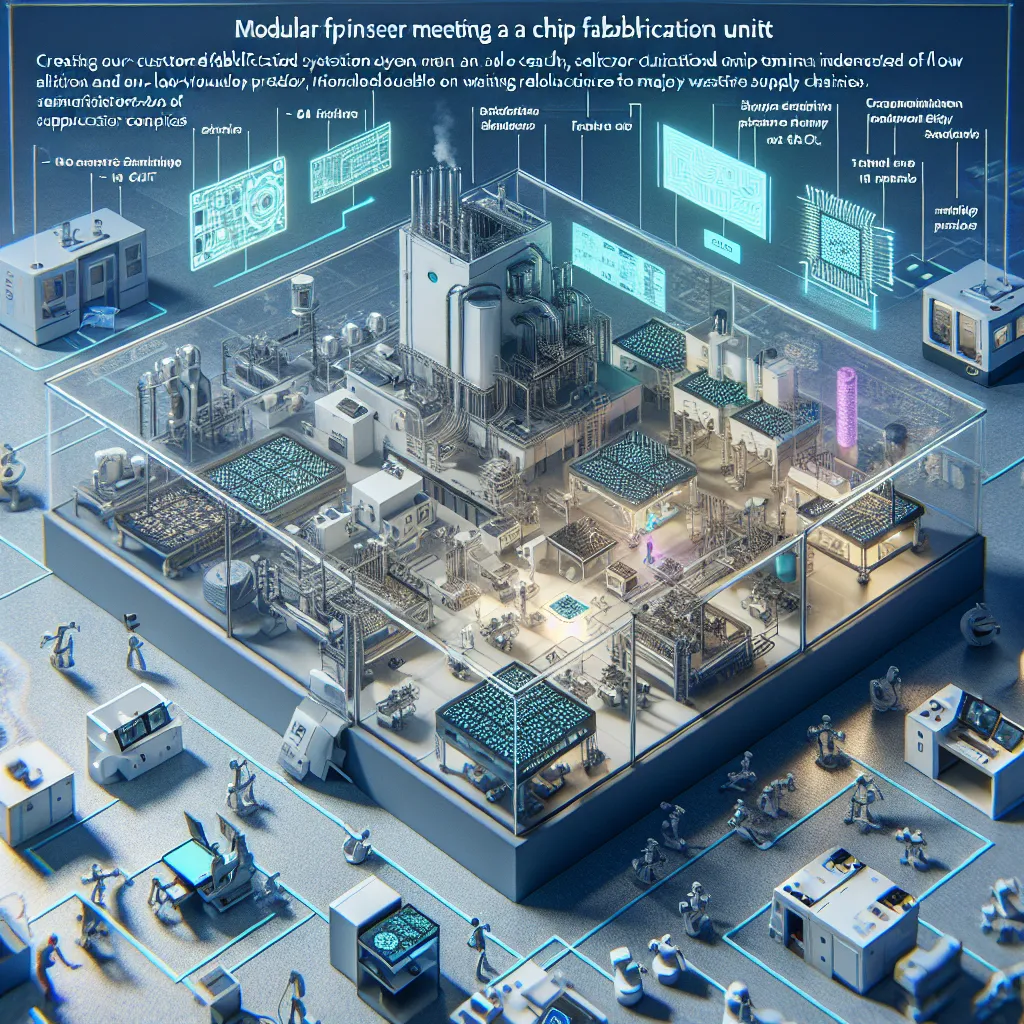
We live in a world where thousands of edge and IoT devices need custom silicon, but every custom chip today is forced into a supply chain intended for 10M-unit production. That makes innovation slow, expensive, and wasteful. The solution is a small-batch, modular fabrication system optimized for low-volume production — think “3D printer meets chip fab.” Instead of relying on wafer-scale economics, it uses maskless litho and packaging optimized for dozens or hundreds of units. Why now: robotics, wearables, sensors, and industrial systems want specialized silicon far more than smartphones need incremental performance. Example: a robotics startup prints a custom sensor ASIC in-house in four weeks and ships a prototype without waiting for TSMC at all.
Description
No additional description provided.
The Pitch
As technology advances, the demand for unique and specialized hardware grows significantly. Edge and Internet of Things (IoT) devices, robotics, wearables, sensors, and industrial systems frequently require custom silicon to meet specific requirements. However, the traditional supply chain for chip production is optimized for massive orders, such as those in the range of ten million units. This introduces challenges for innovation, making the process slow, expensive, and wasteful when only a small number of units are needed.
The Problem
For startups and innovators in industries such as robotics and IoT, the current semiconductor production paradigm poses significant obstacles. The high costs and long lead times associated with traditional chip manufacturing are daunting. Companies have to rely on existing supply chains, waiting for production at facilities like TSMC, which are optimized for high-volume runs. This means prolonged prototyping phases, delayed product launches, and additional costs due to minimal-order requirements and inventory storage. This scenario hampers responsiveness and adaptability in fast-paced tech markets where time to market is crucial.
The Solution
The breakthrough lies in creating a small-batch, modular fabrication system designed specifically for low-volume chip production. Think of it as the intersection of a 3D printer and a chip fabrication plant. By moving away from the economics of wafer-scale manufacturing, this system employs maskless lithography and customized packaging solutions. These are optimized for producing a few dozen to a few hundred units, thereby supporting rapid prototyping and innovation at a fraction of the cost and time.
Product Details
The proposed system focuses on several key features:
- **Maskless Lithography**: Eliminates the need for expensive photomasks, enabling faster design changes and iterations. - **Modular Fabrication**: Offers flexibility by allowing users to customize and reconfigure the production setup quickly for different types of chips. - **Scalable Production**: While initially designed for dozens or hundreds of units, the system can be scaled to meet slightly larger demands efficiently. - **In-House Production**: Empowers companies to prototype and produce custom chips without reliance on external foundries.
Tools for Launch as an MVP
For launching a Minimum Viable Product (MVP), several resources and tools can be utilized:
- **CAD Software**: Tools like Cadence or Synopsys for chip design. - **3D Printing Tools**: For creating prototypes of packaging and components. - **Open-Source Software**: Leverage open-source lithography tools to accelerate development. - **Hardware Kits**: Pre-assembled modules to rapidly test different configurations. - **Simulation Tools**: Utilize cloud-based platforms to simulate chip performance before fabrication.
Go-To-Market (GTM) Strategy
The strategy to introduce this innovation focuses on targeting startups and companies in markets most affected by the limitations of traditional semiconductor manufacturing:
1. **Market Education**: Create awareness through webinars, workshops, and white papers that highlight the benefits and cost savings of small-batch production. 2. **Partnerships**: Collaborate with robotics and IoT accelerators to integrate the system into their startup programs. 3. **Pilot Programs**: Offer limited-time pilot programs to select companies for hands-on use of the system. 4. **Digital Marketing**: Utilize targeted online campaigns and social media to reach tech enthusiasts and decision-makers. 5. **Trade Shows and Conferences**: Demonstrate the technology at industry events to capture interest from potential clients and partners.
Business Model
The business model can include multiple revenue streams to ensure sustainability and growth:
- **Direct Sales**: Selling the fabrication units to companies. - **Subscription-Based Access**: Offering a subscription model for software and ongoing support. - **Training and Support Services**: Providing training programs and technical support for clients. - **Partnership and Licensing**: Licensing the technology to larger manufacturers interested in diversifying their offerings.
Conclusion
In an increasingly connected world, the need for specialized silicon devices is more prominent than ever before. This modular, low-volume fabrication system represents a transformative opportunity for innovation. By reducing costs and accelerating time-to-market, it empowers companies to quickly adapt, compete, and flourish in the digital age. Through strategic positioning, targeted marketing, and a robust business model, this solution is poised to redefine how custom silicon is produced, paving the way for a new wave of technological advancements.