Revolutionizing Age-Inclusive Financial Data Solutions
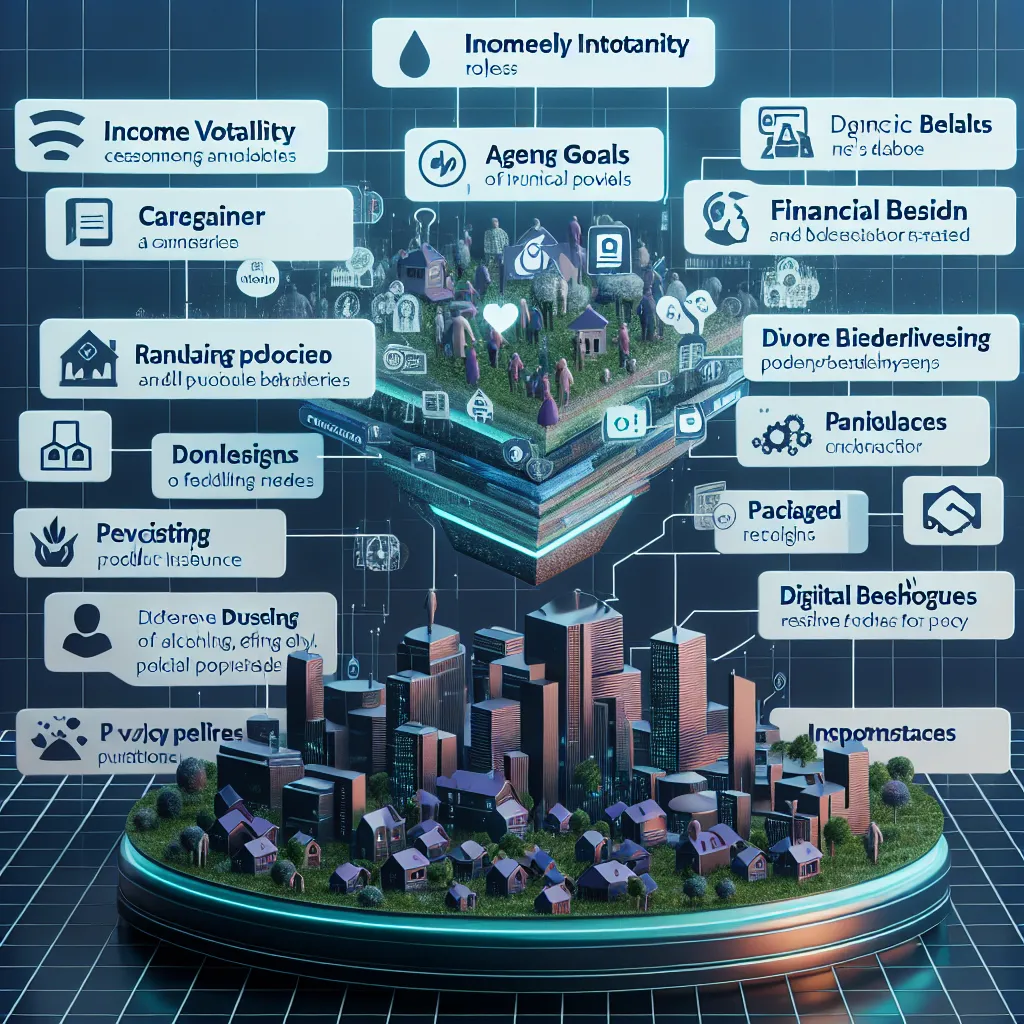
Financial systems today are built on outdated or incomplete data that rarely accounts for aging populations, especially in underserved regions. There’s a lack of age-disaggregated data that’s both ethically sourced and actionable. This is a foundational challenge: “Granular, longitudinal data can help redesign more inclusive systems... but access is uneven.” A new startup could act as a data layer for the longevity economy, collecting and standardizing information on the economic lives of older adults—especially those outside traditional systems. This could include income volatility, caregiving roles, financial goals, and digital behaviors. The platform would anonymize and package this data for use by banks, insurers, and public planners looking to build age-friendly products or policies. For example, an insurer seeking to build micro-insurance for rural seniors could use the data to set pricing, product design, and trust-building strategies. This startup would power better tools by first fixing the inputs.
Description
No additional description provided.
The Pitch
In today’s rapidly aging world, financial systems are failing to adapt to the unique needs of older populations. Traditional data sources do not adequately capture the economic realities and behaviors of aging individuals, particularly those in underserved regions. With the global aging demographic expanding, there is an increasing need for more tailored financial products and policies. However, the lack of granular, longitudinal data presents a significant bottleneck. Without age-disaggregated, ethically sourced, and actionable data, financial institutions and public planners struggle to design inclusive systems that address the challenges faced by older adults.
**The Problem**
The absence of comprehensive data on the economic lives of older adults—a group often operating outside traditional banking and insurance systems—creates gaps in product development and policy planning. This inadequacy manifests in multiple dimensions: unpredictable income patterns, informal caregiving roles, evolving financial goals, and nascent digital behaviors. Without these insights, institutions miss opportunities to innovate and empower aging populations effectively.
**The Solution**
A startup could emerge as a crucial data layer for the longevity economy, focusing on collecting, standardizing, and disseminating data concerning older adults. By providing a detailed view of the financial lives of seniors, especially in rural and underserved areas, this platform would empower stakeholders to develop age-friendly products and policies. The solution involves anonymizing data to protect individual privacy while packaging it in a way that is easily interpretable and actionable for banks, insurers, and policymakers.
**Product Details**
1. **Data Collection**: Employ a combination of surveys, partnerships with NGOs and local governments, and digital monitoring tools to gather data on income volatility, caregiving roles, financial aspirations, and technology usage among older adults.
2. **Data Standardization and Anonymization**: Implement robust algorithms and data science techniques to clean, anonymize, and standardize data, ensuring compliance with ethical standards and privacy laws.
3. **Distribution Platform**: Create a user-friendly interface where clients can access and customize data sets. The platform would offer insights through dashboards, customizable reports, and predictive analytics tools.
4. **Use Cases**: - **Insurance**: Assist insurers in developing micro-insurance products by providing data on risk profiles and financial behavior. - **Banking**: Enable banks to construct savings and credit products tailored to income patterns and financial goals of older adults. - **Public Policy**: Guide policymakers in designing social programs and improvements in public services for seniors.
**Tools for Launching an MVP**
To bring this concept to life, consider using the following tools and platforms:
- **Data Collection**: Leverage SurveyMonkey for survey execution and partnerships with data collection apps like mSurvey. - **Data Platform**: Use a combination of AWS or Google Cloud for storage and processing. Leverage platforms like Tableau for data visualization. - **Anonymization**: Implement privacy-preserving technologies such as differential privacy or Tonic.ai for de-identification. - **Analytics**: Use Python and R for building predictive models and generating insights.
**Go-To-Market (GTM) Strategy**
1. **Identify Key Segments**: Focus on banks, insurance companies, NGOs, and government agencies. Approach organizations with a vested interest in the longevity economy.
2. **Partnership Strategy**: Establish partnerships with relevant NGOs, advocacy groups, and technology providers to both source and distribute data.
3. **Pilot Programs**: Initiate pilot programs with a select group of insurers and banks to demonstrate the value of the data and fine-tune the product.
4. **Thought Leadership**: Position the startup as a thought leader by publishing white papers and hosting webinars on improving the longevity economy.
5. **Industry Conferences**: Participate in or host industry gatherings to network and position the platform as a necessary tool in the longevity data space.
**Business Model**
- **Data Subscription**: Implement a subscription-based model where clients pay for access to data and analytics. - **Tiered Pricing**: Offer different tiers based on the volume and depth of data required: - Basic: General insights and trends. - Pro: Customized datasets and advanced analytics. - Enterprise: Full access to platform capabilities and consulting services. - **Consulting and Insights**: Provide additional consulting services to help clients interpret data and design their strategies.
By tackling the foundational issue of inadequate data, this startup could change the landscape for aging populations, providing a win-win solution for both financial institutions and older adults.