Reverse Shark Tank: Tech Meets Brand Innovation
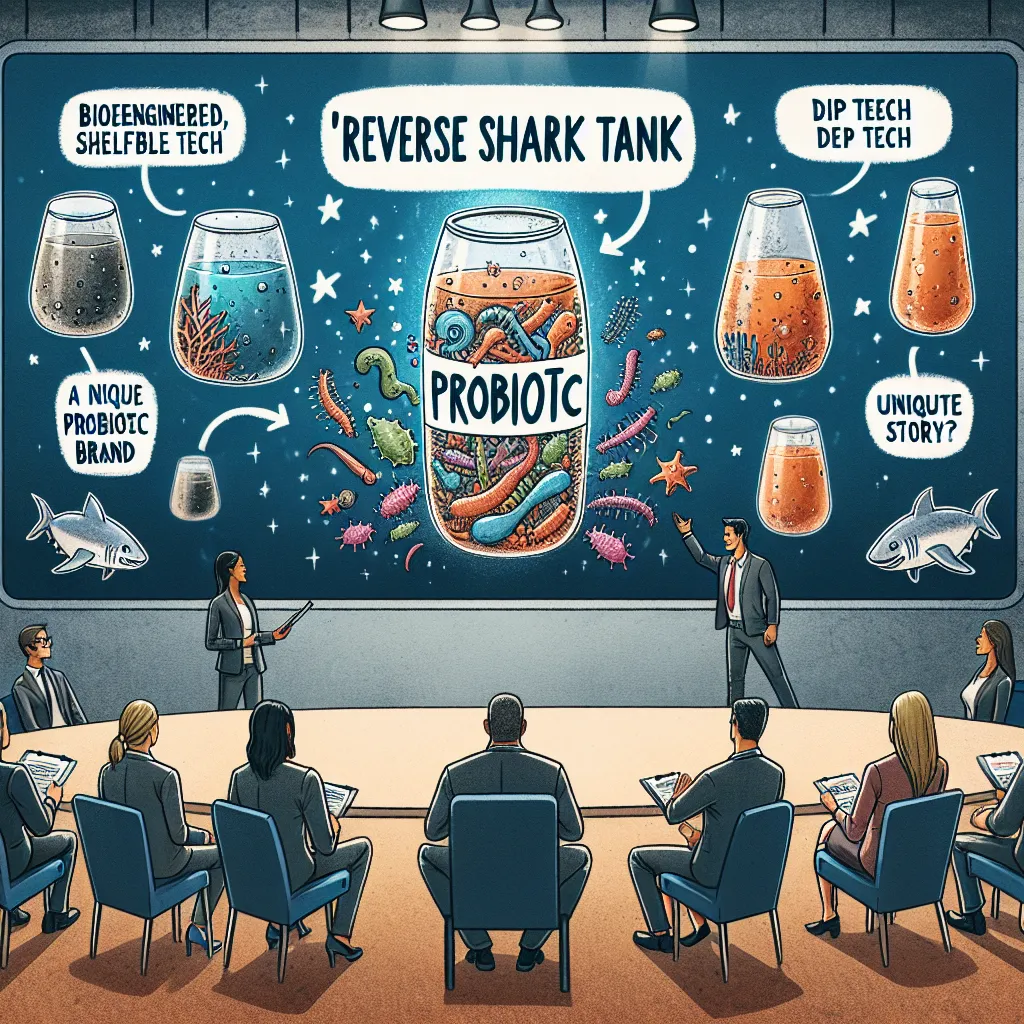
Infra startups often have brilliant tech but no front-end story or use case. At the same time, brand-led founders lack the deep tech to make their dream products possible. A “Reverse Shark Tank” flips the model—brand founders pitch ideas, and infra teams compete to co-build them, sharing equity and bringing differentiated products to market faster. “Differentiation today often comes from the combination of deep tech and a unique story.” A solo founder might pitch a probiotic soda brand that needs bioengineered, shelf-stable microbes. A synthetic bio startup picks up the challenge, co-develops the tech, and helps build a brand with a story no one else can copy.
Description
No additional description provided.
The Pitch
In today's fast-paced market landscape, innovation stands as the pillar of competitive differentiation. However, an issue prevails in that infrastructure-focused startups, despite their brilliant technological capabilities, often struggle to find a compelling narrative or use case for their solutions. On the other hand, brand-driven founders possess powerful visions but lack the technical depth to manifest their innovative products. This divide creates a significant opportunity for a new collaborative approach called a Reverse Shark Tank.
**The Problem**
Tech-oriented startup founders excel at developing cutting-edge technologies and complex solutions but often lack the storytelling necessary to connect these innovations with market demand. Their solutions risk becoming underutilized without a clear, relatable application.
Conversely, brand-focused founders possess strong storytelling abilities and market insights but face challenges in realizing their innovative ideas due to a lack of technical expertise. They might envision groundbreaking products but struggle to find the technical partners who can turn these visions into reality.
**The Solution**
The Reverse Shark Tank model creates an ecosystem where brand founders pitch innovative ideas and product concepts. Infrastructure (infra) tech teams then compete to bring these concepts to life as co-developers, sharing equity in these new ventures. This collaborative approach combines the strengths of both parties, leveraging deep technological innovation with compelling brand stories to accelerate the launch of differentiated products.
**Product Details**
An example of this innovative model in action could involve a solo founder with an idea for a new probiotic soda brand. The concept hinges on the need for bioengineered, shelf-stable microbes—something beyond the founder's expertise. A synthetic biology startup steps up to the challenge, applying its technological prowess to co-develop and produce the necessary microbes, while simultaneously helping to craft a brand story that is not only unique but also robust against emulation.
This collaborative structure fosters a business environment where differentiation is born from the creative fusion of deep tech and a compelling brand narrative.
**Tools for Launching the MVP**
1. **Collaborative Platforms**: Utilize project management and collaborative tools like Asana, Trello, or Jira to manage tasks and track progress.
2. **Prototyping Tools**: Leverage prototyping software such as Figma or InVision to quickly develop and iterate on brand visuals and product designs.
3. **Technical Development**: Use robust development frameworks and cloud platforms like AWS, Google Cloud, or Azure to ensure the technical backend supports rapid scaling.
4. **Biotech Specific Tools**: For synthetic biology, platforms like Benchling can streamline research and development workflows.
**Go-to-Market Strategy**
1. **Identify Niche Markets**: Conduct market research to identify niche markets that would benefit from the innovative product and tailor the branding and marketing efforts accordingly.
2. **Partnerships**: Form strategic partnerships with distributors and retailers to ensure broad market reach.
3. **Story-Driven Marketing**: Utilize storytelling to create an emotional connection with customers, using channels such as social media, content marketing, and influencer partnerships to amplify the brand message.
4. **Feedback Loops**: Implement mechanisms for continuous customer feedback to iterate and improve the product quickly.
**Business Model**
The suggested business model involves co-development agreements where both the brand founder and the infra tech partner share ownership and equity within the new venture. Revenue is generated through product sales and strategic partnerships, with profits divided according to agreed-upon equity. This synergy aligns incentives, ensuring both parties are invested in the venture's success.
**Conclusion**
By uniting deep tech capabilities with brand-driven innovation, the Reverse Shark Tank model addresses significant gaps in today's startup ecosystem. This collaboration not only accelerates product development but also enriches the market with truly unique offerings. The convergence of these elements sets the stage for startups to deliver unparalleled value and differentiated market positions.