Restoring Touch: Enhancing Prosthetics with Light
Modern robotic limbs move well but “feel” nothing — users must visually check every motion, slowing adoption and creating mental load. With optical neural stimulation, a prosthetic hand can translate pressure, temperature, and grip data into learned cortical patterns that restore a sense of touch. A Prosthetic Feedback Layer sits between any prosthetic and the brain, encoding sensory information into light sequences placed over the corresponding cortical map. Why now? The Northwestern team specifically demonstrated that brains can learn to interpret structured light as meaningful sensory feedback, hinting at a future where prosthetics regain natural embodiment. Example: a user picks up a paper cup and knows it’s crushable without looking because the prosthetic sends a “softness” pattern the brain has been trained to recognize.
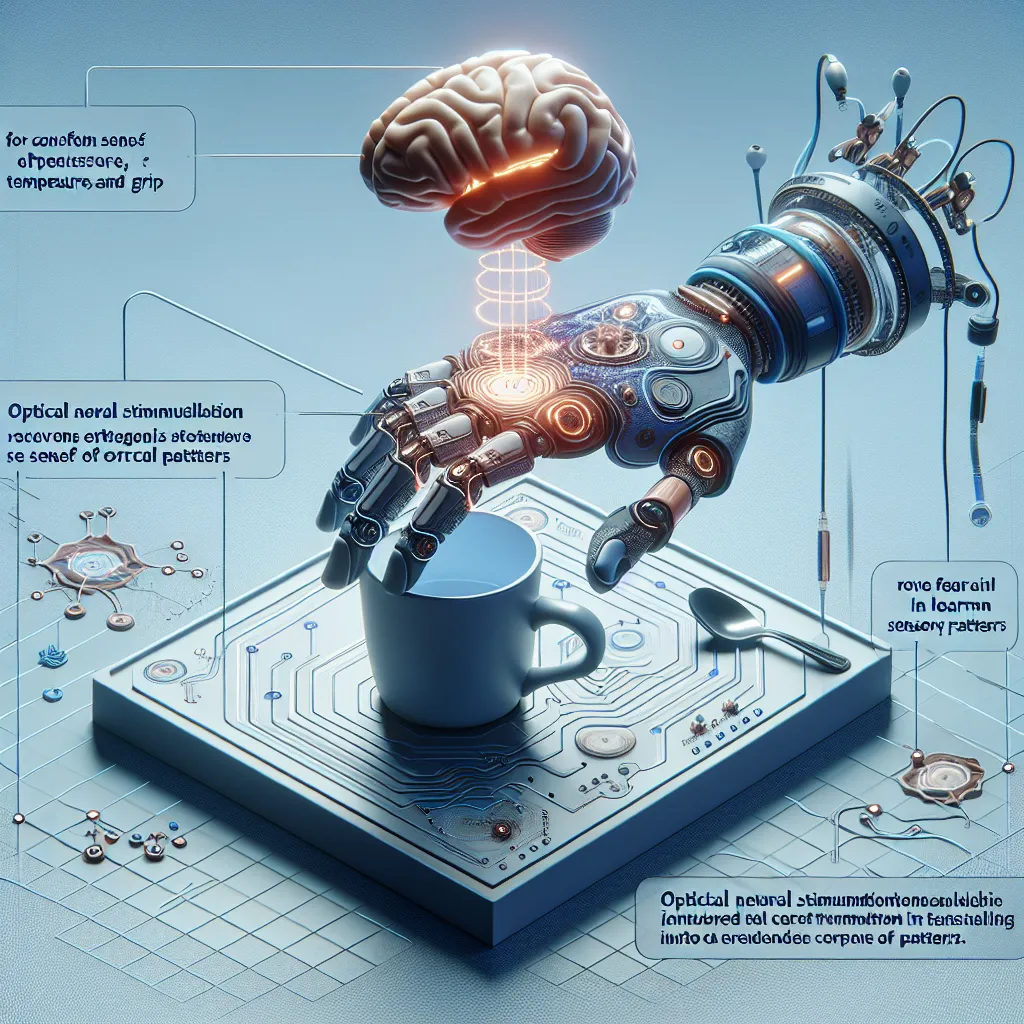
Description
No additional description provided.
The Pitch
In recent years, advancements in prosthetic technology have greatly improved the mechanical capabilities of artificial limbs, allowing for more natural and versatile movement. However, a crucial component remains largely absent: the sense of touch. Current prosthetic users rely heavily on visual confirmation to perform tasks, which not only slows down their actions but also increases cognitive load and can lead to user fatigue and frustration.
Backstory and Problem
Existing prosthetics excel in replicating movement but fall short in providing the user with feedback about the environment they're interacting with. Without the ability to feel, the user must constantly monitor the prosthetic's actions visually. This creates significant mental strain, especially when performing complex or nuanced tasks. For example, something as simple as picking up a paper cup requires the user to watch carefully to avoid crushing the object or losing grip.
Solution
The revolutionary concept of integrating optical neural stimulation into prosthetic limbs presents a breakthrough solution to this problem. By utilizing structured light patterns on the brain's sensory cortex, prosthetic users can begin to interpret and react to pressure, temperature, and grip sensations through learned cortical responses. This innovative approach, demonstrated by the Northwestern team, suggests a future where prosthetics can offer a true sense of touch, enhancing the user's overall experience and improving their quality of life.
Product Details
The proposed product, known as the Prosthetic Feedback Layer (PFL), serves as an intermediary between any existing prosthetic device and the user’s brain. It encodes sensory data into specific light sequences that correspond to various sensations, like softness or temperature, allowing the brain to develop an understanding and response to these stimulations. This non-invasive system is adaptable to different prosthetic devices, making it a versatile addition to the prosthetics market.
Tools for MVP Launch
To facilitate the development of a Minimum Viable Product (MVP), the following steps and tools can be employed:
1. Collaboration with Neuroscience Research Labs: Partner with teams skilled in optical neural stimulation and brain mapping to refine and test the technology. 2. Hardware Development: Utilize microprocessor and sensor technology firms to develop the interfaces required for sensory data collection and transmission. 3. Prototyping with 3D Printing: Employ 3D printing for rapid iteration and customization of prosthetic feedback components. 4. Software Development: Create an accompanying application for users to calibrate and customize sensory feedback patterns according to their preferences.
Go-To-Market Strategy
1. Target Audience: Begin with direct outreach to prosthetic clinics and rehabilitation centers, focusing on early adopters and those in the high-tech prosthetics market. 2. Partnerships: Collaborate with prosthetics manufacturers to integrate the PFL into their existing offerings. 3. Awareness Campaign: Leverage digital marketing and industry conferences to highlight the benefits of sensory feedback integration, ultimately aiming to build a community around this transformative technology. 4. Pilot Programs: Launch pilot programs with selected clinics to gather feedback and iteratively improve the product before a wider release.
Business Model
The business model will focus on a B2B2C approach, engaging prosthetic manufacturers and healthcare providers as primary customers while ultimately serving end-users. Revenue streams will include licensing agreements, direct sales to prosthetic producers, and potential subscription models for ongoing software updates and sensory pattern libraries. Additionally, grants and partnerships with research institutions can further fund development and validation.
This integrated approach promises not only to revolutionize the user experience for prosthetic wearers but also to pave the way for further innovations in human-machine interfaces, ultimately bridging the gap between mechanical and sensory functionalities.