Remote Robotic Stroke Treatment: Global Lifesaving Innovation
Every minute during a stroke kills brain cells, yet most hospitals don’t have a neurointerventionist on call. The result: patients are airlifted across states, losing precious time before a clot can be removed. The solution is a robotic system that lets top specialists perform thrombectomies remotely, guiding catheters through brain arteries from thousands of miles away. Local clinicians handle the prep; the expert takes over remotely through a secure, low-latency console with haptic feedback and AI-assisted imaging. This is newly possible because of real breakthroughs—like the Dundee team’s first-ever transatlantic robotic thrombectomy, which showed near-zero lag across the ocean. The infrastructure, bandwidth, and robotics precision now exist to scale this globally. Imagine a rural ER in Idaho connecting instantly to a London-based specialist who clears a clot in real time, turning what would’ve been paralysis into a full recovery.
Description
No additional description provided.
The Pitch
In the critical moments of a stroke, every second counts. The faster a stroke is treated, the better the chance for recovery. Unfortunately, many hospitals, particularly in rural or underserved areas, lack the specialized expertise required for procedures like thrombectomies, where blood clots are removed from brain arteries. This scarcity often results in patients being transported long distances, losing valuable time and decreasing their chances of a full recovery.
The challenge is to provide immediate access to expert care, regardless of location, and to ensure that life-saving procedures can be performed as soon as possible. Traditional telemedicine approaches fall short when it comes to complex procedures requiring specialized skills and precision in real-time.
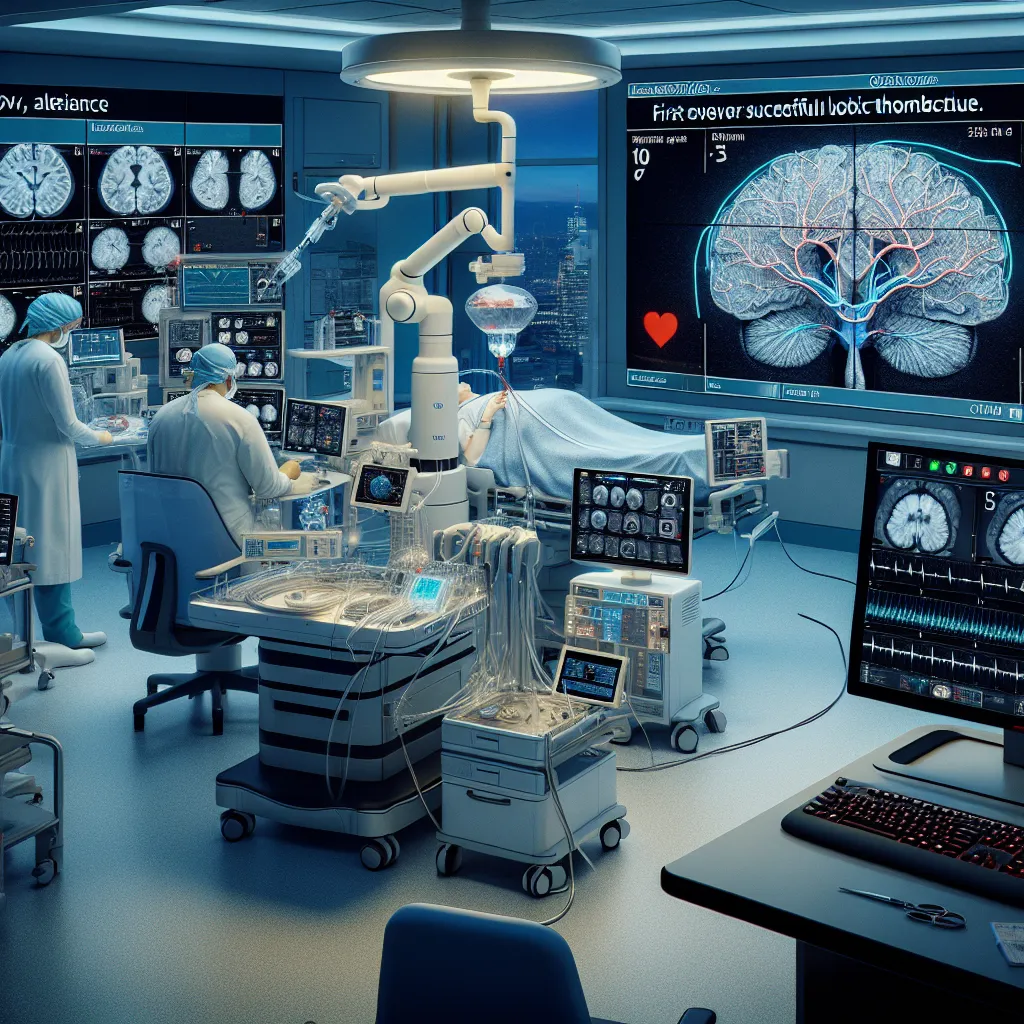
Enter a revolutionary solution: a robotic thrombectomy system that allows neurointerventionists to perform procedures remotely. This system combines advanced robotics, telecommunication, and imaging technologies to enable specialists to guide catheters through brain arteries from afar. Using a secure console equipped with haptic feedback and AI-assisted imaging tools, specialists can perform intricate procedures remotely while local clinicians assist with patient preparation.
This innovation builds on groundbreaking achievements, like the first transatlantic robotic thrombectomy, which demonstrated minimal latency and high precision even over long distances. The integration of cutting-edge robotics, improved global communication infrastructure, and high-speed internet connectivity has made it feasible to expand the reach of specialized medical care worldwide.
For potential builders of this system, the following elements are crucial:
Backstory: Understanding the gap in immediate stroke care and the limitations of current telemedicine for invasive procedures. Recognizing the successful use-case scenarios and technological readiness offers a strong foundation for development.
Problem: Lack of immediate access to neurointerventionists, especially in remote areas, putting stroke patients at risk of severe complications due to delayed treatment.
Solution: A remote robotic intervention system that leverages new technology to virtually eliminate geographical barriers, providing instant access to expert care.
Product Details: The system comprises a robotic catheterization unit controlled remotely, requiring minimal setup by local clinicians. It includes a console with haptic feedback to give the remote specialist physical cues and AI-enhanced imaging for precise guidance.
Tools for Launching an MVP: - Advanced robotic systems with capabilities for remote operation. - High-speed, secure communication networks to ensure seamless operation between sites. - AI algorithms for enhanced imaging and operational support. - Partnerships with healthcare providers and technology firms to test and validate the system.
Go-To-Market Strategy: 1. Collaborate with leading hospitals and telemedicine providers to pilot the system in locations lacking neurointerventionists. 2. Develop licensing agreements with healthcare organizations globally. 3. Conduct demonstrations and provide training to establish trust with medical professionals and regulatory bodies.
Business Model: Adopt a subscription model for hospitals to access the robotic system, including hardware, software, and continuous updates. Additional revenue can be generated through training, maintenance services, and data insights to optimize procedures.
This approach aims to democratize access to critical stroke care, turning time lost into time saved, and lives changed. By bridging the skills gap with technology, every hospital can have a leading neurointerventionist ready at a moment's notice, regardless of physical location.