Remix Registry: Tracking Authorship in AI Creations
As generative AI remixes content endlessly, the concept of “original work” is collapsing—making authorship hard to trace and reward. This creates friction for creators and confusion for consumers. A “Remix Registry” solves this by tracking the lineage of every AI-generated work, showing which inputs were reused, remixed, or transformed—and crediting contributors automatically. With creativity shifting from creation to curation and recombination, attribution becomes the new IP. For example, a viral image made by an AI art tool reveals its roots: three artists’ styles, one public dataset, and a remix by a designer—each credited and micro-compensated transparently.
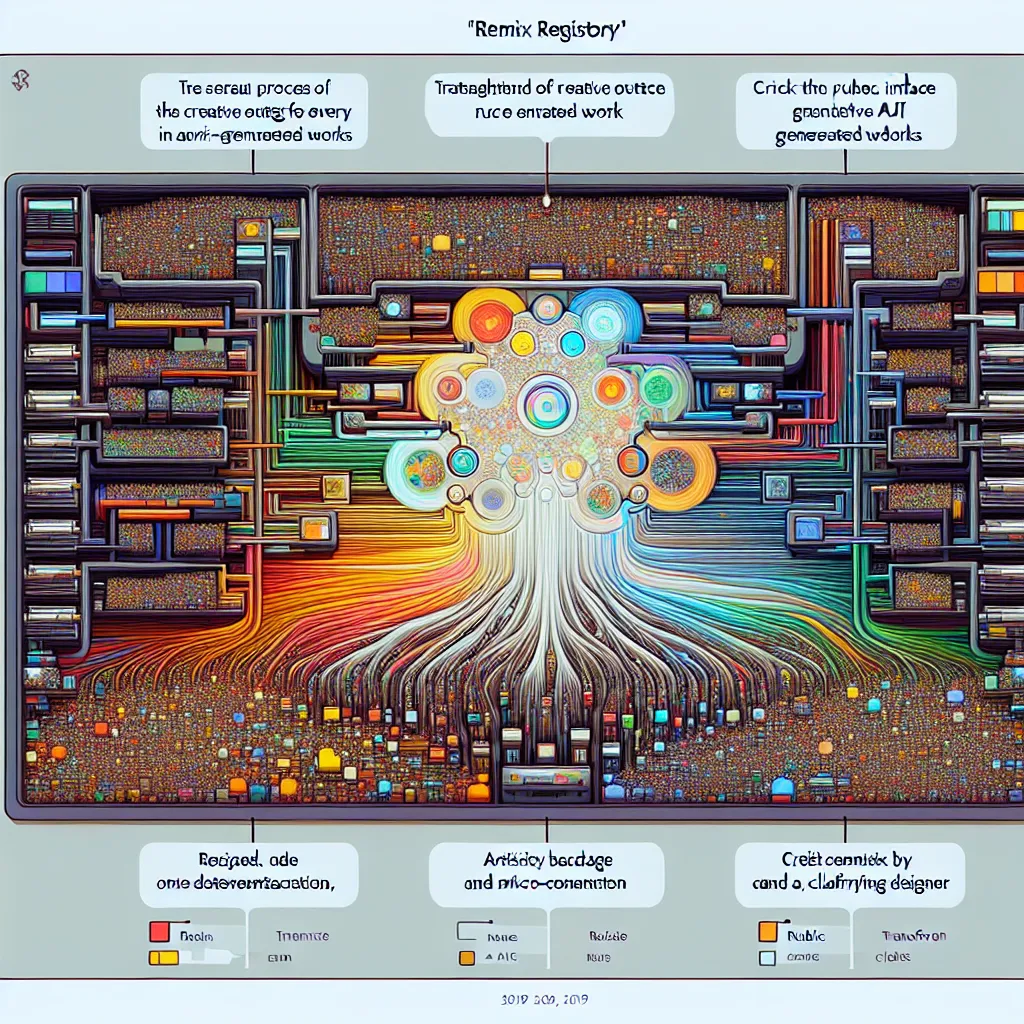
Description
No additional description provided.
The Pitch
The evolution of generative AI has fundamentally altered the landscape of creative work. As these powerful tools remix and transform content at an unprecedented rate, the traditional concept of original work is increasingly elusive. This has led to significant challenges in tracing authorship and ensuring proper reward and recognition for creators. The need for a solution has become apparent, both for creators seeking fair attribution and compensation and for consumers desiring clarity on the origin of creative works.
Backstory
With the proliferation of AI-generated content in art, music, and literature, the creative process has evolved from pure creation to a complex interplay of curation and recombination. In this new environment, attribution becomes the cornerstone of intellectual property. There is a growing call for a system that can effectively track and manage the lineage of AI-generated works, from the initial input sources to the final output. This demand for transparency and fairness has laid the groundwork for innovative solutions.
The Problem
The core issue lies in the difficulty of tracing the origins of AI-generated content. When an AI produces an artwork, for instance, it might draw from a multitude of sources—various artists' styles, public datasets, and unique modifications by designers. This fragmentation makes it challenging to credit those who have contributed to the final piece. Without a robust system for attribution, creators risk losing fair compensation and recognition, while consumers face confusion over the authenticity and originality of the content they engage with.
The Solution: Remix Registry
The Remix Registry is envisioned as a transformative platform to address these challenges. By meticulously tracking the lineage of every AI-generated work, it reveals the inputs that were reused, remixed, or transformed. This system not only facilitates automatic crediting but also introduces transparent micro-compensation mechanisms for all contributors involved in the creative process. The Remix Registry thus emerges as a revolutionary approach to redefine intellectual property in the age of digital remix culture.
Product Details
The Remix Registry comprises several key components:
1. Lineage Tracking System: At its heart, the platform employs sophisticated algorithms to identify and log each element used in AI-generated works, tracing their origins back to original creators and datasets.
2. Attribution Framework: By employing blockchain technology, the registry ensures immutable and transparent storage of creator contributions, allowing for real-time updates and verifiable authenticity.
3. Micro-compensation Mechanism: Through smart contracts, contributors are automatically rewarded with micro-payments each time their works are reused or transformed, encouraging continuous creativity and innovation.
4. User-Friendly Interface: A seamless, intuitive platform enables creators and consumers to explore the creative genealogy of works, enhancing appreciation and understanding of the creative process.
Tools for Launching as an MVP
1. Blockchain Platforms: Utilize platforms like Ethereum to implement secure and transparent tracking of contributions and compensation.
2. AI Analysis Tools: Employ machine learning algorithms capable of deconstructing AI-generated content and tracing its components.
3. Web Development Frameworks: Leverage frameworks like React or Angular to build a user-friendly interface.
4. Payment Gateways: Integrate payment solutions for facilitating micro-transactions to compensate contributors.
Go-To-Market Strategy
1. Community Engagement: Collaborate with artist communities, AI developers, and creative organizations to gather insights and foster support.
2. Educational Campaigns: Launch initiatives that educate both creators and consumers about the benefits of transparent attribution and reward systems.
3. Strategic Partnerships: Partner with AI platforms, content distribution networks, and blockchain firms to expand the reach and capabilities of the Remix Registry.
4. Trial and Adoption: Offer an initial free trial period to encourage adoption and feedback from early users, refining the platform based on their experiences.
Business Model
1. Subscription Services: Offer tiered subscription plans for creators and organizations, providing access to advanced features and analytics.
2. Transaction Fees: Implement a small fee on micro-transactions to generate revenue while ensuring creators receive fair compensation.
3. Licensing Opportunities: Create opportunities for licensing the technology to other AI platforms and creative industries.
4. Data Services: Offer anonymized data analytics and insights into creative trends and patterns as a premium service.
Conclusion
The Remix Registry holds the potential to revolutionize how we perceive and manage authorship in the digital age. By creating an ecosystem of transparent attribution and equitable compensation, it empowers creators and educates consumers, paving the way for a more innovative and fair creative landscape. As the Remix Registry takes shape, its impact on redefining intellectual property and fostering creativity will be profound.