Recycling Legacy Chips to Reduce Tech Waste
Semiconductor waste is becoming one of the biggest unspoken technology problems — we recycle lithium, batteries, phones, and solar panels, but not silicon. Meanwhile, older nodes (14-nm, 28-nm) are perfectly capable for controllers, EV systems, industrial sensors, appliances, and more. The problem is there’s no system for re-qualifying or re-deploying chips at scale. The solution is a platform that buys, certifies, repackages, and resells legacy chips with warranties and standardization — or even reuses partially etched wafers. Why now: the shift to AI workloads has created massive inventory mismatches and supply gluts in certain nodes. Example: the automotive industry finds reliable chip supply from recycled inventory instead of waiting for new fabs — and saves billions while reducing global waste.
Description
No additional description provided.
The Pitch
In recent years, the technology industry has witnessed incredible advancements, particularly in the semiconductor space. However, alongside these innovations, an unspoken issue is steadily growing: semiconductor waste. While recycling efforts have been made for lithium, batteries, phones, and solar panels, silicon recycling remains largely unaddressed. This is despite the fact that older semiconductor nodes, such as 14-nm and 28-nm, are still highly functional and can be effectively deployed in various applications like controllers, electric vehicle systems, industrial sensors, and household appliances.
### The Problem
The primary challenge we are facing is the lack of a standardized system for re-qualifying or redeploying chips at scale. Without an organized approach to managing the surplus inventory of these older nodes, valuable resources are being wasted. The recent shift towards AI workloads has exacerbated this issue, leading to significant inventory mismatches and supply gluts in certain nodes.
### The Solution
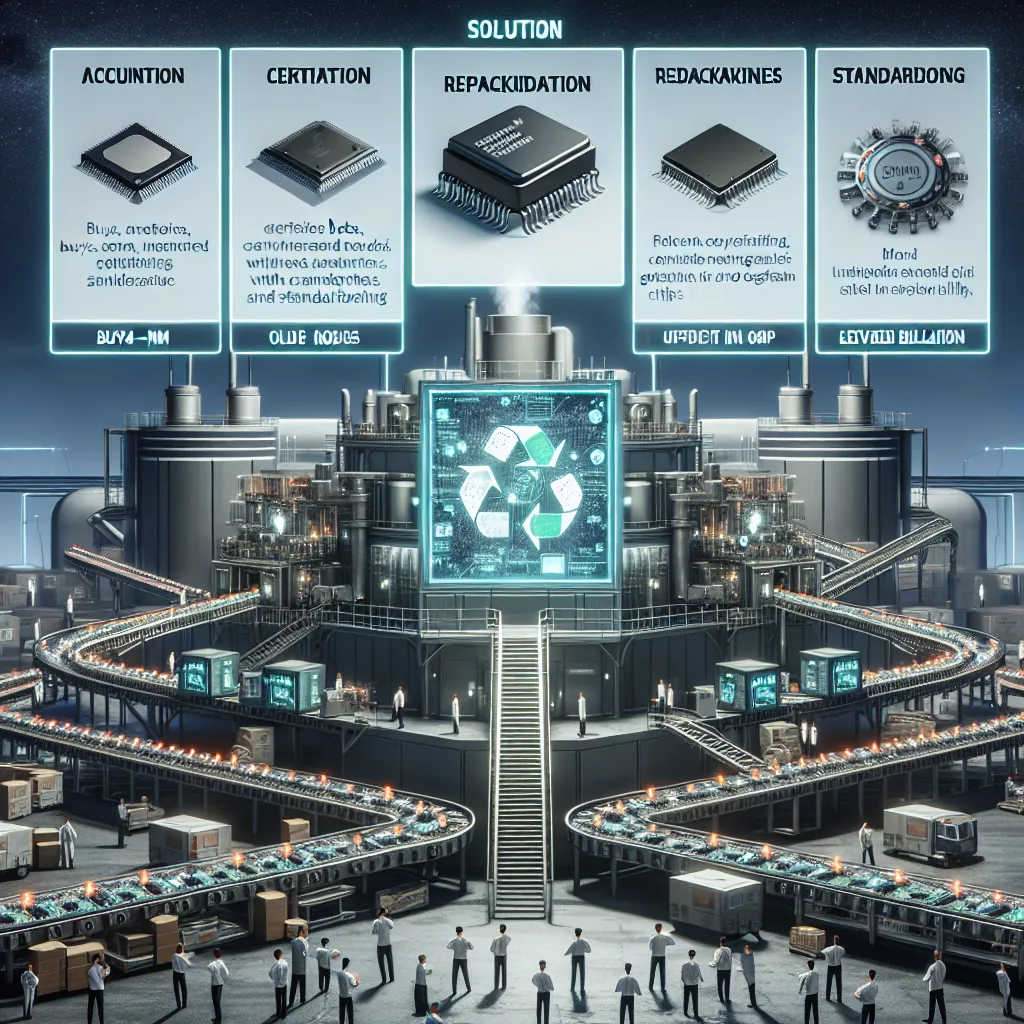
To address this challenge, we propose the development of a platform dedicated to managing the lifecycle of legacy chips. This platform will focus on purchasing, certifying, repackaging, and reselling older semiconductor chips, while also providing warranties and ensuring standardization. Additionally, the platform could explore the reuse of partially etched wafers, maximizing resource utilization.
### Product Details
- **Chip Acquisition and Certification**: Developing partnerships with manufacturers to acquire surplus legacy chips and implementing rigorous testing protocols to certify their functionality and reliability.
- **Repackaging and Standardization**: Ensuring that all chips are repackaged to meet industry standards, allowing for easy integration into new systems.
- **Warranty Program**: Offering warranties to instill confidence in consumers regarding the quality and longevity of the repurposed chips.
- **Platform Features**: A user-friendly interface that allows businesses to easily browse, purchase, and track orders for certified and repackaged chips.
### Tools and Technologies for MVP Launch
To quickly launch a Minimum Viable Product (MVP), the following tools and technologies could be utilized:
- **Cloud Services**: AWS or Azure for scalable computing resources. - **E-commerce Platform**: Shopify or WooCommerce to manage the purchase and sale of chips. - **Testing and Certification Tools**: Specialized hardware and software tools for chip testing. - **Data Analytics**: Tools like Google Analytics and Tableau for tracking inventory and sales trends.
### Go-To-Market (GTM) Strategy
- **Target Industry Segments**: Focus on industries that can most benefit from legacy chips, such as automotive, industrial automation, and consumer electronics. - **Partnership Development**: Build relationships with semiconductor manufacturers to secure a stable supply of surplus nodes. - **Awareness Campaigns**: Highlight the environmental benefits and cost savings through case studies and whitepapers tailored to each target segment. - **Trade Shows and Conferences**: Participate in relevant industry events to showcase the platform and build industry connections.
### Business Model
- **Revenue Streams**: 1. Direct sales of certified and repackaged chips. 2. Subscription-based access for businesses requiring regular consultation and inventory reports.
- **Cost Structure**: Primary costs will include acquisition of legacy chips, cost of testing and repackaging, platform development and maintenance, and marketing.
By creating a sustainable pathway for the reuse of legacy semiconductor chips, this platform addresses the growing problem of semiconductor waste, provides cost-effective solutions for businesses, and contributes positively to environmental sustainability.