Real-Time Skills Platform for Modern Hiring
Education and hiring operate on completely different systems: schools issue degrees while employers search for signals of competence, leaving millions of graduates underemployed despite years of training. A startup could build a “Live Skills Graph” that continuously maps the real skills people demonstrate through projects, tools used, and work output rather than static credentials. The platform would integrate with learning platforms, developer tools, and workplace software to automatically update each user’s verified capability profile. Employers could then search for real-time skill signals instead of resumes. As AI increasingly automates credential screening, the real value shifts to trustworthy data about what someone can actually do. Imagine a hiring manager instantly discovering candidates who recently built relevant projects—even if they never applied.
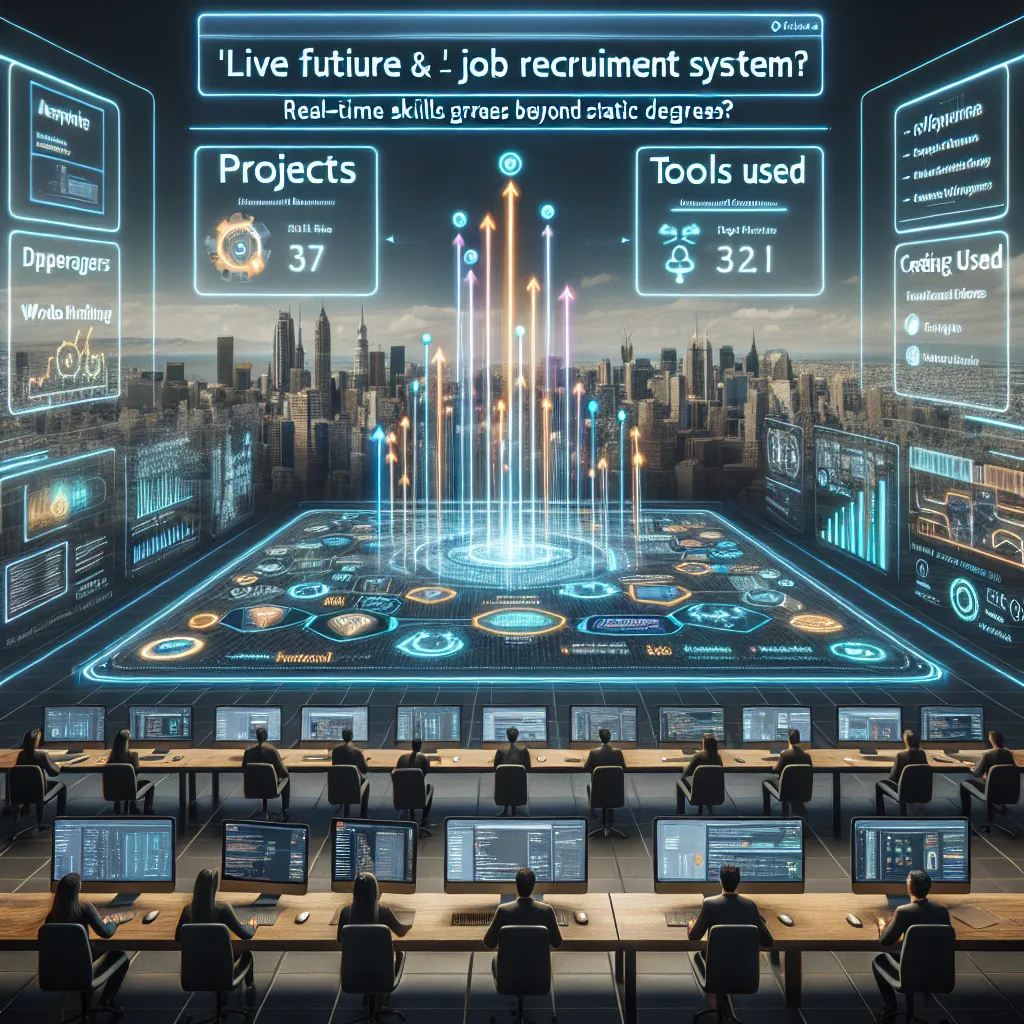
Description
No additional description provided.
The Pitch
In the current landscape, there exists a significant disconnection between education and employment. Academic institutions primarily focus on issuing degrees, while employers are on a constant hunt for tangible signals of competence and skill. This gap results in a considerable number of graduates ending up underemployed, despite having dedicated years to their education.
The concept of a “Live Skills Graph” emerges as a solution to bridge this divide. This system would dynamically map and display the actual skills individuals demonstrate through their projects, the tools they use, and their work output, rather than relying on static credentials like degrees or certificates. The goal is to offer a continuously updated, real-time view of an individual's capabilities and achievements.
To bring this idea to life, the platform would seamlessly integrate with existing learning platforms, developer tools, and workplace software. As users engage with different projects and tasks, their verified skill profile would be automatically updated to reflect their latest competencies. This approach would provide employers with real-time access to skill signals, surpassing the traditional resume or cover letter, and instead offering a more accurate representation of a candidate’s abilities.
In today's rapidly evolving job market, where artificial intelligence is beginning to automate the screening of credentials, the true value lies in having trustworthy data on what an individual can accomplish in real-world scenarios. For hiring managers, this means they could instantly identify candidates who have recently completed relevant projects, even if those candidates have not formally applied for a position.
To develop and launch this concept as a Minimum Viable Product, several tools and strategies can be employed. Initially, integrating with popular learning management systems, version control platforms, and collaboration tools would facilitate the verification and update of user skills. Leveraging APIs and data analytics, the platform would ensure seamless interactions and real-time updates. A clear focus on user privacy and data security would be paramount, ensuring that users have control over what information is shared and with whom.
For the go-to-market strategy, targeting industries with dynamic skill requirements such as tech, marketing, and creative fields could demonstrate early value. Building partnerships with educational institutions and online learning platforms could facilitate adoption and trust in the platform. Initial marketing efforts might include engaging content showcasing success stories, strategic partnerships, and leveraging professional networks and platforms to reach both individual users and corporate clients.
The business model could incorporate a freemium approach, offering basic profile and skill updates for free, with premium features available for a subscription fee. These could include advanced analytics for users, personalized learning recommendations, and enhanced recruiting tools for employers. Revenue could also be generated through partnerships with educational platforms, which might pay for insights into industry skill demands.
Ultimately, the “Live Skills Graph” would cater to a growing need for transparency and relevance in the skills economy, providing both individuals and employers with the tools they need to succeed in an ever-changing job market.