Real-Time Skills Index: AI-Driven Career Insights
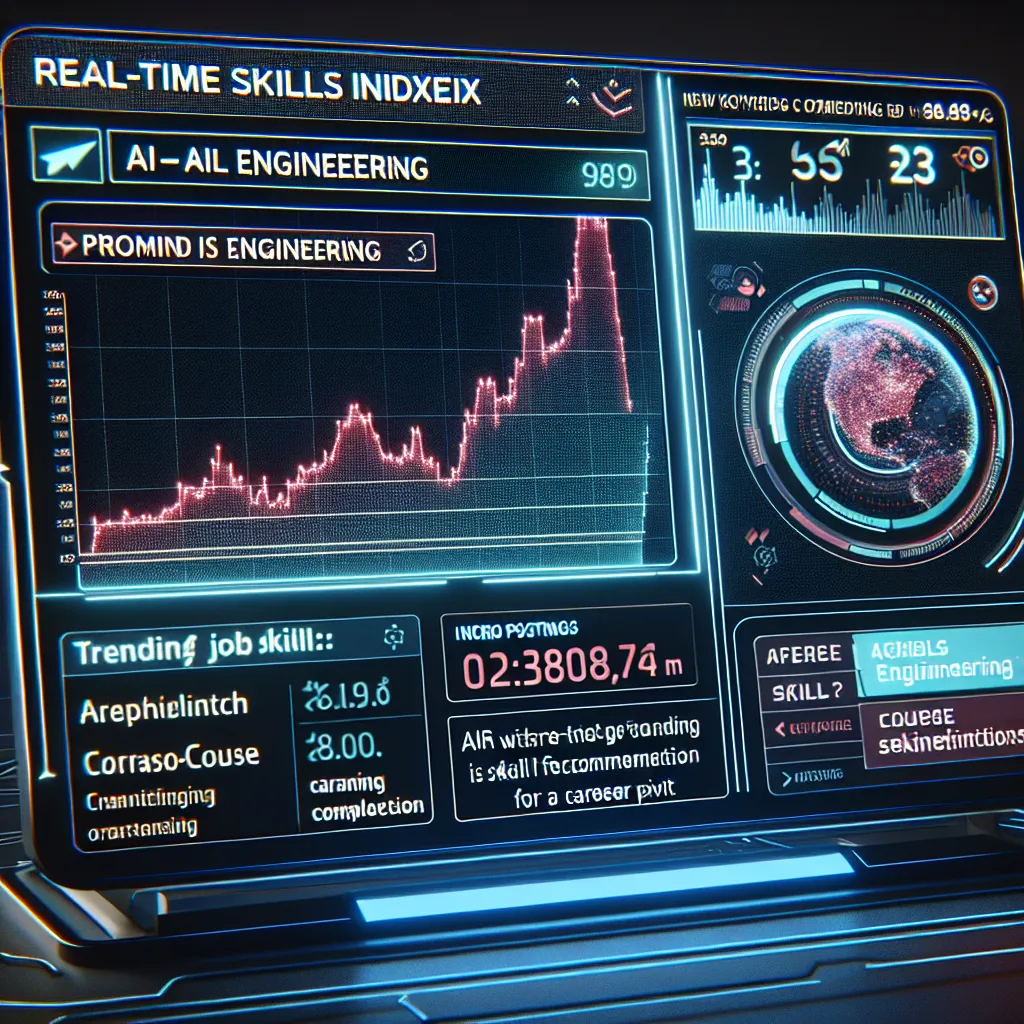
LinkedIn’s creator analytics and trend insights hint at something bigger: skill discovery. The problem is no one knows which skills are emerging fastest until it’s too late. A startup could create the Real-Time Skills Index — an AI-driven dashboard tracking the velocity of new keywords in job postings and course completions. The trend: job markets move like memes now. Imagine an index showing “Prompt Engineering” dropping while “AI Operations” surges — and instantly recommending a weekend micro-course to pivot. It’s Bloomberg Terminal for careers.
Description
No additional description provided.
The Pitch
Staying ahead of emerging skills is more critical than ever. The changing landscape means that individuals and organizations often find themselves reacting to skill trends rather than proactively adapting. The current tools, while informative, provide insights retrospectively rather than giving users the ability to anticipate and pivot in real-time.
The challenge lies in the inability to swiftly identify which skills are gaining traction and will define the future job market. This delayed reaction results in missed opportunities for skill acquisition, career advancement, and strategic workforce development.
The solution is a Real-Time Skills Index, an AI-powered platform designed to address this gap. This innovative dashboard tracks the emergence and popularity of new keywords in job postings and course completions, offering real-time insights into skill trends. By tapping into this data, users can foresee shifts in the job market and adjust their learning paths accordingly.
The Real-Time Skills Index is akin to a Bloomberg Terminal for careers, offering a dynamic interface where users can monitor trends such as the rise of AI Operations while Prompt Engineering wanes. When a trend is detected, the platform suggests relevant micro-courses or resources that individuals can pursue over a weekend to align with new market demands.
To bring this concept to life, collaboration with existing data sources from platforms like LinkedIn and major online learning providers is key, alongside developing proprietary AI models to analyze and forecast skill trends. The technology stack may include tools like Python for data analysis, TensorFlow or PyTorch for AI model development, and a user-friendly front-end built with React or Vue.js.
Launching as a Minimum Viable Product (MVP), the initial focus would be on a core set of rapidly evolving industries such as technology, healthcare, and finance. User feedback would be crucial to refining the algorithm and expanding the sectors covered.
For go-to-market strategy, partnerships with educational institutions and professional networks could drive initial user acquisition. A freemium model, where basic trend insights are free with an option to upgrade to premium features, could facilitate widespread adoption while generating revenue. Premium offerings might include personalized dashboard experiences, exclusive trend reports, and direct access to curated course partnerships.
The establishment of the Real-Time Skills Index not only empowers individuals to steer their careers proactively but also aids organizations in forecasting skill needs, thus closing the gap between industry demands and workforce capabilities. In an era where job markets are as volatile as memes, this platform aims to be the compass guiding tomorrow's workforce through the dynamic landscape of skill evolution.