Real-Time Emotional Monitoring for Workplace Communication
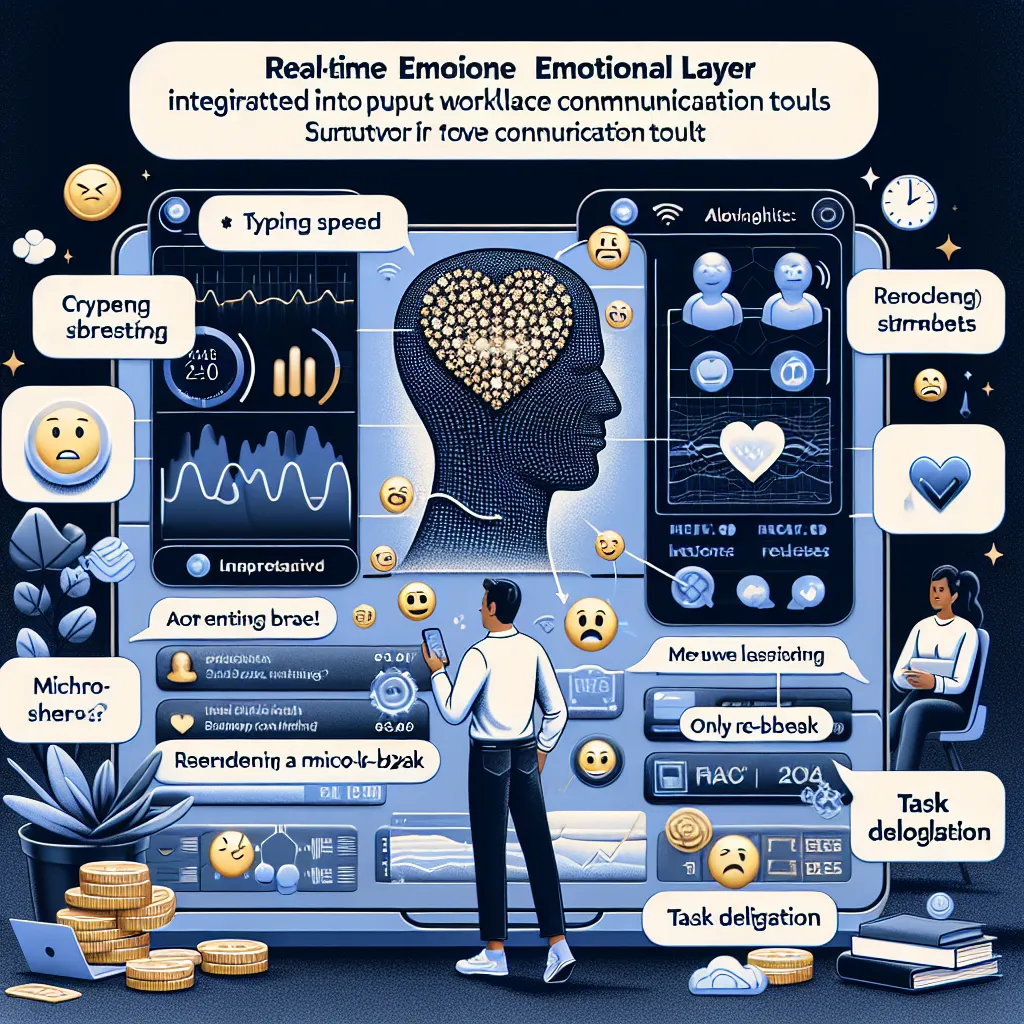
Most collaboration tools today treat all communication equally—but not all messages are created equal. A critical Slack thread during crunch time can spike cortisol and cause subtle burnout patterns to build invisibly. The problem? No tool today detects rising emotional load inside your actual workflow. Our solution is a real-time emotional layer embedded in Slack, Teams, and email. Using natural language processing and passive behavioral signals (like typing speed, emoji use, sentiment drift), it quietly surfaces subtle stress cues and suggests lightweight interventions—like pausing a thread, prompting a micro-break, or redistributing tasks. The trend is clear: companies are investing in workplace mental health and tools like Microsoft Viva, but they remain reactive or weekly-based. This is moment-level. For example, an engineer tagged repeatedly in a tense product thread would receive a nudge to delegate or take a quick walk—before burnout hits.
Description
No additional description provided.
The Pitch
In today's fast-paced work environment, digital communication platforms like Slack, Microsoft Teams, and email have become essential tools for collaboration. However, not all messages within these platforms hold the same weight, and the constant influx can lead to unnoticed emotional strain. Consider a scenario during a project deadline: a flurry of critical messages often leads to heightened stress levels, which over time, contribute to burnout. The crux of the problem is the absence of mechanisms to identify and mitigate emotional load within existing workflows.
Our proposal introduces a revolutionary solution—an embedded, real-time emotional intelligence layer within popular communication tools. This system utilizes advanced natural language processing, combined with passive behavioral signals such as typing speed, emoji usage, and sentiment intonation, to unobtrusively identify rising stress levels. When subtle stress cues are detected, our solution offers immediate interventions tailored to the user's needs. These interventions are designed to be non-intrusive and effective, such as suggesting a brief pause in thread activity, recommending a quick micro-break to refresh, or encouraging the redistribution of tasks to alleviate pressure.
The market trend and organizational focus on employee mental health are clear, with significant investments being funneled into solutions like Microsoft Viva. However, existing tools often operate on a reactive basis, analyzing data weekly or monthly. In contrast, our real-time approach provides moment-by-moment insights, enabling proactive mental health management. For instance, an engineer persistently engaged in a stressful product discussion would receive a prompt to delegate some responsibilities or take a short walk, thereby preventing burnout before it takes root.
Key Product Features: 1. Seamless Integration: Compatible with Slack, Microsoft Teams, and all major email platforms to ensure smooth adoption. 2. Real-Time Analysis: Utilizes natural language processing and behavioral analytics to monitor emotional cues as they occur. 3. Personalized Interventions: Offers tailored suggestions like thread pauses, micro-break reminders, and task redistribution prompts. 4. Privacy-Centric Design: Ensures user data is anonymized and secure, maintaining trust while assisting with mental well-being. 5. Scalable Architecture: Built to support organizations of all sizes, from startups to enterprises.
Tools and Technologies: - Natural Language Processing (NLP) engines for sentiment analysis. - Behavioral analytics frameworks for monitoring engagement patterns. - Secure API integrations with communication platforms for data processing. - Cloud infrastructure for scalable and reliable service delivery.
Launching as a Minimum Viable Product (MVP): - Focus initial development on core NLP models and integration with Slack, given its widespread use. - Conduct closed beta testing with select companies, gathering user feedback to refine features. - Utilize feedback loops to enhance accuracy and relevance of interventions.
Go-To-Market (GTM) Strategy: - Target HR departments and workplace well-being teams at tech-forward companies for pilot programs. - Position the product as a pioneering tool in proactive mental health management. - Develop partnerships with mental health organizations to leverage expertise and credibility. - Employ content marketing through thought leadership articles and webinars focusing on the importance of real-time emotional intelligence.
Business Model: - Subscription-based service with tiered pricing options for different organizational sizes and needs. - Offer a freemium tier with basic features to encourage adoption and scale user feedback. - Premium tiers include advanced analytics and customization options for enterprises. - Consider potential for enterprise-wide licensing agreements for larger organizations.
By focusing on the intricacies of workplace communication and emotional well-being, this innovative approach provides organizations with the tools they need to maintain a healthier, more productive work environment.