Real-Time AI Memory Sync for Vector Databases
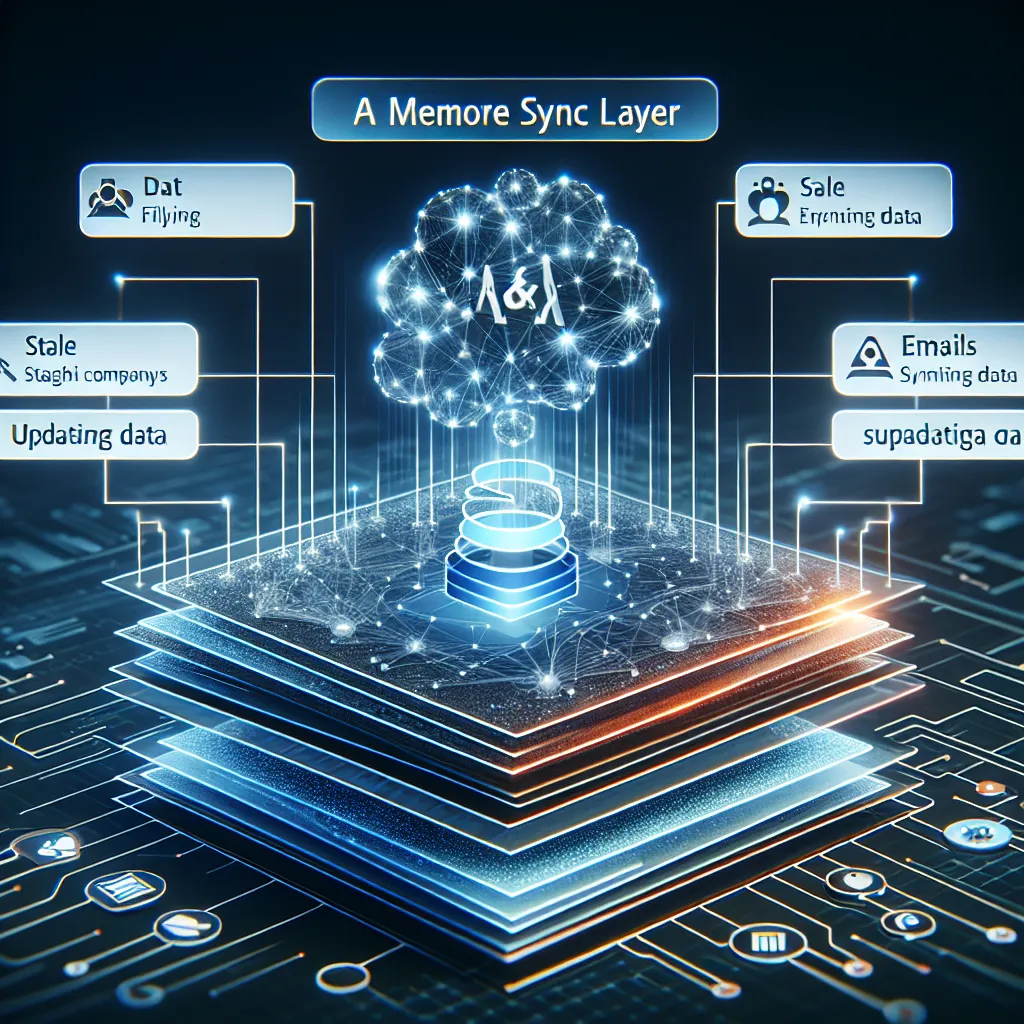
Current vector store solutions lack real-time memory. Once documents are embedded, changes go unnoticed. The new twist: an AI-enabled “Memory Sync Layer” that continuously monitors changes across a company’s files, emails, wikis, and updates the vector database as things evolve. As noted: “If the website changes, it’s not going to know… because the training was done at a particular date.” This system ensures the LLM always has an up-to-date understanding of the business, removing stale data and reflecting live context, enabling accurate Q&A across ever-changing information.
Description
No additional description provided.
The Pitch
For anyone interested in building a cutting-edge solution that addresses modern challenges in data management and machine learning, consider the revolutionary concept of an AI-enabled Memory Sync Layer. This innovation leverages real-time monitoring to keep vector databases up-to-date, ensuring that Large Language Models (LLMs) reflect the most current business context in their outputs.
Background:
In today's fast-paced digital landscape, businesses continuously generate and update vast amounts of data across multiple platforms, including files, emails, and wikis. Traditional vector store solutions, while adept at initial data embeddings, fail to keep pace with these ongoing updates. Their inability to automatically incorporate changes results in outdated information, leading to inaccuracies in applications relying on these databases, especially in question-and-answer scenarios where precision is paramount.
The Problem:
One of the main challenges with existing vector stores is their static nature post-initial embedding. Companies often find themselves in a situation where their business data evolves, but their vector databases do not. This results in discrepancies between the actual business context and what the LLMs can interpret, ultimately affecting decision-making processes, customer interactions, and operational efficiency. Traditional methods of manually updating the vector database are not only cumbersome but also impractical at scale.
The Solution:
The Memory Sync Layer introduces a dynamic, real-time updating mechanism for vector stores. This layer continuously monitors document changes across various platforms and updates the vector embeddings accordingly. It ensures that the LLM has access to the freshest information available, allowing for precise and contextually relevant outputs. This feature is akin to giving the LLM a live, ever-evolving understanding of the business, akin to a real-time memory.
Product Details:
- Real-Time Monitoring: Utilizing AI-driven techniques, the Memory Sync Layer identifies changes in real-time across all chosen data sources, including files, emails, and internal wikis. - Automated Updates: Upon detecting changes, the system automatically updates the vector store, maintaining synchronization with the live data environment. - Scalable Integration: Designed to seamlessly integrate with existing vector store solutions without the need for extensive reconfiguration. - Enhanced Accuracy for LLMs: By providing up-to-date, contextual data, LLMs are enabled to perform more accurate Q&A, data analysis, and other tasks critical to business operations.
Tools for Launching an MVP:
- Cloud-Based Monitoring Services (e.g., AWS Lambda, Azure Functions) for scalable real-time change detection across data sources. - Vector Database Solutions (e.g., Pinecone, Weaviate) for efficient management and querying of embedded data. - AI/ML Platforms (e.g., TensorFlow, PyTorch) to develop and deploy the AI models underpinning the Memory Sync Layer. - API Integration Tools (e.g., Zapier, Integromat) to facilitate easy synchronization between platforms.
Go-To-Market Strategy:
1. Identify Early Adopters: Target tech-driven companies that prioritize data accuracy and have existing LLM deployments as initial adopters. 2. Partnership with Vector Store Providers: Collaborate with companies that provide vector stores to offer the Memory Sync Layer as an add-on feature. 3. Educational Content: Develop webinars, whitepapers, and case studies that highlight the benefits and applications of real-time data synchronization. 4. Industry Events and Conferences: Present the solution at relevant tech and AI conferences to raise awareness and build credibility.
Business Model:
- Subscription-Based Pricing: Offer tiered pricing plans based on the volume of data processed and the number of data sources monitored. - Enterprise Solutions: Provide customized solutions for large businesses with specific data synchronization needs. - Integration Consulting Services: Offer professional services to assist companies in seamlessly integrating the Memory Sync Layer into their existing infrastructures.
In summary, the Memory Sync Layer addresses the critical challenge of keeping vector databases current in an ever-changing business environment. By ensuring that LLMs have access to live, relevant data, businesses can expect improved accuracy and efficiency in their AI-driven applications.