QuietSignal: Predictive Wearable for Early Disease Management
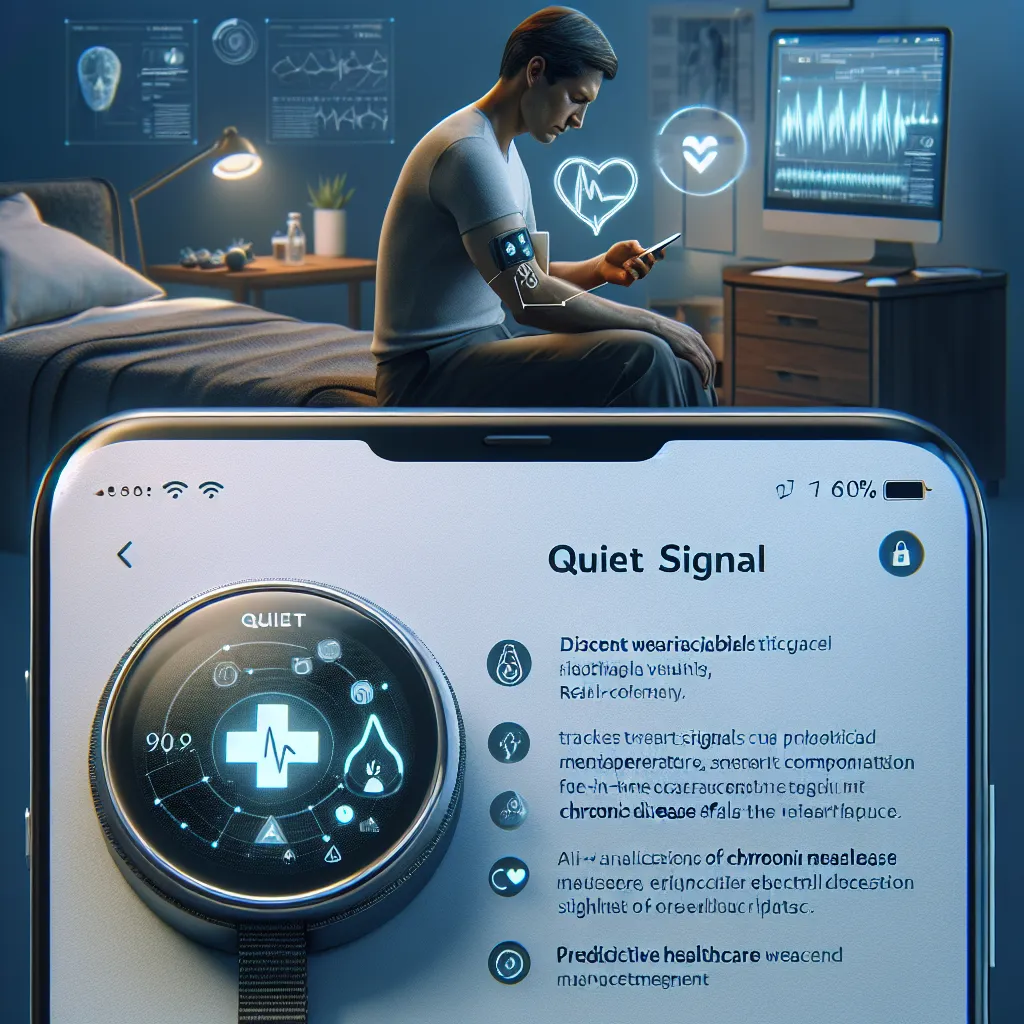
Chronic disease flare-ups often go undetected until symptoms intensify, leading to emergency care and avoidable hospitalizations. QuietSignal is a discreet wearable patch that tracks subtle physiological signals like HRV, skin temperature, and sweat composition, analyzing them alongside EMR data to detect pre-symptomatic deterioration. This supports the trend of AI-driven disease management and predictive healthcare. Companies like Lucem Health focus on dataset mining; QuietSignal adds real-time biosensing. For instance, a rheumatoid arthritis patient wearing QuietSignal might receive a doctor alert days before a flare-up, enabling medication adjustment and preventing a hospital visit.
Description
No additional description provided.
The Pitch
In today's healthcare landscape, managing chronic diseases effectively can significantly improve patient outcomes and reduce the burden on healthcare systems. However, one of the major challenges is identifying and addressing disease flare-ups before they become severe. Often, these exacerbations are detected only after symptoms have intensified, leading to emergency care and hospitalizations that could have been avoided. This is where QuietSignal steps in as an innovative solution.
Backstory:
Chronic diseases such as rheumatoid arthritis, heart disease, and diabetes affect millions of people worldwide. The management of these conditions is complex and requires continuous monitoring to prevent acute episodes. Unfortunately, the existing model heavily relies on patients' subjective reports of symptoms and intermittent clinical visits, which may not catch early signs of deterioration. There is a pressing need for a solution that can bridge the gap between regular clinical assessments and real-time monitoring.
Problem:
The traditional methods for managing chronic diseases are reactive, focusing on treating flare-ups after they occur rather than preventing them. This approach can lead to worsening health conditions, frequent hospital visits, and increased healthcare costs. Patients, caregivers, and healthcare providers need a system that can detect subtle physiological changes and alert them before symptoms become severe.
Solution:
QuietSignal presents a proactive approach to chronic disease management through its innovative wearable technology. It is a discreet patch designed to monitor physiological signals such as heart rate variability (HRV), skin temperature, and sweat composition. By integrating this data with electronic medical records (EMR), QuietSignal provides a comprehensive analysis to detect pre-symptomatic deterioration, allowing for timely interventions.
Product Details:
1. Discreet Wearable Patch: QuietSignal offers a lightweight, easy-to-wear patch that continuously monitors the body's physiological signals without interfering with daily activities.
2. Biosensing Technology: The patch is equipped with advanced sensors for tracking HRV, skin temperature, and sweat composition, providing valuable insights into the body's condition.
3. EMR Integration: By syncing with electronic medical records, QuietSignal offers a holistic view of the patient's health, combining real-time data with historical medical information.
4. Predictive Alerts: The system analyzes collected data using AI algorithms, sending notifications to healthcare providers if it detects any signs of potential flare-ups.
5. Personalization: The platform can customize alerts and recommendations based on individual patient profiles and past health records.
Tools for MVP Launch:
1. Rapid Prototyping Platforms: Use tools like Arduino or Raspberry Pi for initial hardware development. 2. Sensor Libraries: Leverage libraries such as Adafruit or SparkFun for biosensing components. 3. AI and ML Frameworks: Employ TensorFlow or PyTorch to develop predictive models. 4. Cloud Services: Use AWS or Google Cloud to store and process data securely. 5. EMR Integration: Utilize APIs like HL7 or FHIR for seamless integration with existing EMR systems.
Go-to-Market Strategy:
1. Partnerships with Healthcare Providers: Collaborate with hospitals and clinics to pilot QuietSignal with their chronic disease patients. 2. Patient Education Campaigns: Conduct webinars and create educational content to inform patients about the benefits of proactive disease management. 3. Collaboration with Insurance Companies: Partner with insurers to offer QuietSignal as part of disease management programs, potentially reducing insurance premiums for users. 4. Conferences and Events: Showcase QuietSignal at healthcare technology conferences to gain visibility and attract potential partners and investors.
Business Model:
1. Subscription-Based Model: Offer QuietSignal as a subscription service where users pay a monthly or annual fee for real-time monitoring and insights. 2. Data Monetization: Generate revenue by anonymizing and selling large datasets to research institutions and pharmaceutical companies for new drug developments and studies. 3. Licensing Agreements: License the technology to other healthcare companies seeking to enhance their chronic disease management offerings. 4. Direct Sales: Market the patch directly to consumers through an e-commerce platform for individuals interested in proactive health management.
QuietSignal represents a significant step forward in chronic disease management by leveraging cutting-edge technology and AI to provide a proactive, patient-centric approach. By detecting subtle physiological changes before symptoms appear, it empowers patients and healthcare providers to take timely action, improving patient outcomes and reducing the strain on healthcare systems.