Quantum Battery Swaps for AI Model Training
Batteries today are too slow and heavy for the energy needs of AI model training — storage is the bottleneck. Solution: Commercialize quantum batteries — theoretical batteries that can charge/discharge near-instantaneously — and build battery swap stations for data centers, where fully charged modules are autonomously swapped in and out during peak loads. Why now? Quantum battery research is maturing in labs (still experimental, but with real physics support); AI workloads create peak demand cycles perfect for a swap model. Example: An Nvidia training cluster swaps in quantum battery packs during the final hours of a GPT-6 training run — saving millions on peak grid pricing.
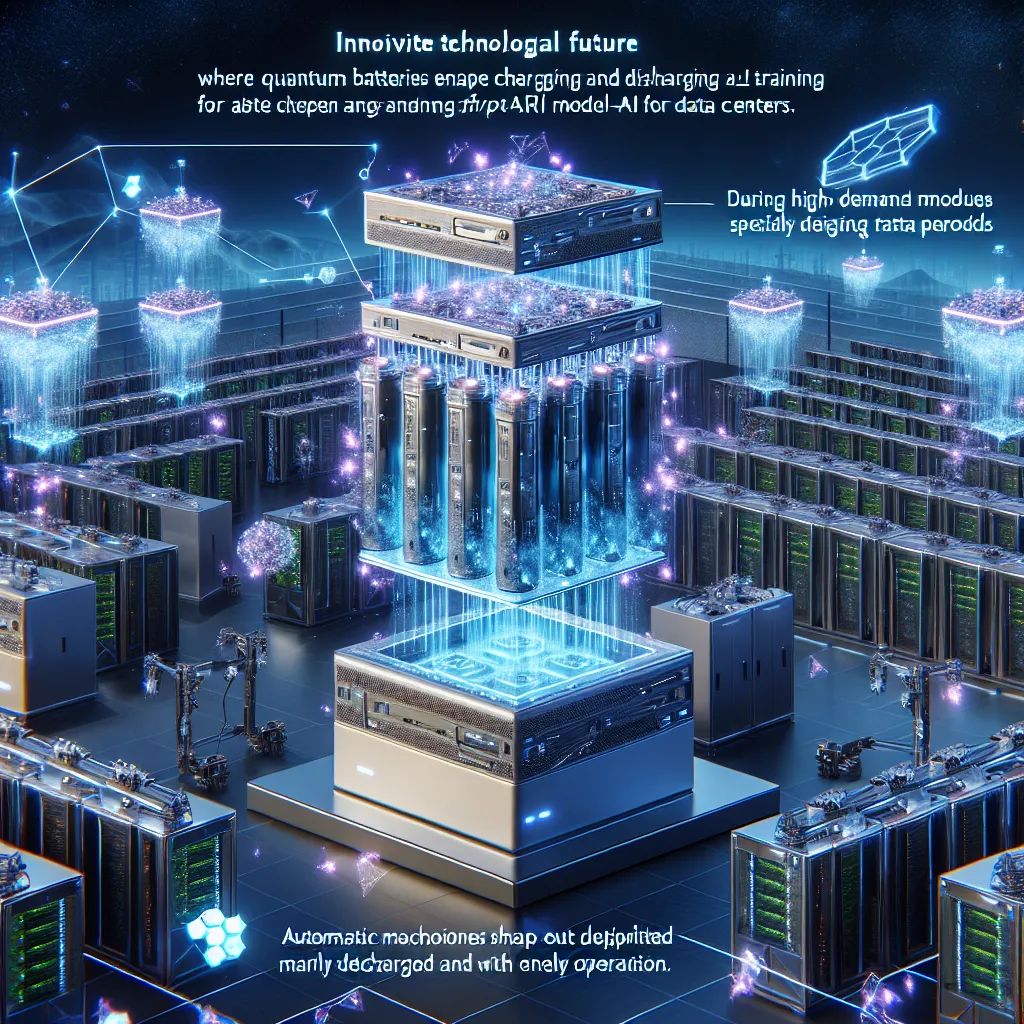
Description
No additional description provided.
The Pitch
In the rapidly evolving landscape of artificial intelligence (AI), the demand for more efficient energy solutions is more critical than ever. Current battery technologies, pivotal in powering data centers during AI model training sessions, are proving to be both slow and cumbersome. These limitations in energy storage threaten to impede the progress of AI advancements by becoming a bottleneck, particularly during peak operational periods.
Backstory
The AI industry is experiencing exponential growth, driven by advancements in machine learning and neural networks that require significant computational power. As AI models become more complex, the energy requirements for training these models also increase, often resulting in peak demand scenarios where energy costs soar. Traditional battery solutions struggle to keep pace with these demands due to their slow charging rates and heavy structure, emphasizing the need for an innovative solution.
Problem
Current battery technologies are not optimized for the unique energy demands of AI model training:
- Slow charging cycles hinder the ability to respond swiftly to energy spikes. - Heavy and cumbersome battery systems occupy valuable data center space. - Rising energy costs during peak demand periods contribute to escalating operational expenses.
Solution
The commercialization of quantum batteries offers a promising solution to address these challenges. These theoretical batteries possess the potential to charge and discharge nearly instantaneously, seamlessly adapting to fluctuating energy demands. The integration of quantum battery swap stations within data centers can alleviate peak load stress by facilitating an automated system where fully charged modules are swapped in and out.
Product Details
The proposed system includes:
1. Quantum Batteries: These units leverage quantum physical properties to provide rapid charging and discharging capabilities, offering a revolutionary improvement over traditional battery systems.
2. Battery Swap Stations: Strategically located in data centers, these stations utilize autonomous systems to efficiently manage the swapping of fully charged battery modules in and out during high demand periods.
3. Energy Management Software: A sophisticated software solution will monitor energy use, predict peak demands, and control the battery swap process to optimize energy efficiency and reduce costs.
Tools for MVP Launch
1. Prototype Development: Collaborate with cutting-edge quantum physics research institutions to develop a working prototype of the quantum battery. 2. Robotics and Automation: Partner with companies specializing in robotics to build the automated swap station system. 3. Software Development: Utilize cloud-based platforms to develop the energy management software necessary for monitoring and automation.
Go-To-Market Strategy
1. Early Adoption Focus: Target partnerships with large data centers and AI-intensive organizations for early-stage implementation and feedback. 2. Industry Collaborations: Work closely with AI and quantum research communities to strengthen credibility and drive innovation. 3. Marketing and Awareness: Leverage digital platforms, industry conferences, and white papers to educate and inform potential users about the benefits of quantum batteries.
Business Model
1. Subscription Model: Offer the battery swapping and energy management solution as a subscription service, providing regular upgrade and maintenance support. 2. Pay-per-Use: An alternative pricing model based on the number of swaps or energy saved during peak demand scenarios. 3. Licensing and Collaborations: License the technology to other industries with similar energy challenges, expanding the impact and reach of quantum batteries.
Conclusion
Quantum batteries represent a transformative step forward in addressing the energy challenges faced by the AI industry. By reducing energy costs and improving efficiency through an innovative battery swap system, this project positions itself at the forefront of technological advancement. As quantum battery research continues to mature, the potential for integration across varied sectors promises a sustainable future for high-demand energy applications.