Protect Your Credit: Navigate Medical Debt Easily
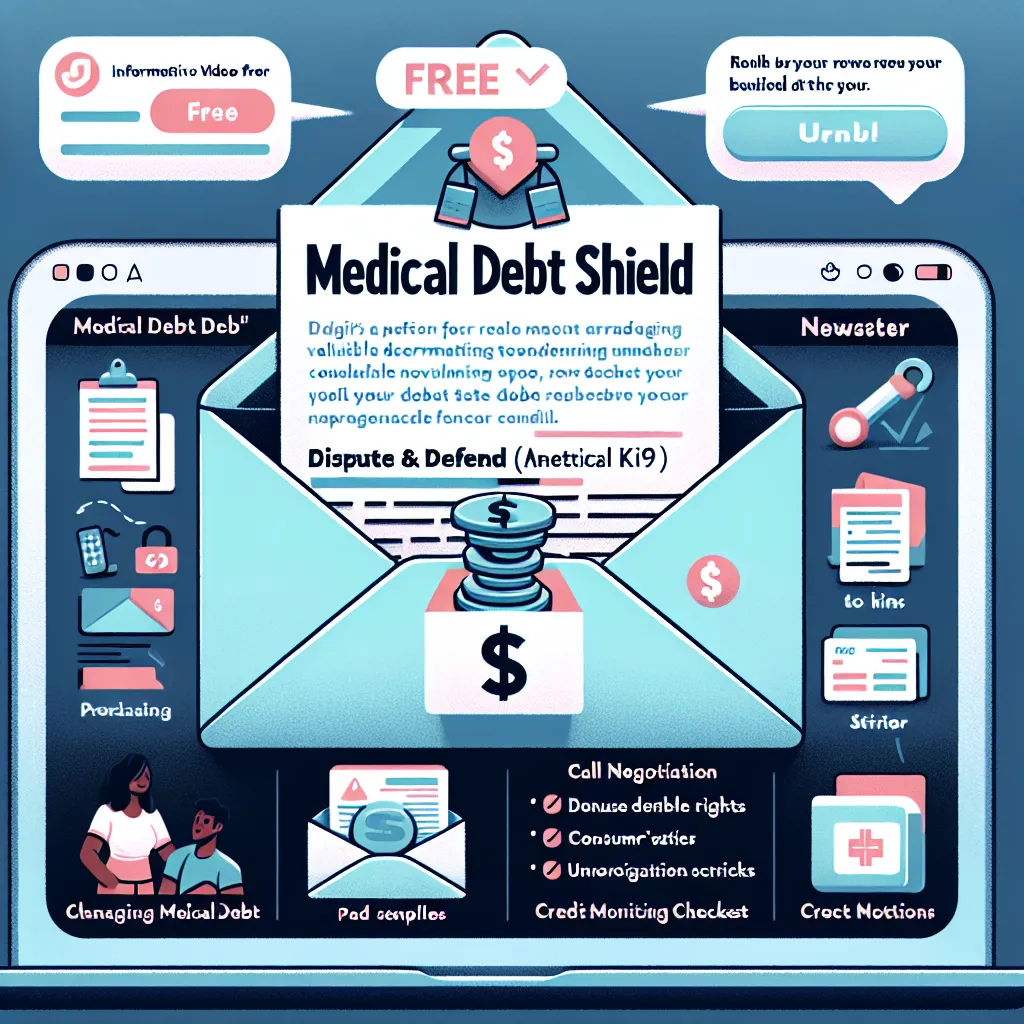
Millions of Americans are now at risk of credit score damage from medical debt, often without knowing their options to fight back. But legal help is expensive, and most people don’t know where to start. “Medical Debt Shield” is a lightweight, low-cost solution: a free newsletter that breaks down what’s happening, what your rights are, and what steps to take—plus a paid toolkit with dispute templates, negotiation scripts, and step-by-step checklists to protect your credit. It’s like having a consumer rights expert in your inbox. With the court ruling reinstating medical debt on credit reports, fear and confusion are spiking. This creates a massive, underserved need for simple, trustworthy guidance. Example: A user sees a TikTok explaining how to stop a bill from hitting their report, signs up for the newsletter, then pays $49 for the “Dispute & Defend Kit” — including a customizable letter to challenge debt, a call script to reduce what’s owed, and a checklist to monitor credit afterward. All run by a solo founder using Beehiiv, Stripe, and Notion.
Description
No additional description provided.
The Pitch
Millions of Americans are currently facing the risk of credit score damage due to medical debt, a situation that often leaves them unaware of their options for defense. Legal assistance is costly and many individuals are uncertain about how to begin addressing these issues. Medical Debt Shield presents a streamlined, cost-effective solution: a complimentary newsletter designed to elucidate the current landscape, explain individual rights, and outline actionable steps. In addition, there's a paid toolkit available that includes dispute templates, negotiation scripts, and thorough checklists, all aimed at safeguarding one's credit. Essentially, it functions as having a consumer rights expert delivered directly to your inbox.
With recent court rulings leading to the reinstatement of medical debt on credit reports, there is a surge in fear and confusion among the public. This scenario gives rise to a significant and underserved need for clear, reliable guidance. For instance, a user might encounter a TikTok video that demonstrates how to prevent a bill from impacting their credit report. This could motivate them to subscribe to the newsletter and subsequently purchase the Dispute & Defend Kit for $49. This kit offers valuable resources like a customizable letter for challenging debts, a phone script for negotiating reduced amounts, and a checklist to keep track of credit activities afterward.
This initiative is spearheaded by a solo founder making use of several efficient tools such as Beehiiv for managing the newsletter, Stripe for processing transactions, and Notion for organizing content and operations.
For those interested in building a similar venture, a sound understanding of the backstory is crucial. The complexity and opacity surrounding medical debt collection and credit reporting have long been an obstacle for many Americans. The root problem lies in the lack of accessible, affordable resources that can guide individuals through their rights and the steps they can take to defend themselves.
The proposed solution is straightforward yet powerful: provide a free, insightful newsletter that demystifies the issue and a reasonably priced toolkit that empowers consumers with the tools they need to take action.
Details of the product comprise two main components. The free newsletter offers ongoing education and updates about the medical debt landscape, tips on consumer rights, and proactive steps individuals can take. The paid toolkit, on the other hand, is an actionable resource containing customizable documents and scripts necessary for effectively disputing and negotiating medical debts, along with a comprehensive checklist to help users maintain vigilance over their credit status.
To launch such a minimal viable product effectively, leveraging modern digital tools is essential. For instance, a platform like Beehiiv can facilitate the creation and management of the newsletter. Stripe offers a seamless payment gateway for monetizing the toolkit, while Notion can serve as a robust tool for organizing content and workflow.
The go-to-market strategy involves leveraging social media platforms like TikTok and Instagram to raise awareness and drive subscriptions. Engaging content that highlights success stories, tips, and educational snippets can attract and convert viewers into subscribers and customers. Collaborations with influencers focused on financial literacy can further enhance reach and credibility.
Regarding the business model, a dual approach of free content for broad engagement coupled with a paid add-on for those seeking further assistance provides a balanced revenue stream. The offering appeals to a wide audience by lowering barriers to entry, while the tailored toolkit caters to those ready to invest in deeper solutions.
In summary, Medical Debt Shield offers an innovative way to address a critical need. By combining educational resources with practical tools, it empowers individuals to protect their financial futures amidst a challenging backdrop of medical debt and credit reporting dynamics.