Programmable Matter: Transforming Surfaces Without Power
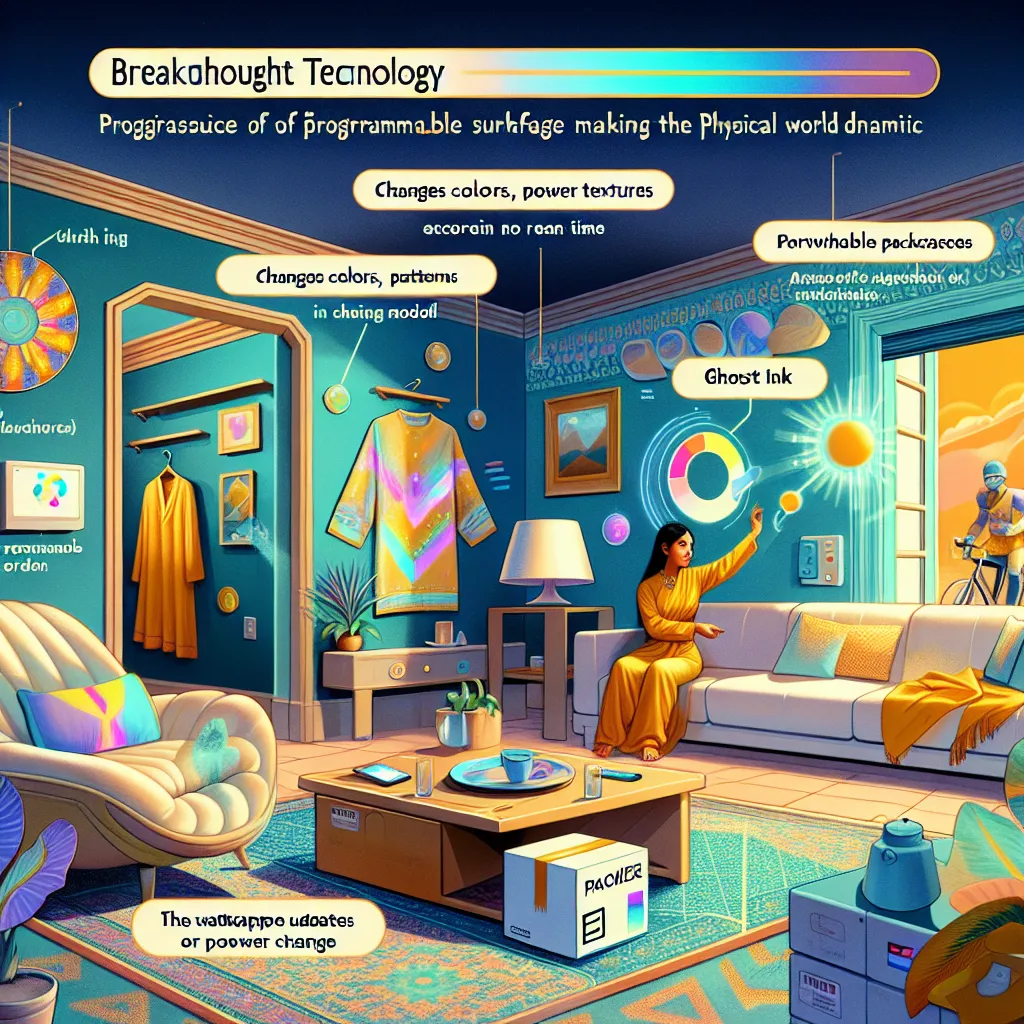
Most surfaces in our world are passive — clothes, walls, packaging — they look the same until you change them manually. But what if any surface could change color, pattern, or texture in real time, without screens or batteries? Thanks to a 2025 breakthrough in 2D materials, we can now control how light (excitons) and magnetism (magnons) interact, unlocking a new class of programmable surfaces. “Ghost Ink” is a startup that turns thin sheets of material into living, reactive displays. These surfaces respond to light or magnetic signals to shift their appearance — no chips, no power supply. Why now? Before this discovery, light and magnetism couldn’t talk to each other this precisely or efficiently. Now they can. Imagine clothing that changes color based on mood, packaging that glows when delivered, or wallpaper that updates with the weather. This isn’t e-ink or projection — it’s the physical world made dynamic. A billion-dollar industry for programmable matter has just become possible.
Description
No additional description provided.
The Pitch
In a rapidly evolving technological landscape, a new frontier has emerged with the potential to revolutionize how we interact with the world around us. Traditional surfaces, such as clothing, walls, and packaging, have long been static, requiring manual changes to alter their appearance. However, the advent of an innovative breakthrough in 2025 involving 2D materials has paved the way for the creation of dynamic, reactive surfaces that can change color, pattern, or texture in real-time, without the need for screens or power sources.
This extraordinary development has given rise to Ghost Ink, a startup devoted to transforming thin sheets of material into living, programmable displays. These groundbreaking surfaces can respond to light or magnetic signals to modify their appearance, creating an interactive and engaging experience without relying on traditional electronics or power supplies.
Until now, the interaction between light and magnetism was limited by the imprecise and inefficient communication between them. The novel breakthrough has enabled precise and effective control over how excitons (light) and magnons (magnetism) communicate, forging a new pathway toward programmable surfaces that can react to environmental changes seamlessly.
Consider the applications of such technology: clothing that adjusts its colors according to one’s mood, packaging that illuminates upon delivery, or wallpaper that evolves with the weather. This is a transformation of the tangible world into a dynamic, responsive environment, marking the creation of a billion-dollar industry centered around programmable matter.
For those interested in building this transformative technology, the journey begins with addressing the challenges and solutions involved. Key problems lie in the fabrication of these 2D materials and the calibration of their interactions with external signals to ensure precise responsiveness. However, advancements have unlocked new design possibilities, making it feasible to integrate this technology into everyday surfaces.
Solution-wise, by mastering the intricate interaction between light and magnetism, Ghost Ink can produce surfaces that remain passive until activated by specific stimuli, eliminating the need for complex power systems or chips.
The product details focus on sheets of material that are ultra-thin and flexible, ideal for a variety of applications, from textiles to architectural elements. These sheets can be customized in size, shape, and responsiveness, allowing tailored solutions for different sectors.
To launch this innovation as a Minimum Viable Product (MVP), leveraging tools such as rapid prototyping, material engineering software, and pilot testing within controlled environments is crucial. Collaborations with universities and material science labs can provide access to cutting-edge research and facilitate development.
The Go-To-Market (GTM) strategy should start with targeting niche markets eager for innovation, such as high-end fashion, luxury packaging, and avant-garde interior design. Demonstrations at tech expos and partnerships with industry influencers can enhance visibility and credibility.
The business model could follow a B2B and B2C approach, offering licensing opportunities for other companies to use the technology in their products, while also creating proprietary designs for direct consumer sales. Revenue streams could include direct product sales, service and support for integration, and ongoing maintenance or software upgrades for existing installations.
As the world embraces this new era of programmable surfaces, Ghost Ink stands at the forefront, driven by a vision to turn the static into the dynamic, bringing the concept of living surfaces from the realm of imagination into reality.