Private Wedding Guest Travel Coordination Platform
You're invited to a wedding in Miami and immediately have six questions that have nothing to do with the wedding. Who else is going? What flight is everyone taking? Where are people staying? Is anyone splitting a rental car? The problem is you can't exactly text 20 people asking because some of them might not be invited. Build a private coordination layer that only reveals other confirmed guests. Once you're in, you can share flights, hotels, transportation, plans, and group chats without creating work for the couple. Wedding websites organize the wedding. This organizes everyone getting there.
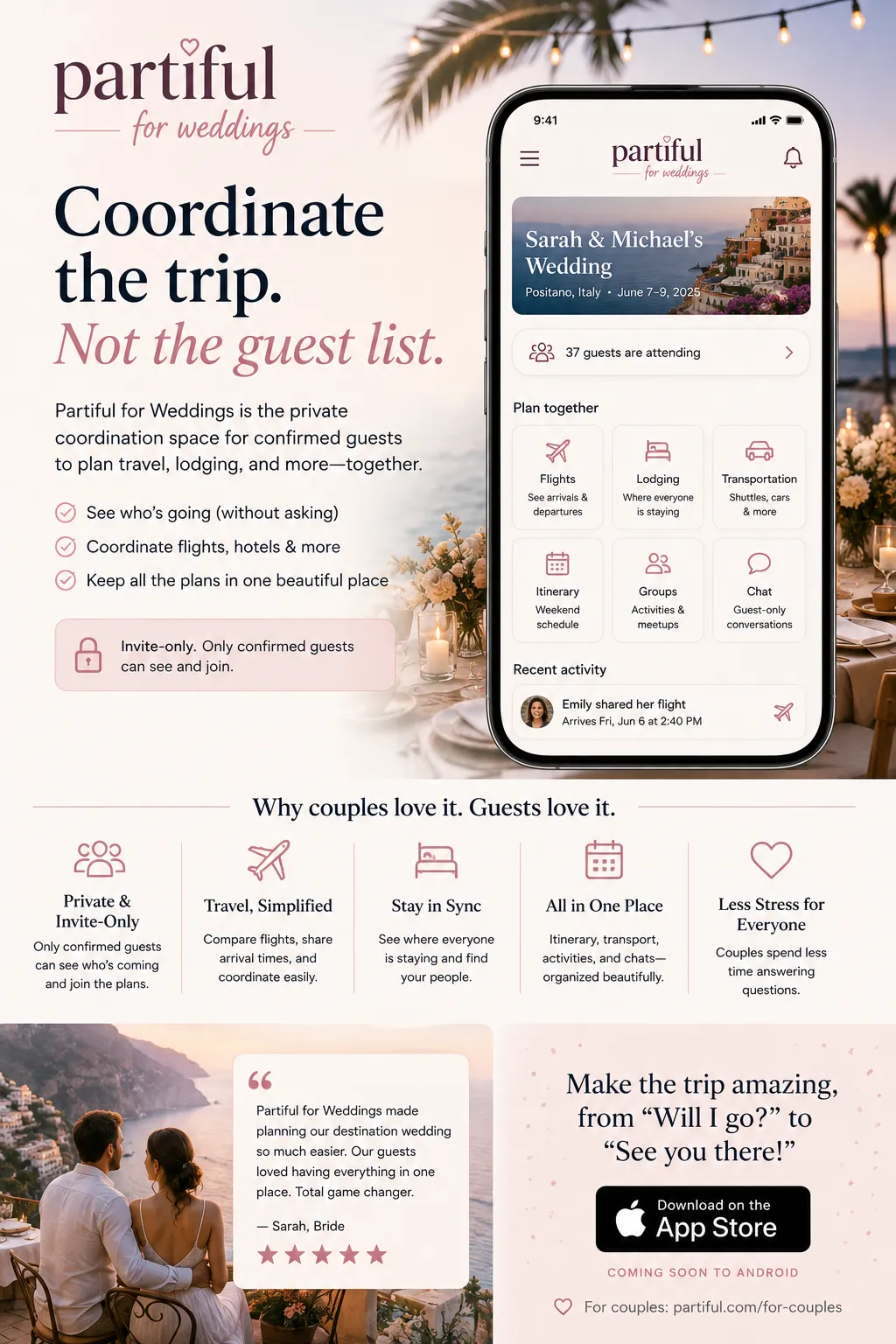
Description
No additional description provided.
The Pitch
A wedding is one of the rare consumer events where a large group of people simultaneously has the same logistical problem, the same deadline, and partial trust in one another. That combination is unusually valuable. Most travel products are built around individuals or pre-formed groups, but wedding guests are neither: they are a temporary network of acquaintances who would coordinate if there were a socially safe way to discover one another.
The strongest insight is that the guest list is privileged information. It is not just a list of names; it is the social boundary that determines what can be said without awkwardness. That makes ordinary tools feel wrong. A group chat is too broad, texting is too risky, and public travel forums are irrelevant. A product that uses confirmation as the permission layer solves a social problem before it solves a logistical one. It lets coordination happen without forcing anyone to reveal uncertainty, exclusion, or relationship politics.
The business works because the couple is a poor owner of this problem. They are the central node, but they are also the bottleneck everyone is trying not to burden. Any tool that removes small inbound questions from the couple creates immediate emotional value, even if the practical tasks are mundane. The product does not need to replace wedding websites; it can occupy the neglected space after the RSVP, where guests have committed but still need to turn attendance into an actual trip.
There is also a useful asymmetry in how often the problem repeats. A person may attend only a few weddings a year, but venues, planners, registry platforms, wedding websites, hotel blocks, and travel providers touch the pattern constantly. The guest experience is fragmented, but the underlying demand appears again and again in a predictable format. That makes weddings less like isolated events and more like recurring bursts of temporary social infrastructure.
The most interesting version of this company would not feel like “travel planning for weddings.” It would feel like a consent-based map of who is in the room before the room exists. Once that map exists, flights, hotels, rides, brunches, and side plans become natural extensions. The durable value is not the itinerary; it is the permission to coordinate with people you know just enough to need, but not enough to ask.