Privacy Consent Infrastructure for Camera Glasses
As camera glasses become ordinary, people currently have no machine-readable way to say, “You may look at me, but you may not record, identify, store, or publish me.” Build a universal consent layer that lets someone broadcast their privacy preferences from their phone, watch, wearable, venue badge, or physical beacon. Participating glasses and cameras would automatically blur that person, mute their voice, prohibit facial recognition, or delete footage after a set period. Venues could establish rules such as “recording allowed, facial identification prohibited” or “all bystanders automatically blurred.” The company becomes the permission infrastructure between camera owners, hardware manufacturers, venues, social platforms, employers, schools, and ordinary people.
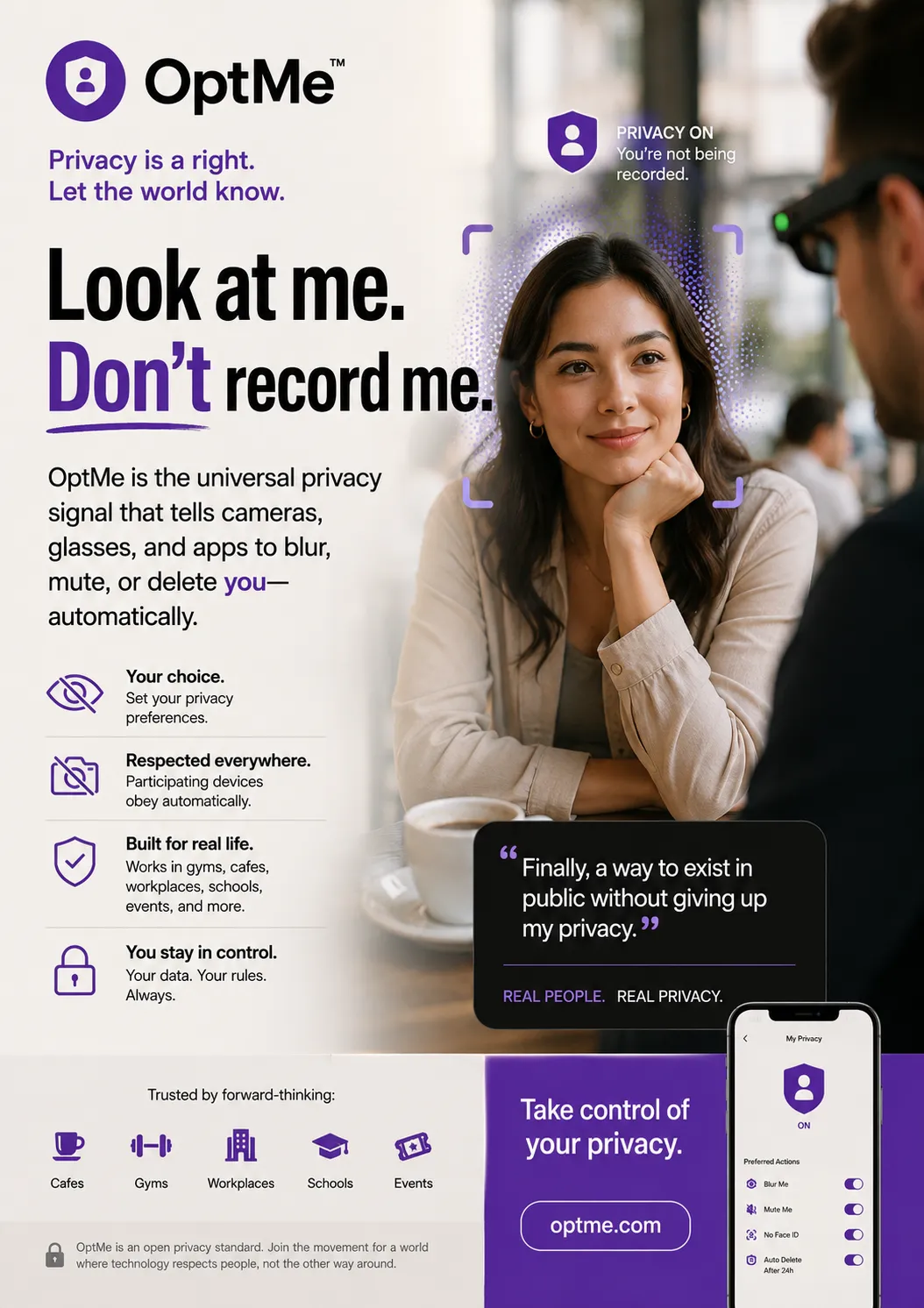
Description
No additional description provided.
The Pitch
Cameras are moving from intentional objects to ambient ones. The social contract around recording was built for phones, where pointing a rectangle at someone is visible and socially legible. Glasses collapse that signal. When capture becomes indistinguishable from presence, consent can no longer depend on noticing the camera. The missing layer is not better etiquette; it is a protocol that makes privacy preferences readable by machines before harm happens.
The most valuable position in that world is not owning the camera or the content, but defining the transaction between the person being observed and the device doing the observing. Today, privacy rights are mostly expressed after the fact: takedown requests, moderation disputes, lawsuits, workplace policies, platform rules. A live consent signal turns privacy from a cleanup problem into an input. That shift is powerful because it makes compliance programmable, and programmable compliance tends to become infrastructure.
The surprising customer pull may come less from privacy purists than from institutions that do not want every camera to become a liability machine. Schools, hospitals, offices, gyms, concerts, stores, and cities will all face the same awkward problem: they want the benefits of visual computing without becoming places where everyone feels perpetually extractable. A venue-level consent layer gives them a way to permit recording without surrendering the norms that made the place usable in the first place. It is a compromise technology, and compromise technologies often scale because they let adoption continue.
The network effects are unusually asymmetric. A single person broadcasting preferences has limited power unless devices listen; a single camera maker supporting the protocol has limited value unless people and venues use it. But once major venues, employers, or jurisdictions begin requiring machine-readable consent, support becomes a selling point for hardware makers and platforms rather than a concession. The layer that starts as a privacy feature can become the equivalent of a safety certification: invisible when it works, conspicuous when absent.
The deeper business truth is that identity will not only mean proving who you are; it will also mean declaring what may be done to you by other people’s machines. As perception becomes automated, the right to be unindexed, unrecognized, unarchived, or simply left out of the frame becomes a practical need rather than a philosophical preference. The company that standardizes those declarations could sit at the boundary where public life, personal autonomy, and machine vision collide.