Prediction Market Analytics Platform
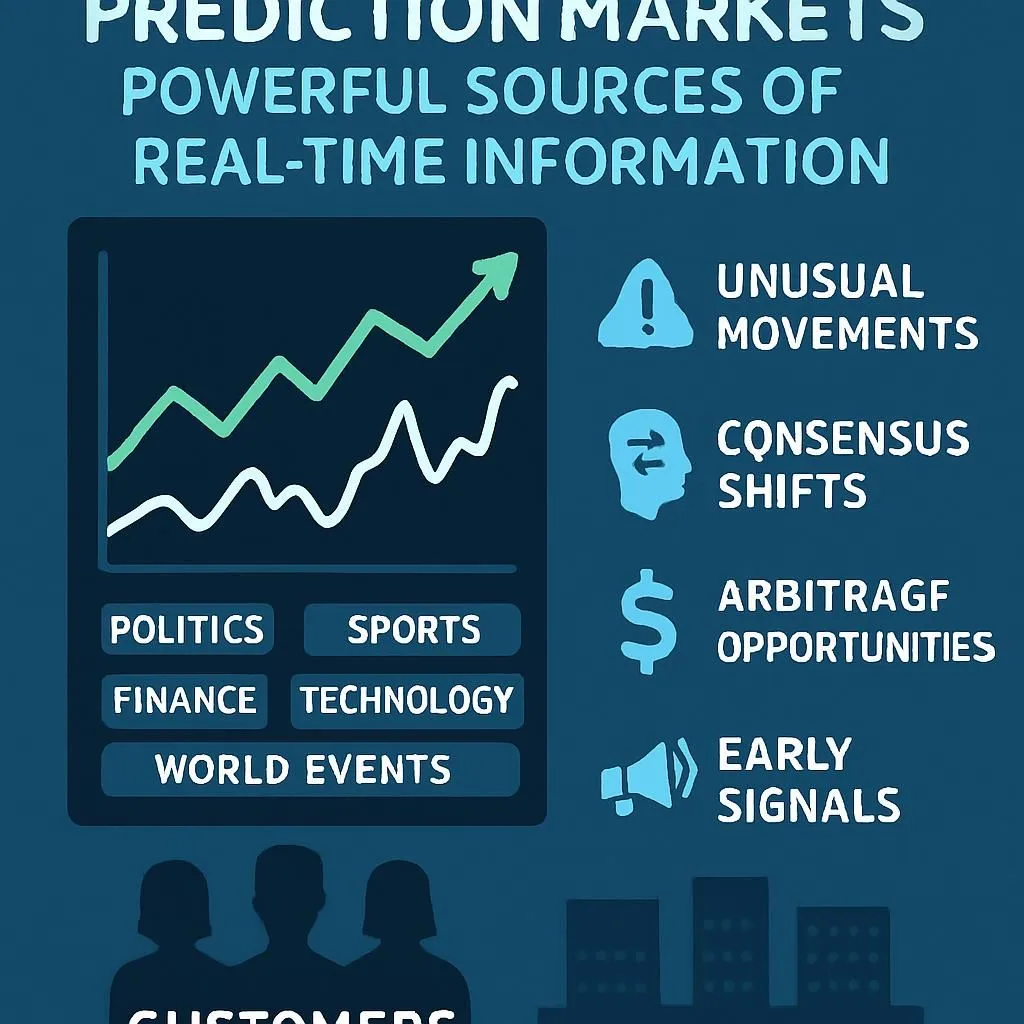
Prediction markets like Polymarket and Kalshi are becoming powerful sources of real-time information, aggregating the beliefs of thousands of participants across politics, sports, finance, technology, and world events. However, users currently see only market prices rather than the deeper insights hidden within the data. This startup would aggregate prediction markets and surface unusual movements, consensus shifts, arbitrage opportunities, narrative changes, and early signals before they appear in traditional media. Customers could include investors, journalists, researchers, hedge funds, and corporations. The opportunity exists because prediction markets are rapidly entering the mainstream, creating a new category of information infrastructure that does not yet have a Bloomberg-style analytics layer.
Description
No additional description provided.
The Pitch
Prediction markets are not merely places to bet; they are live instruments for measuring collective belief. The price is only the most visible output. The more valuable signal is in the motion: which markets are moving together, which assumptions are breaking, which small contracts suddenly become informative, and where the crowd is quietly updating before anyone has written the headline. In that sense, the raw market is less like a news site and more like a sensor network.
The interesting shift is that prediction markets turn uncertainty into structured, timestamped data. Most information businesses still organize the world around documents: articles, reports, filings, transcripts, posts. Prediction markets organize it around changing probabilities. That is a different primitive. A system built on top of those probability changes could show not just what people are saying, but what financially committed participants now believe is more or less likely than they did an hour ago. For certain decisions, that distinction is more useful than another summary of the discourse.
The business would also benefit from the fact that public attention is inefficient. Obvious markets will be watched closely, but the strongest signals may come from obscure or adjacent ones: a niche regulatory contract moving before a public company reacts, a local political race implying a national consequence, a weather or logistics market foreshadowing a commodity move. The insight layer is valuable because the world does not care which category a signal came from. Prediction markets are fragmented by platform and topic; real events are not.
There is also a durable asymmetry between people who casually check odds and people whose work depends on noticing belief changes early. Journalists, analysts, operators, and traders already spend their days asking, “What changed?” A product that answers that question with market-implied evidence, rather than social-media noise, becomes a daily habit rather than a novelty. The value is not in declaring the future; it is in detecting when the future people are preparing for has changed.
If prediction markets keep growing, the scarce asset will not be access to odds. Odds will be everywhere. The scarce asset will be interpretation: knowing which movements matter, which are distortions, and which reveal that informed people have started to think differently. That is why an analytics layer could become more important than any single market venue. It would translate scattered bets into a readable map of changing expectations.