Practice Dating Platform with Structured Feedback
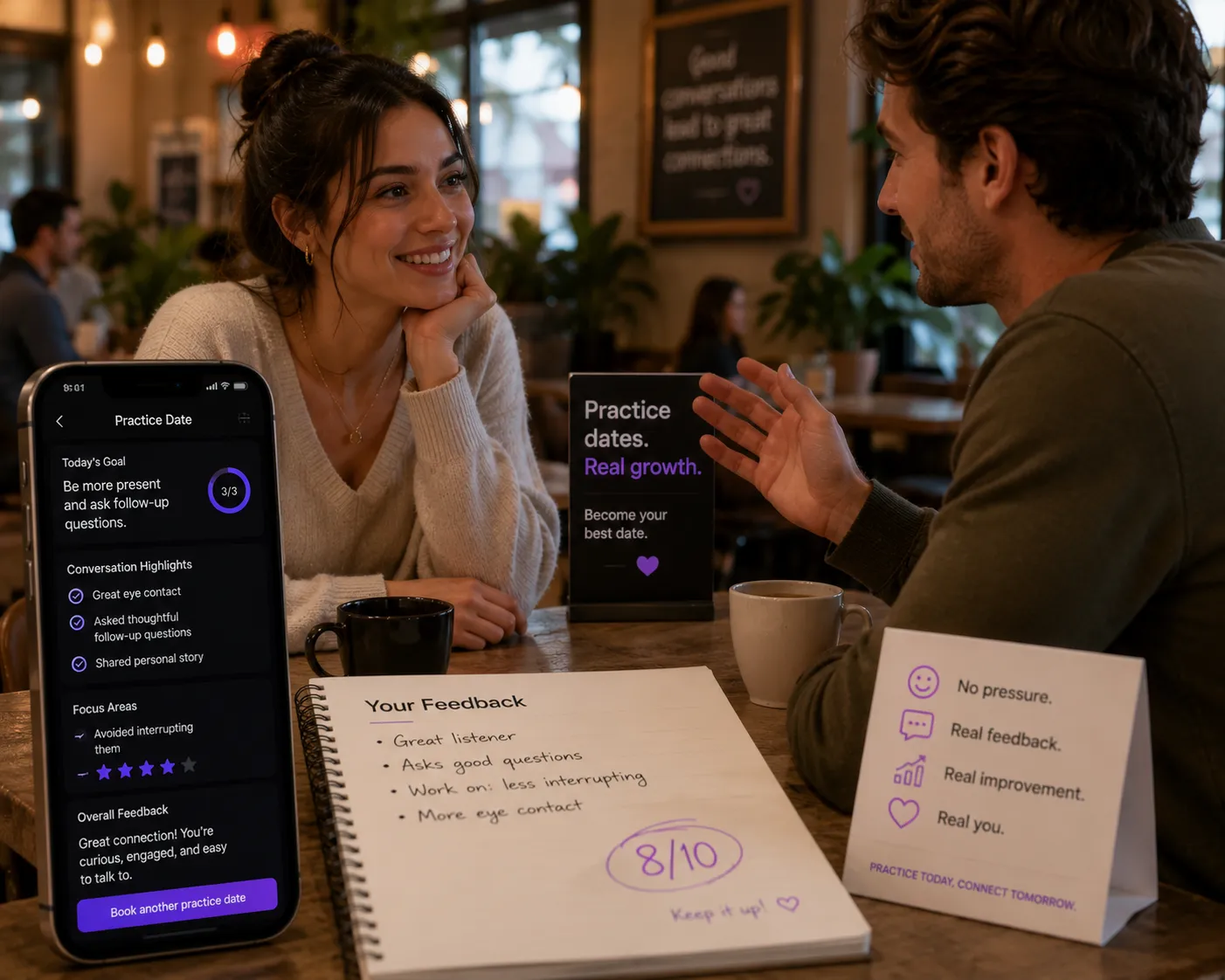
Dating is one of the few important life skills where people receive almost no structured feedback, causing many to repeat the same mistakes across dozens of dates without realizing it. A Practice Dating Platform removes the pressure of finding romance by matching people specifically to practice conversations, flirting, confidence, and communication in a judgment-free environment. After each session, both participants anonymously provide structured feedback highlighting strengths, weaknesses, and opportunities for improvement. Premium experiences could include professional dating coaches or trained evaluators. As loneliness continues rising and coaching becomes increasingly normalized across careers, fitness, and mental health, there's an opportunity to apply deliberate practice to dating. Imagine completing ten practice dates in a week, receiving recurring feedback that you interrupt people too often, improving that behavior, and walking into your next real date noticeably more confident and prepared.
Description
No additional description provided.
The Pitch
A person can leave ten bad dates believing they are unlucky, too unattractive, or choosing the wrong people, when the real issue might be something simple and fixable: they talk like they are being interviewed, never ask follow-up questions, avoid eye contact, over-explain their job, or make jokes that read as defensive. The market exists because most people do not need a total reinvention of themselves; they need a mirror they can actually trust.
What makes this different from dating apps is that the incentive is cleaner. Traditional dating platforms are built around hope, attraction, and outcome anxiety, which makes honest learning almost impossible. People perform, protect their ego, and disappear rather than explain what felt off. In a practice setting, rejection is not the product’s failure state; it is converted into information. That changes the emotional contract. Participants can be more generous because they are not being asked to decide whether someone is their future partner.
There is also a strange asymmetry in how society treats social competence. People will pay for a golf lesson to shave two strokes off a hobby, but are expected to improvise the conversations that determine intimacy, partnership, and family life. The more relationships move through screens, the more valuable live interpersonal fluency becomes. A company that gives people repetitions in the messy, high-context parts of attraction is selling something more durable than matches: it is selling social calibration.
The feedback loop could become unusually powerful because dating mistakes are often patterned. One person’s comments after a single conversation may be easy to dismiss, but the same theme appearing across five sessions becomes hard to ignore. That accumulation turns subjective chemistry into a usable signal. The product’s deepest value would not be telling users whether they are “good at dating,” but revealing the gap between how they think they come across and how they are actually experienced.
The business works if it becomes socially acceptable to separate practice from performance. Once that norm exists, the platform is not just for the chronically unsuccessful; it is for anyone facing a high-stakes return to dating after a breakup, divorce, relocation, or years away. In a world where people already rehearse job interviews, presentations, and difficult conversations, it is almost odd that they do not rehearse the conversations that might change their lives.