Portable Personal Data Layer for Apps
Your digital life belongs to the apps you use. Instagram has your social graph, Google has your photos, LinkedIn has your career, Spotify has your taste, and every new service makes you rebuild some version of yourself from scratch. Build a personal internet layer where your identity, relationships, content, interests, purchases, memberships, and eventually your AI agent live with you and connect to apps with permission. AI makes this possible because software can finally organize years of fragmented personal data while agents create a reason for that context to stay portable. Imagine deleting Instagram, joining a new social network, and bringing your profile, friends, photos, preferences, and personal AI with you in one click. The billion-dollar opportunity may be turning the individual into the permanent account that the rest of the internet plugs into.
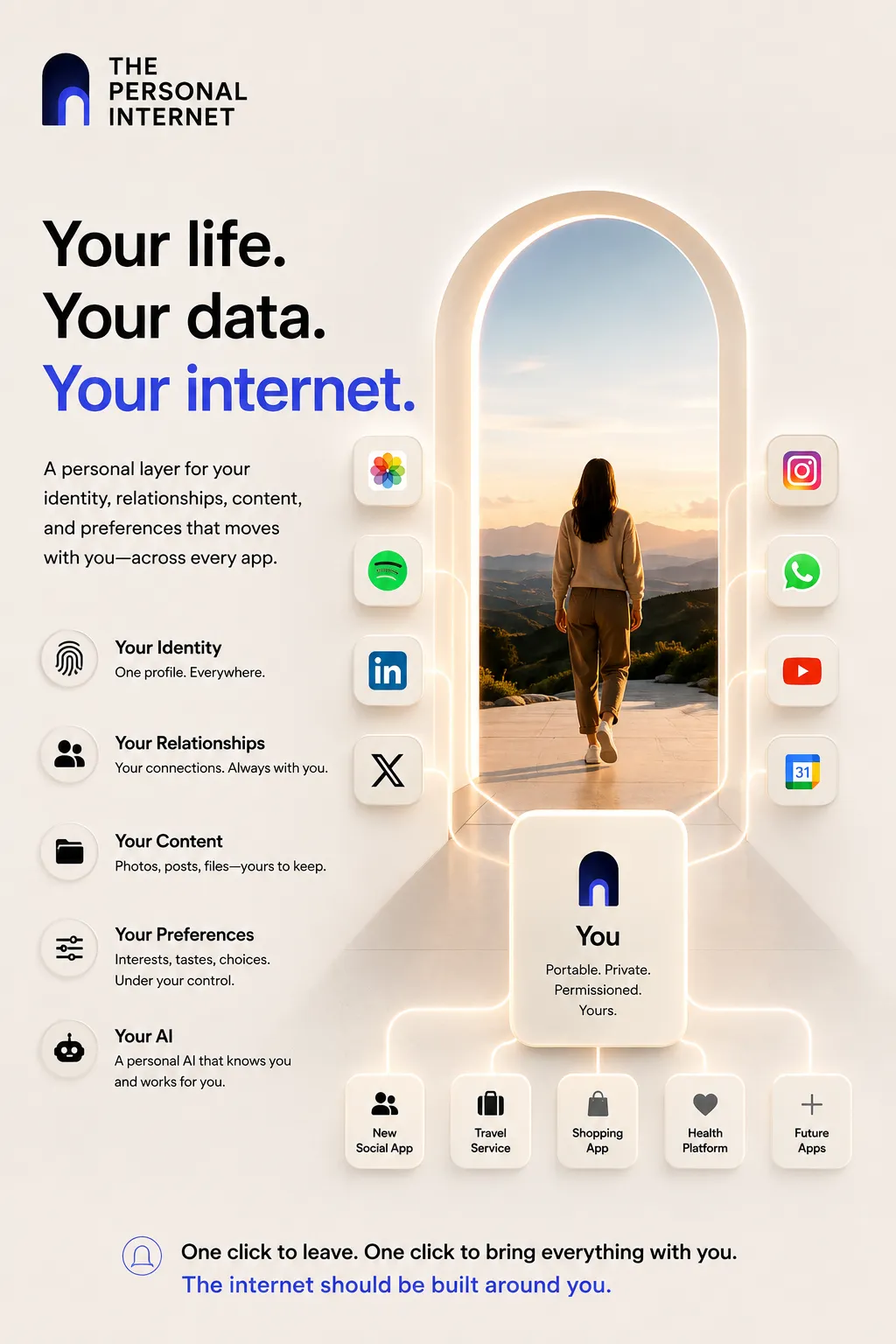
Description
No additional description provided.
The Pitch
A personal internet layer would be compelling because the center of gravity online is quietly shifting from apps to individuals. For twenty years, companies won by trapping identity inside their own databases. That worked when the main activity was posting, searching, shopping, or streaming inside separate destinations. But if AI agents begin acting across services on a person’s behalf, the old model becomes awkward: the most important context cannot live inside any one app. The valuable unit is no longer the account; it is the accumulated self.
The non-obvious business truth is that portability becomes more valuable as personalization gets better. In the old internet, losing your data was annoying. In an AI-native internet, losing your data means losing judgment, memory, preferences, relationships, and instructions that took years to form. A user who has trained a personal agent to understand their habits will not want to restart that relationship every time they try a new product. The more intelligent software becomes, the more painful fragmentation becomes.
This could also change the power dynamic between new apps and incumbents. Today, every new consumer product starts cold: no friends, no history, no taste, no trust. That gives existing platforms an enormous defensive advantage, because their data moats are also onboarding moats. A neutral personal layer would make new apps feel instantly populated and useful. It would not merely protect users from lock-in; it would increase the rate at which new applications can become viable.
The business would work best if it became a trusted intermediary rather than another destination. People do not need one more profile page. They need a durable home for the pieces of themselves that are too important to be scattered across companies with changing incentives. The winning company would be judged less by how much attention it captures and more by how reliably it lets attention move elsewhere without loss.
The deepest reason this idea matters is that identity is becoming infrastructure. Payments became portable, authentication became portable, cloud files became portable, but the richer human context behind internet use remains trapped. Whoever provides that layer could occupy a rare position: invisible when things work, indispensable when anything wants to know who you are.