Portable AI Modules for Rural Clinic Diagnostics
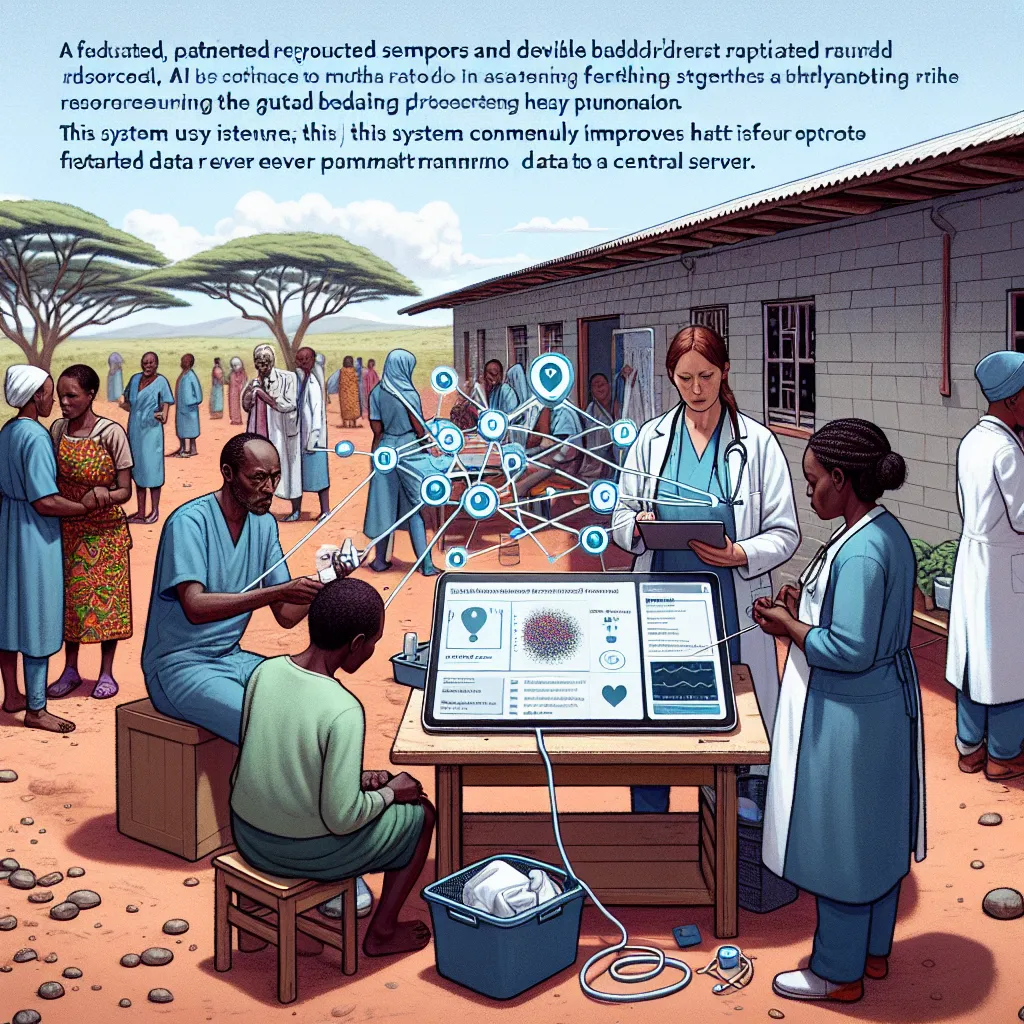
Rural and under-resourced clinics often lack access to AI systems due to data privacy constraints or poor internet. Yet these communities could benefit the most from diagnostic help. A startup could offer portable AI modules trained using federated learning—so each clinic’s data improves the model without ever leaving the device. Microsoft’s results prove that large diagnostic models can generalize, and federated tech is now mature. This system would allow each clinic to improve care while preserving data sovereignty. For example, a tablet used in a rural Kenyan clinic could diagnose pneumonia from patient-reported symptoms and vitals—and gradually become better over time without sending any raw data to a central server.
Description
No additional description provided.
The Pitch
In many parts of the world, particularly rural and under-resourced regions, healthcare facilities face significant challenges. One of these is the lack of access to advanced diagnostic tools and AI systems. This is often due to constraints around data privacy and the lack of reliable internet connectivity. Paradoxically, these communities are the ones that could benefit most from AI-driven diagnostic assistance.
Backstory and Problem
Rural clinics often operate with limited resources, including insufficient medical staff and a lack of specialized diagnostic equipment. This is exacerbated by poor internet access that restricts the use of cloud-based AI systems. Furthermore, data privacy concerns prevent these clinics from sending sensitive patient information to central servers for analysis. As a result, many conditions could go under-diagnosed or misdiagnosed, leading to suboptimal patient care and outcomes.
Proposed Solution
A promising solution is the development of portable AI modules designed to function independently within clinic settings. These modules would be equipped with federated learning capabilities, meaning that while they operate locally, they can learn and improve from the data they process without that data ever leaving the device. This allows individual clinics to contribute to the overall improvement of the AI model without compromising data privacy. It also enables these clinics to offer better diagnostic services, tailored to their specific patient population.
Product Details
The core product would be a diagnostic tool—most practically, a tablet or a small portable device—that leverages AI to analyze patient-reported symptoms and vitals. This device would be pre-loaded with diagnostic models that have been trained to generalize across numerous conditions. As the device is used, it would continue to refine its algorithms based on the local data it receives, thus becoming increasingly accurate and effective over time. For example, a device deployed in a rural Kenyan clinic might initially be able to identify pneumonia based on standard inputs and gradually enhance its diagnostic capabilities as it receives input from more cases.
Tools for Launching the MVP
Several tools are crucial for developing and launching this solution as a minimum viable product (MVP):
1. Federated Learning Framework: Open-source platforms like TensorFlow Federated can be used to implement federated learning protocols that ensure the privacy of patient data.
2. AI Development Environment: Integrating libraries and tools such as PyTorch or Keras to build and refine diagnostic models.
3. Edge Computing Solutions: Technologies like NVIDIA Jetson can be employed for deploying AI models on portable devices, allowing them to operate independently of cloud environments.
4. Local Customization: Incorporating systems that allow customization based on local languages and medical guidelines.
Go-to-Market Strategy
The go-to-market strategy would involve partnerships with local health organizations and non-profits that already have established networks in these rural areas. Initial deployment should focus on pilot programs in select clinics to demonstrate effectiveness and gather feedback for iterative improvement. Educational initiatives and training workshops for local health providers would be critical to ensure proper usage and maintenance of the diagnostic devices.
Business Model
The business model could be a subscription-based service where clinics pay a nominal monthly fee for software updates and support. Alternatively, the model could include partnerships with governments or NGO sponsorships to subsidize the costs, ensuring affordability for clinics with limited budgets. Additionally, offering tiered packages for different levels of diagnostic complexity could cater to various clinic sizes and capabilities.
By addressing both the technological constraints and the business aspects, this portable AI diagnostic tool holds the potential to transform healthcare in rural and under-resourced regions, enabling them to deliver better patient outcomes while maintaining control over their data.