Plug-and-Play Immersion Cooling for Data Centers
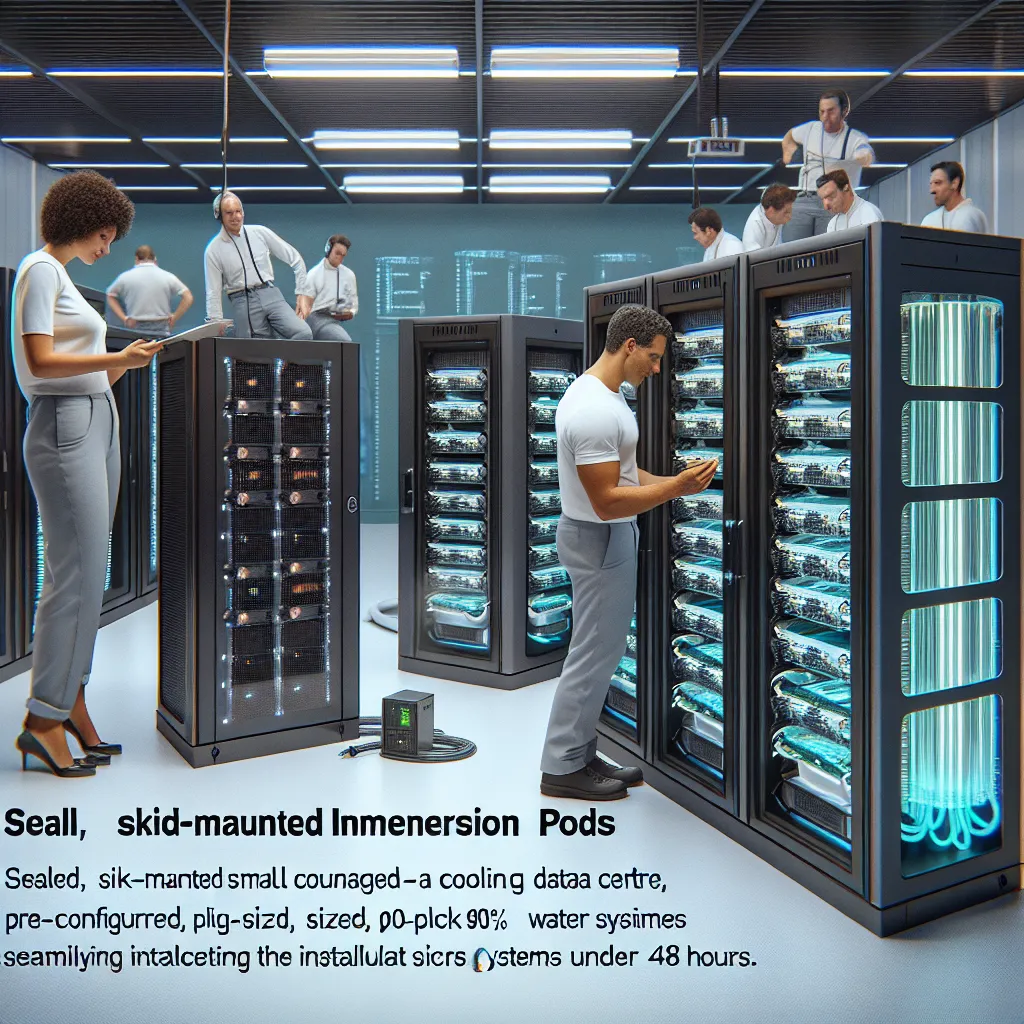
Immersion cooling works, but deploying it usually means gutting your facility. Most small and mid-sized data centers can’t afford the cost, downtime, or re-architecture. This startup builds sealed, skid-mounted immersion pods—pre-configured, rack-sized, plug-and-play units that slide into standard airflow systems. Powered by the trend toward edge computing and modular design, this lets even Tier III sites tap into the 96% heat recapture and 90% water savings immersion offers. With cooling responsible for 40%+ of DC power draw, and AI making that worse, small operators need a fast, affordable path into next-gen cooling. Example: A university research center installs a two-pod unit in 48 hours to support GPU-intensive experiments.
Description
No additional description provided.
The Pitch
The rapid expansion of data centers, driven by increasing computational demands, has led to significant energy consumption challenges. Traditionally, cooling solutions have involved extensive infrastructure changes, often unfeasible for small to mid-sized operations. This presents an opportunity for innovation in the field of data center cooling.
Background: The Growing Need for Efficient Cooling
Data centers are the backbone of modern digital infrastructure, yet they face mounting pressure to become more energy-efficient. Cooling systems alone can account for over 40% of a data center's total power consumption. With advancements in AI and other high-performance computing tasks, these demands are only increasing. Traditional cooling methods are often inefficient, expensive, and environmentally taxing, creating a pressing need for more sustainable practices.
Problem Statement
For small and mid-sized data centers, adopting immersion cooling—a method proven to significantly reduce energy use and environmental impact—is often cost-prohibitive. Conventional implementations require major overhauls of existing facilities, resulting in high costs, operational downtime, and complex re-architecturing. These challenges prevent broader adoption despite the method's compelling energy savings and efficiency benefits.
Proposed Solution: Skid-Mounted Immersion Pods
This initiative proposes the development of sealed, skid-mounted immersion cooling pods. These are pre-configured, rack-sized, plug-and-play units that integrate seamlessly within existing airflow systems. By facilitating a straightforward installation process without substantial infrastructure changes, they provide a practical and economical path for smaller data centers to leverage the benefits of immersion cooling.
Product Details
1. Design and Configuration: - Compact, modular units designed to fit standard rack dimensions. - Each pod is self-contained, allowing for easy integration and scalability. - Advanced heat recapture technology offering 96% efficiency. - Proprietary fluid designed for optimal cooling and minimal environmental impact.
2. Installation and Deployment: - Quick installation with minimal downtime, achievable within 48 hours. - No need for significant facility modifications, reducing upfront investment. - Compatible with Tier III and edge computing environments.
3. Performance and Efficiency: - Achieves up to 90% water savings compared to traditional cooling methods. - Significant reduction in energy consumption, contributing to sustainability goals. - Enhances the performance of GPU-intensive and high-computation applications.
Tools for MVP Launch
To facilitate an effective Minimum Viable Product launch, consider the following tools and methodologies:
- Prototyping: Use CAD software for designing the initial pod models. Tools like SolidWorks or AutoCAD can be instrumental. - Testing and Iteration: Deploy the pods in controlled environments to test efficiency and gather data. Use tools like MATLAB for computational fluid dynamics simulations. - Cloud-Based Collaboration: Platforms like Jira or Trello for project management and real-time collaboration. - IoT Integration: Utilize IoT technology for real-time monitoring of pod performance and predictive maintenance.
Go-to-Market Strategy
1. Target Market: - Focus on small to mid-sized data centers, university research centers, and edge computing locations.
2. Marketing and Outreach: - Develop informative content highlighting the cost-savings and environmental benefits. - Partner with industry events and trade shows to showcase the technology. - Engage with online communities focused on data center efficiency and sustainability.
3. Sales Channels: - Develop partnerships with data center construction and maintenance firms. - Offer trial installations or lease options to lower the entry barrier.
4. Customer Support and Service: - Provide comprehensive support and training for installation and maintenance. - Develop an online resource hub for troubleshooting and best practices.
Business Model
The proposed business model should include:
- Direct Sales: Selling the pods to data center operators. - Subscription Model: Offering maintenance and fluid replacement services. - Leasing Options: Providing flexibility for organizations with budget constraints. - Strategic Alliances: Collaborate with existing data center infrastructure providers to bundle solutions.
Conclusion
By addressing the financial and operational barriers to adopting immersion cooling, these immersion pods can transform how small and mid-sized data centers manage their energy consumption and operational efficiency. This innovative approach aligns with broader industry trends toward sustainable and modular design, providing a timely solution in the evolving landscape of data management and computational demand.