PilotGraveyard: Transforming Failed AI Pilots Into Success
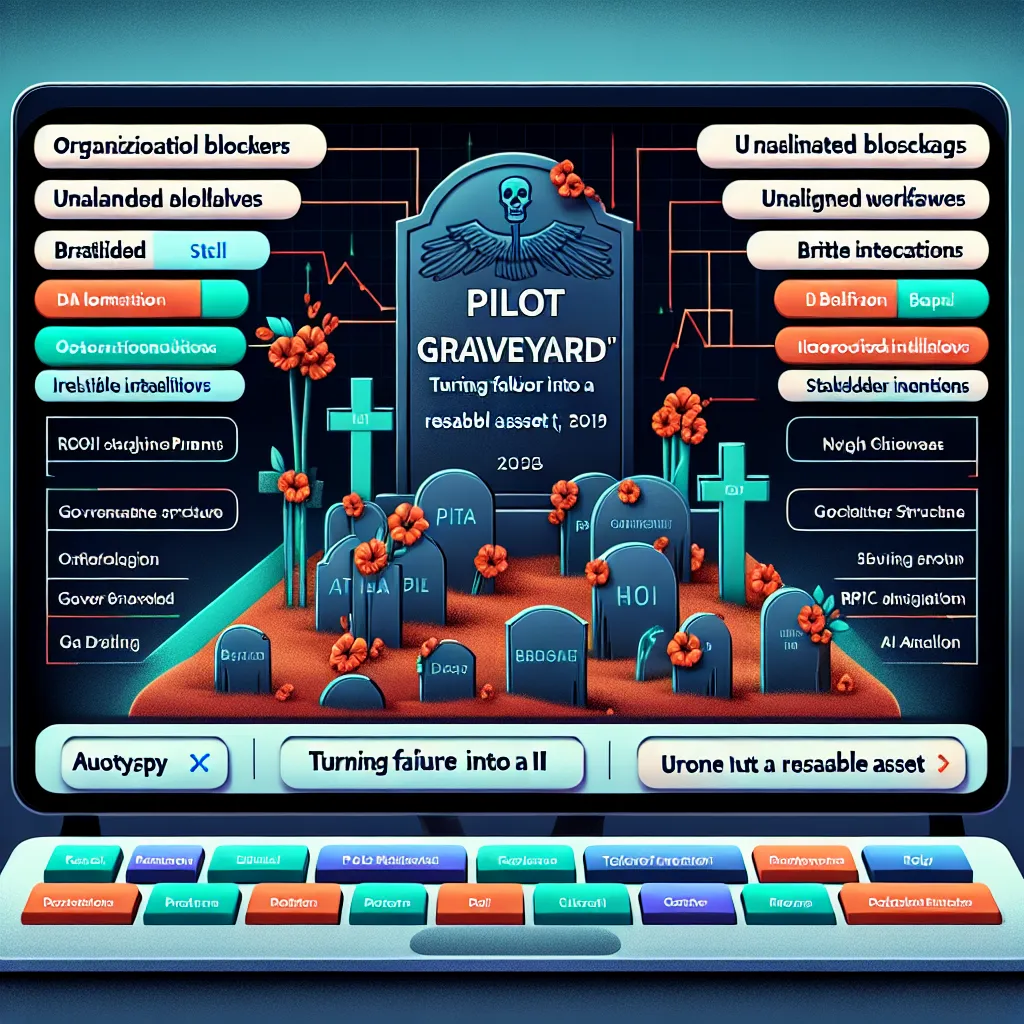
Enterprises keep running AI pilots that go nowhere, wasting millions and losing internal credibility. PilotGraveyard is a forensic analytics tool that performs an “autopsy” on every failed AI pilot: identifying organizational blockers, data issues, workflow mismatches, brittle integrations, wrong ROI assumptions, and missing stakeholder incentives. Then it generates a corrected pilot plan with the right datasets, governance, workflows, and KPIs for success. It becomes the institutional memory enterprises desperately lack. In a world where 95% of pilots fail, PilotGraveyard turns failure into a reusable asset — a way for companies to learn faster than their competitors. Imagine a company running its 12th AI pilot — and finally getting it right because it learned from the bones of the first eleven.
Description
No additional description provided.
The Pitch
In the rapidly evolving world of artificial intelligence, enterprises are under constant pressure to innovate and integrate AI solutions into their operations. However, the journey from pilot to production is fraught with challenges. A staggering 95% of AI pilots fail to transition into successful production deployments, often resulting in wasted resources, shattered confidence, and lessons that remain unlearned. This repetitive cycle of failure underscores a critical need for a systemic approach to understanding and learning from these missteps.
**Problem**
The high failure rate of AI pilots in enterprises can be attributed to several factors. Common issues include organizational barriers, data quality problems, misaligned workflows, fragile integrations, unrealistic ROI expectations, and a lack of stakeholder incentives. Without a structured mechanism to analyze and learn from these failures, companies find themselves repeating the same mistakes, wasting millions of dollars, and damaging their internal credibility.
**Solution**
PilotGraveyard is an innovative forensic analytics tool designed to address this pervasive issue. It performs detailed analyses, or autopsies, on failed AI pilots, identifying key issues such as organizational blockers, data inconsistencies, and integration failures. By dissecting these failed initiatives, PilotGraveyard provides actionable insights and constructs a corrected pilot plan. This plan includes the identification of appropriate datasets, governance frameworks, workflow alignments, and key performance indicators (KPIs) necessary for success. In doing so, it transforms failures into invaluable learning assets, enabling companies to adapt and improve faster than their competitors.
**Product Details**
PilotGraveyard functions as an institutional memory platform for enterprises. Its core features include:
1. **Forensic Analysis**: Conducts comprehensive reviews of failed pilots to uncover root causes of failure.
2. **Actionable Insights**: Generates insights for organizational improvement, focusing on data quality, workflow alignment, integration robustness, and stakeholder engagement.
3. **Corrected Pilot Plan**: Provides a roadmap for future pilots, ensuring alignment with best practices and successful deployment criteria.
4. **Learning Database**: Serves as a repository for past pilot data and forensic findings, fostering a culture of continuous learning and improvement.
5. **Collaboration Tools**: Facilitates communication and collaboration among stakeholders to ensure alignment on pilot objectives and strategies.
**Tools for Launching MVP**
To bring PilotGraveyard to market as a Minimum Viable Product (MVP), several tools can streamline the development process:
- **Data Analytics Platforms**: Utilize tools like Tableau or PowerBI for data visualization and analysis. - **Cloud Infrastructure**: Deploy on cloud platforms such as AWS or Azure to ensure scalability and reliability. - **Automated Workflow Tools**: Leverage Zapier or Microsoft Power Automate for workflow integration. - **Collaboration Software**: Use platforms like Slack or Microsoft Teams to enhance team communication and project management. - **Feedback Mechanisms**: Implement tools like SurveyMonkey or Typeform to gather user feedback and insights.
**Go-To-Market Strategy**
The go-to-market (GTM) strategy for PilotGraveyard should focus on the following elements:
1. **Target Audience**: Engage with enterprise-level companies across industries heavily investing in AI, such as finance, healthcare, and manufacturing.
2. **Value Proposition**: Emphasize PilotGraveyard's unique ability to turn AI pilot failures into learning assets, ultimately reducing costs and improving success rates.
3. **Partnerships**: Collaborate with AI consultancy firms and technology integrators to expand reach and credibility.
4. **Marketing Channels**: Utilize content marketing, webinars, and industry conferences to showcase PilotGraveyard's capabilities and success stories.
5. **Pilot Programs**: Offer trial versions of the product to select enterprises to gather testimonials and case studies that demonstrate real-world impact.
**Business Model**
PilotGraveyard should adopt a subscription-based business model, offering tiered plans based on features and enterprise size. This model ensures recurring revenue and allows for customization based on client needs. Additionally, PilotGraveyard can explore a consultancy fee for in-depth analysis and strategic recommendations, providing an additional revenue stream and deeper client engagement.
In conclusion, PilotGraveyard represents a transformative approach to handling AI pilot failures. By systematically analyzing and learning from past mistakes, enterprises can develop a competitive edge, ensuring their AI initiatives are both effective and efficient.