Personalized Gift Recommendation and Buying Service
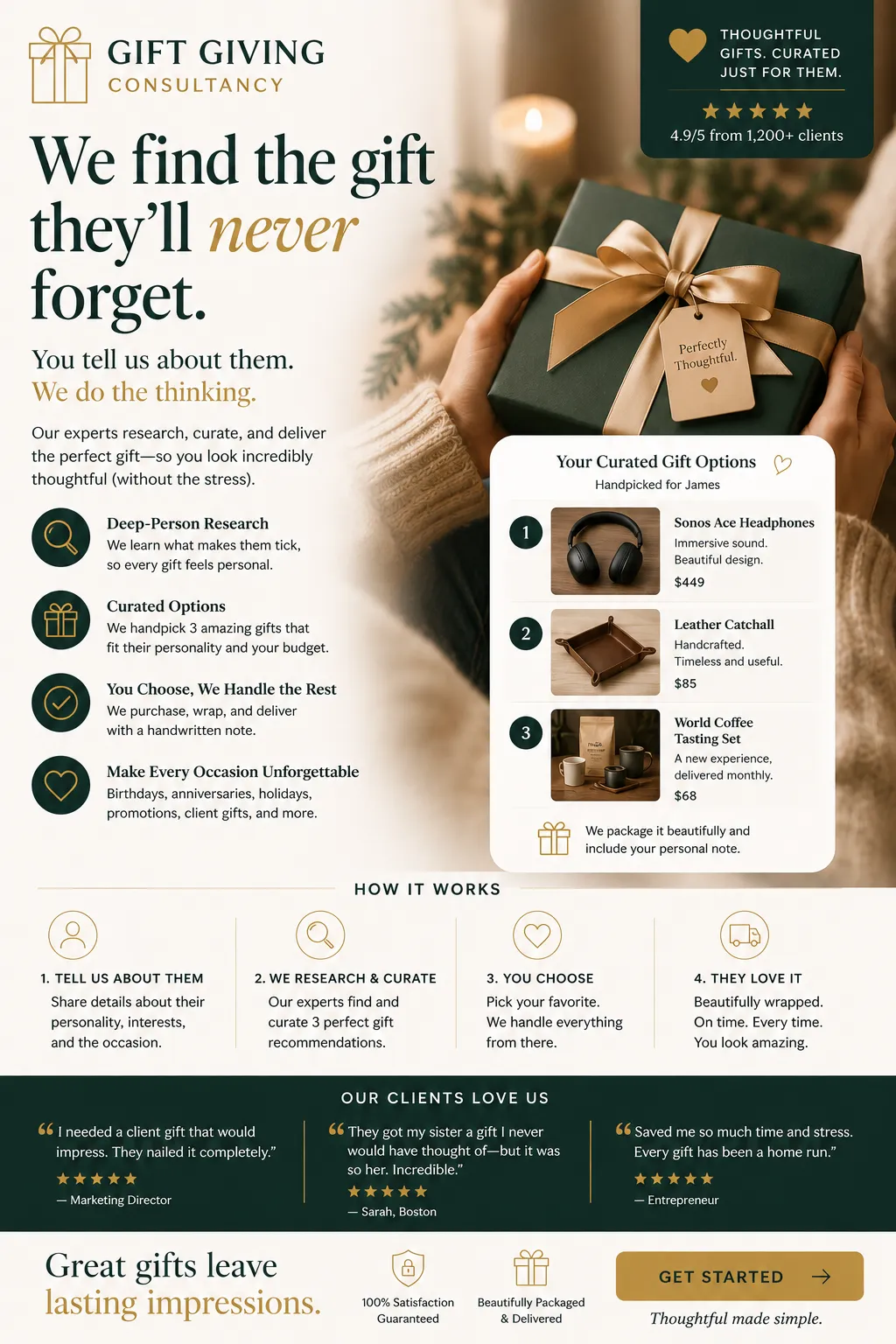
The best gifts make someone wonder how you possibly thought of them. Build a service whose entire job is doing that. Tell us who the person is, how you know them, what they're into, things they've mentioned, your budget, and anything else you know. We research them, ask a few surprisingly specific questions, and send you three gifts that feel like you spent months thinking about them. You pick one and we handle the rest. Personal shopping exists for yourself. The harder shopping problem has always been everyone else.
Description
No additional description provided.
The Pitch
Gift-giving is one of the few consumer categories where the buyer is not really buying the object. They are buying evidence of attention. That makes it structurally different from ordinary commerce: the same item can feel worthless or unforgettable depending on whether it seems to contain proof that someone noticed. Most retailers optimize for discovery, price, and convenience, but gifting often fails because the missing ingredient is interpretation. The business opportunity sits in that gap between information and meaning.
The strange thing about modern gifting is that people have more data about one another than ever and still give worse gifts than they should. Friends leave trails everywhere: hobbies, jokes, complaints, wishful comments, aesthetic preferences, places they have been, things they almost bought, things they would never buy for themselves. The hard part is not access to clues; it is knowing which clues matter. A service that can turn scattered personal context into a tasteful, legible gesture is valuable because it converts latent intimacy into action.
This also works because gifting is emotionally high-stakes but episodic. People tolerate friction and pay for help when the occasion matters: a milestone birthday, a new job, a breakup, a wedding, a parent who says they want nothing. These are moments when a generic recommendation engine feels almost insulting. The buyer does not want endless options; they want relief from the fear of seeming careless. A narrow set of thoughtful choices can be more powerful than a vast catalog because it reduces both the cognitive load and the emotional risk.
The best version of this business would not be judged by whether recipients like the product in a normal consumer sense. It would be judged by whether the recipient says, “How did you know?” That reaction is a defensible standard because it is hard to mass-produce. Taste can be copied, inventory can be matched, but the synthesis of relationship context, occasion, personality, and restraint is much harder to commoditize. The moat is not merely sourcing unusual items; it is developing judgment about what kind of specificity feels affectionate rather than creepy, clever rather than performative.
There is also a quiet status dynamic underneath the idea. Thoughtfulness has become a scarce social signal precisely because convenience has made everything easy to buy. When flowers, gift cards, and same-day delivery are abundant, the scarce thing is not access but care. A company that helps people appear not richer, but more attentive, is selling one of the few luxuries that still feels morally attractive.