Personal Healthcare Coordination Assistant App
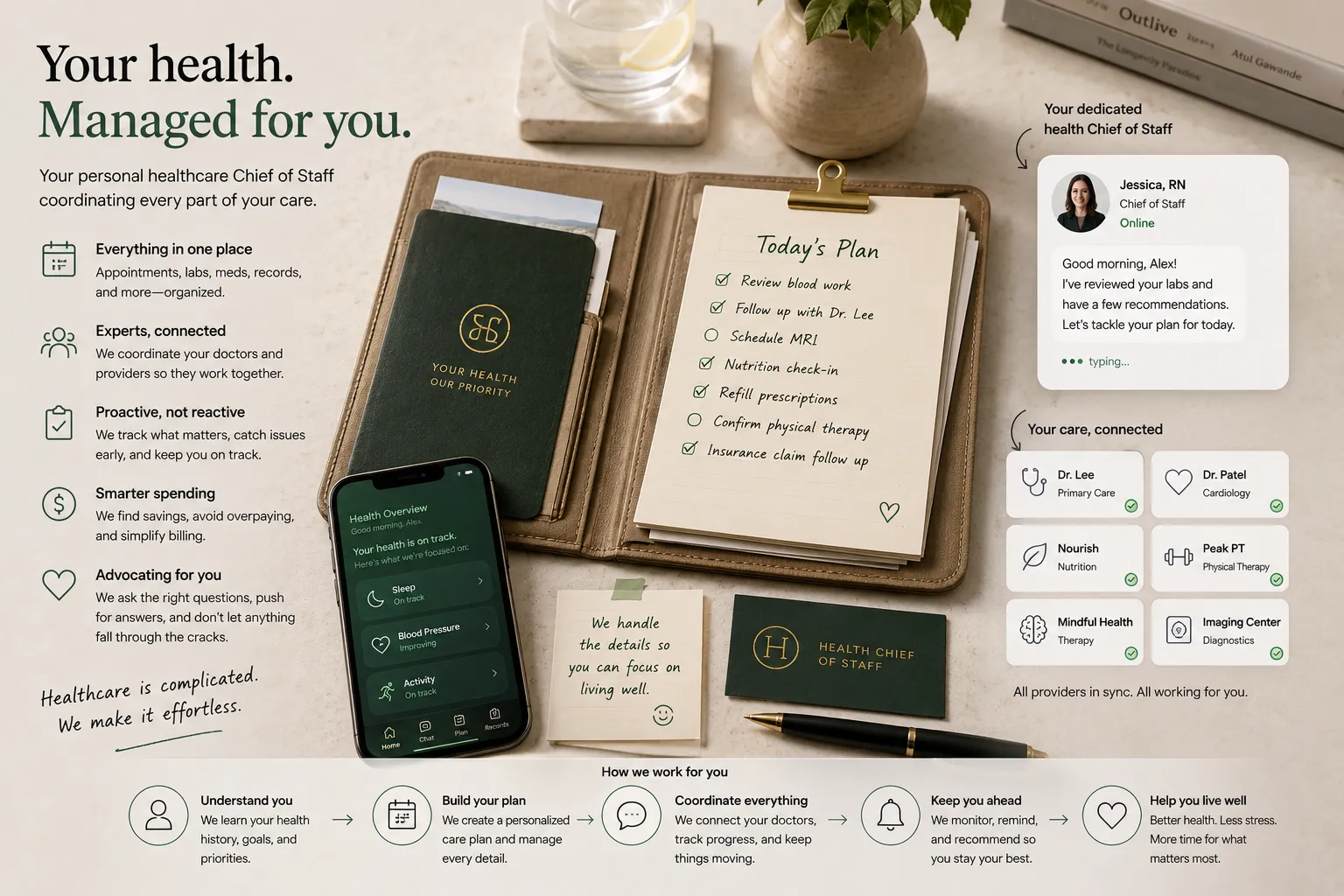
Healthcare has become too complicated. You have insurance, specialists, concierge doctors, labs, prescriptions, nutritionists, physical therapists, and wellness programs that never talk to each other. This company becomes your personal healthcare operating system. It manages appointments, negotiates bills, finds specialists, coordinates medical records, monitors lab work, recommends preventative care, and tells you what to do next. Think of it as an executive assistant for your health that sits above every provider instead of replacing them. This is becoming possible as AI gets good enough to coordinate complex workflows and healthcare continues fragmenting into specialized services. Imagine opening one app and asking, “Who should I see next about my cholesterol?” instead of spending hours navigating the healthcare system.
Description
No additional description provided.
The Pitch
Healthcare’s deepest pain is not a lack of medical expertise, but a lack of continuity. Most people do not have one doctor who truly sees the whole picture anymore. They have fragments: a cardiologist note in one portal, lab results in another, a prescription history at a pharmacy, a bill from an imaging center, and half-remembered advice from a rushed visit. The economic opportunity sits in stitching together what medicine has unbundled.
The powerful wedge is that the buyer does not need to be convinced that healthcare matters; they already experience the system as a recurring administrative tax. Unlike many health products that ask people to adopt a new habit, this would remove work people already resent doing. The value is clearest in moments of confusion: after a diagnosis, before a procedure, when a bill looks wrong, when symptoms persist, when aging parents need help. Those are high-anxiety moments where people are unusually willing to trust a capable intermediary.
The business also benefits from a strange asymmetry: small coordination failures can have enormous consequences. A missed follow-up, duplicate test, overlooked drug interaction, out-of-network referral, or unchallenged bill may look mundane in isolation, but the financial and medical stakes can be huge. That means the product does not have to “transform healthcare” in a grand way to be valuable. It can win by preventing the boring mistakes that the system routinely produces because nobody is paid to notice them.
What makes the idea especially interesting is that it sits above providers rather than competing with them. Hospitals, doctors, insurers, pharmacies, and wellness companies each optimize their own slice; the patient is the only party exposed to the full mess. A neutral layer that works for the individual could become more trusted than any single institution, precisely because it is not trying to deliver every service itself. In a fragmented market, the coordinator can become the most important relationship.
If it worked, it would turn healthcare from an episodic emergency into an ongoing managed life domain, more like finances. People do not want infinite dashboards about their bodies; they want someone competent to notice what matters, translate it, and push the next action at the right time. The company that owns that layer would not just save time. It would become the memory, map, and advocate that modern healthcare quietly assumes every patient already has.