Personal Health Agent: Simplified Health Insights Brief
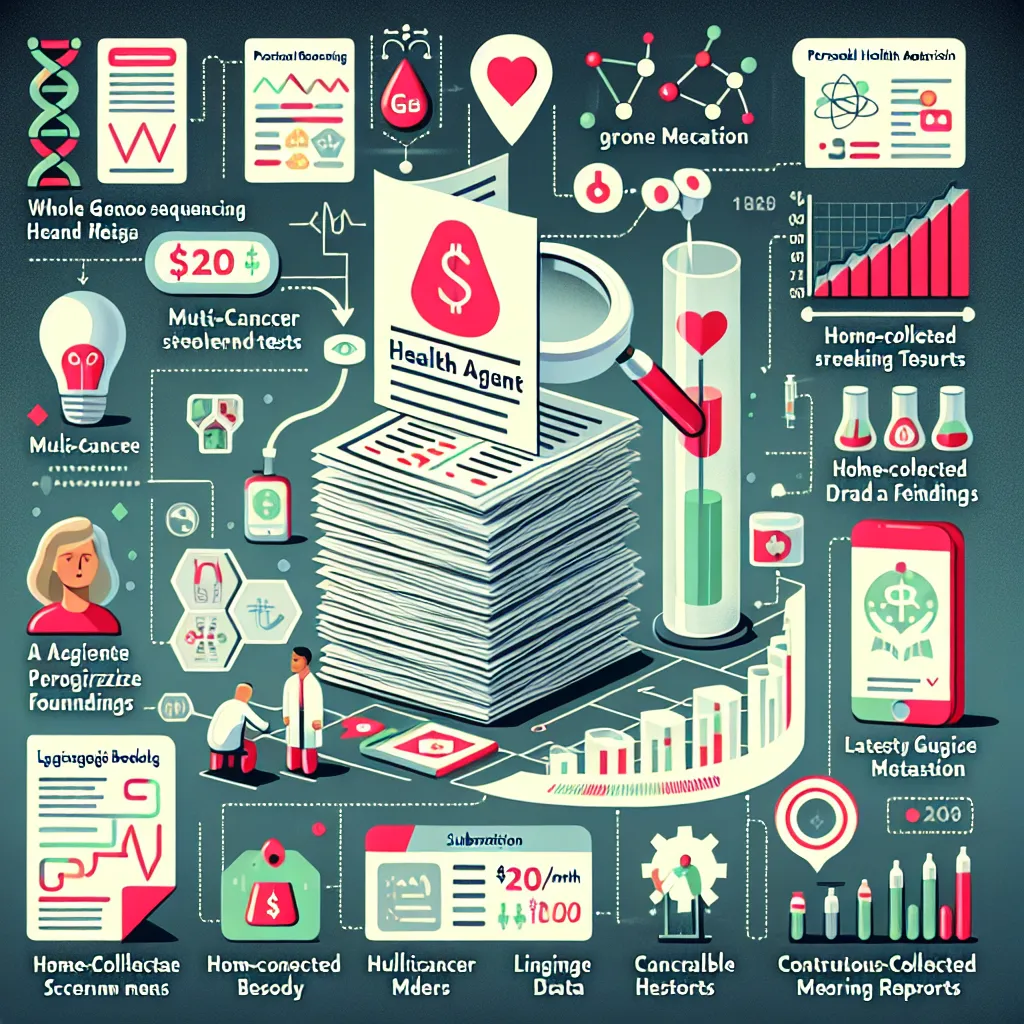
Anyone who has ordered whole genome sequencing, a multi-cancer blood test, or strapped on a continuous glucose monitor in the last year hits the same wall. The lab sends a 200-page PDF and the family doctor neither reads it nor knows what to do with it. A personal health agent that ingests every diagnostic, every wearable feed, and the patient's medical history could write a quarterly one-page brief on the three things worth raising at the next appointment and the dozens of findings that aren't worth losing sleep over. Whole genome sequencing dropped under $200 in late 2024, home-collected screening tests crossed several hundred thousand annual orders in 2025, and language models are finally cheap enough to reason across a patient's full data set in one pass. The first version could be a $20-a-month subscription that pulls in an Apple Health export, raw genome data, and recent lab PDFs, then ships a brief the patient hands their doctor before the next physical.
Description
No additional description provided.
The Pitch
In recent years, the healthcare landscape has transformed through advancements in diagnostic technologies and wearable health devices. Despite the availability of comprehensive data, patients and healthcare professionals face challenges in interpreting and applying this information efficiently. This has created a need for a system that simplifies complex health data into actionable insights.
Background: Many patients have begun adopting advanced diagnostic tools such as whole genome sequencing, multi-cancer blood tests, and continuous glucose monitors. However, these technologies often result in extensive reports that are difficult for both patients and family doctors to interpret. Consequently, critical information may be overlooked during medical consultations, adversely impacting patient care.
Problem: The problem arises when voluminous health reports are sent to patients, who in turn forward them to their doctors. These reports can contain hundreds of pages filled with technical data, making it impractical for doctors to review them thoroughly before appointments. This information overload results in inefficiencies, with important findings possibly ignored and benign details given undue attention.
Solution: A personal health agent can bridge the gap between complex medical diagnostics and practical healthcare delivery. By ingesting various data streams—ranging from diagnostic tests to wearable device outputs—a personal health agent can generate a concise, personalized summary. This brief can highlight critical findings that need to be addressed during a medical consultation, while also indicating data points that can be safely disregarded, thus enhancing the efficiency and effectiveness of doctor-patient interactions.
Product Details: The proposed solution involves developing a software application that integrates with health data sources such as Apple Health, raw genome data, and lab report PDFs. The software would use advanced language models to analyze and condense this data into a quarterly one-page brief. The output would be designed to be easily understood by both patients and healthcare providers, facilitating meaningful communication during medical appointments.
Tools for MVP Launch: To launch this personal health agent as a Minimum Viable Product (MVP), several tools and technologies can be leveraged: 1. Data Integration APIs: Utilize APIs to connect with data sources like health records, wearable devices, and genomic data providers. 2. Natural Language Processing (NLP): Deploy language models to parse and synthesize complex health data efficiently. 3. User-friendly Interface Design: Build an intuitive interface to ensure easy navigation and usage by patients. 4. Cloud Computing Platforms: Host the application on scalable cloud infrastructure to manage data processing and storage. 5. Security Protocols: Implement robust data encryption and privacy measures to protect sensitive health information.
Go-to-Market Strategy: The initial target market can be tech-savvy individuals already engaged with advanced health monitoring tools. The strategy would focus on: - Partnerships with healthcare providers and diagnostic companies for data accessibility. - Digital marketing campaigns to reach tech-oriented health enthusiasts. - Collaborations with wearable device manufacturers for bundled offerings. - Educational webinars and content to demonstrate product value and ease of use.
Business Model: The service could be offered as a subscription-based model at $20 per month. This would cover data integration, continuous updates, and regular briefings. There could also be premium subscription tiers offering personalized consultations or more frequent updates. Additional revenue streams might include partnerships with healthcare organizations or licensing the technology to other health tech companies.
By offering a service that translates complex health data into practical insights, patients can have more meaningful discussions with their healthcare providers, leading to better health outcomes and enhanced patient satisfaction.