Personal AI Medical History Assistant
Patients repeatedly explain their medical history to every new doctor while years of lab work, imaging, medications, and specialist opinions remain fragmented across systems. This startup builds a lifelong AI trained exclusively on your complete medical history. Before every appointment, your AI briefs the physician, surfaces relevant research, flags inconsistencies, tracks trends over years, and ensures nothing important gets overlooked. The timing is right because AI has become capable of synthesizing longitudinal medical information while interoperability regulations are gradually improving access to patient records. Imagine every new doctor instantly understanding twenty years of your health in under a minute.
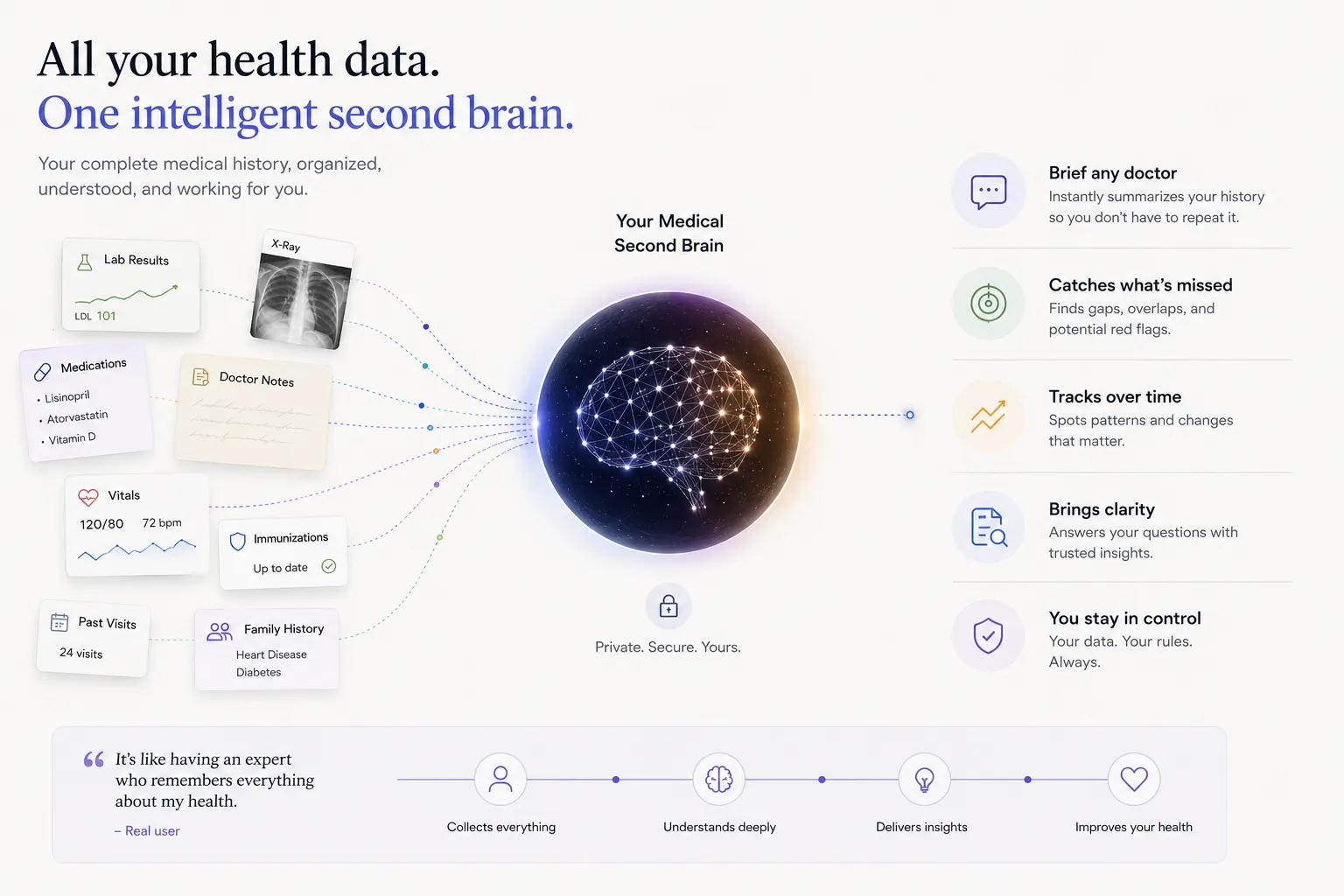
Description
No additional description provided.
The Pitch
A durable business here would be built on a strange asymmetry in medicine: the patient is the only constant participant in their care, yet the patient has the worst tools for remembering it. Hospitals optimize around encounters, insurers around claims, doctors around specialties, but illness unfolds as a story. The valuable layer is not another portal or record repository; it is the continuity layer that turns scattered events into a coherent narrative that survives every handoff.
The deepest value may come from what medicine routinely loses: context. A lab result is more meaningful when compared against a ten-year baseline; a medication side effect is easier to spot when it appears after a quiet change in dosage; a specialist’s note matters differently when it contradicts something another specialist concluded three years earlier. Most medical errors are not caused by the absence of data, but by the practical impossibility of reading all of it at the right moment. A company that makes old information newly usable would be selling attention in a field where attention is scarce and expensive.
The business also has a rare emotional wedge: people do not want “health data management,” they want to stop feeling like the unreliable narrator of their own body. The anxiety before an appointment often comes from knowing there is something important buried in the past that they will forget to mention. If a product can reliably make patients feel more understood by clinicians, it becomes tied to trust, not convenience. That is a much stronger habit than checking another dashboard.
This could become more defensible over time because the most useful medical intelligence would not be generic. It would come from accumulating a clean, longitudinal, patient-approved record of one person’s body and the decisions made around it. The longer it exists, the more it understands what is normal for that patient, which risks have already been considered, and which explanations have been ruled out. In medicine, memory compounds.
The most interesting feature of the business is that it could make doctors better without requiring them to change who they work for. It fits into the small, high-stakes interval before clinical judgment is applied. If it consistently helps a physician see the one relevant fact they would otherwise miss, it becomes a quiet infrastructure for better care: not replacing the doctor, not owning the clinic, but making the patient’s history impossible to ignore.