Permission Management Platform for AI Agents
The biggest AI company may never build a model. Everyone assumes the winners in AI will build the smartest models. History suggests otherwise. Google didn’t invent the internet. Stripe didn’t invent payments. Shopify didn’t invent ecommerce. They became the infrastructure everyone else relied on. AI has a new infrastructure problem: trust. Every agent wants access to your email, bank account, calendar, Slack, CRM, and credit card. Every time you install one, you’re forced to decide, “What am I comfortable letting this AI do?” That decision shouldn’t happen 100 times. Imagine one place where you define your rules once: this AI can spend up to $200, this one can only read my inbox, this one can never message customers without approval. Every future agent plugs into that permission layer. As AI fragments into thousands of specialized agents, the company that owns trust may become more valuable than the companies building intelligence.
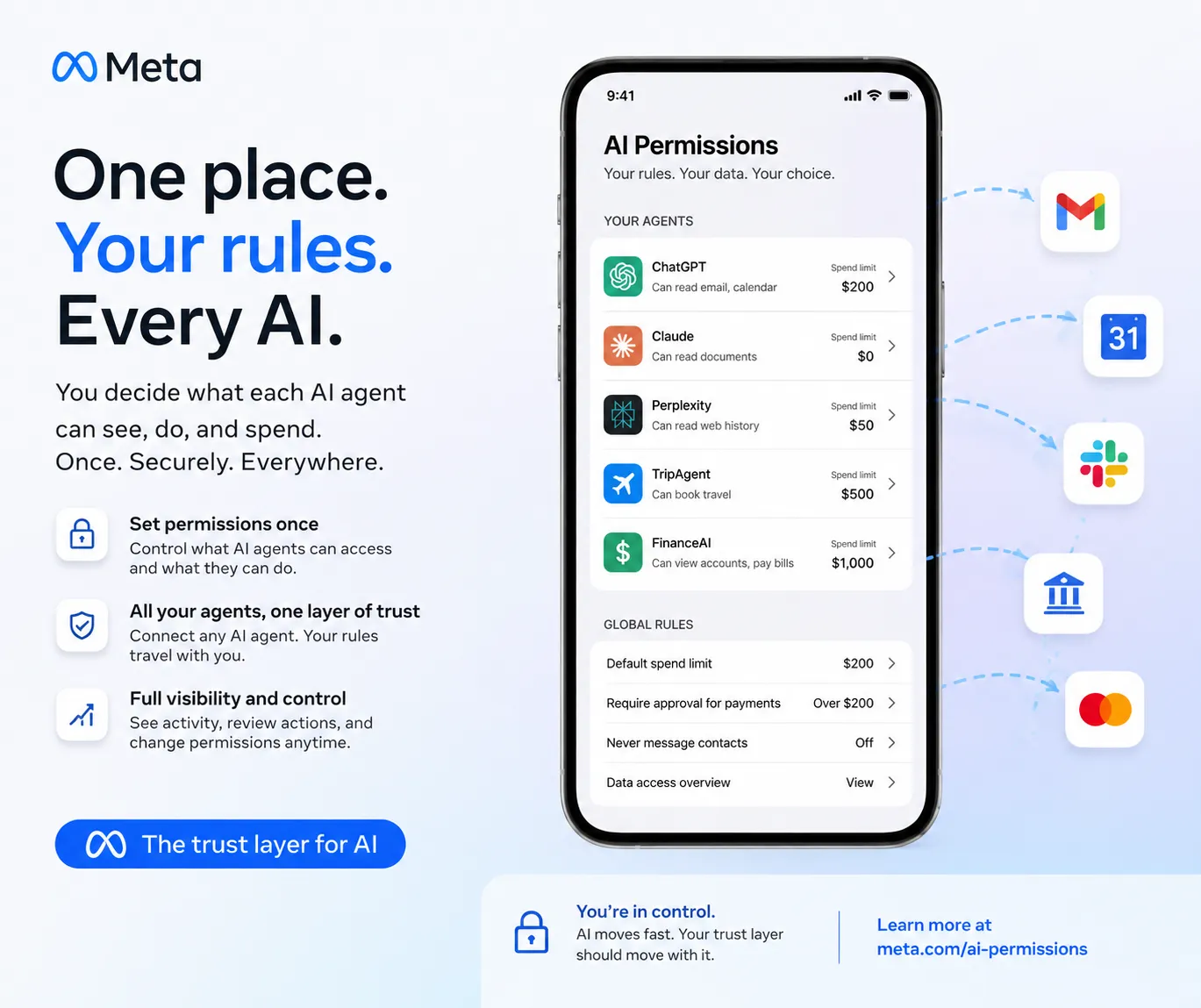
Description
No additional description provided.
The Pitch
Today’s internet assumes the user is the actor: a person clicks, signs in, approves, pays, sends, deletes. AI breaks that assumption. The actor increasingly becomes something acting on a person’s behalf, and most software has no native way to distinguish between “Alice did this” and “Alice’s research agent did this under narrow authority at 2:13 p.m.” That distinction will become economically important.
The non-obvious shift is that permission becomes a persistent asset, not a pop-up. OAuth was built for apps that wanted access; agents need authority that is contextual, revocable, budgeted, auditable, and portable. A model may be brilliant for ten minutes, but trust accumulates over years. If one company becomes the place where people and businesses express what their agents may do, it sits in a much more durable position than any single agent. Intelligence will be rented from many providers; authority will be centralized because fragmentation there is dangerous.
This business would also benefit from a strange asymmetry: users want less choice, not more. The more agents exist, the less tolerable it becomes to inspect each one’s permissions from scratch. People will not maintain hundreds of separate trust relationships with bots any more than companies want every employee negotiating their own security policies. A shared permission layer turns a messy emotional decision into an institutional default. The value is not just safety; it is reducing the cognitive tax that prevents people from using powerful tools at all.
The company that owns this layer could become the system of record for AI actions. When something goes wrong, “the AI did it” will not be an acceptable explanation. Businesses will need logs, approvals, limits, provenance, and liability boundaries. Consumers will need the same thing in simpler form. In a world where agents can take real actions, the audit trail may matter as much as the action itself.
What makes the opportunity especially compelling is that it gets stronger as the AI market becomes more chaotic. Every new model, agent, and workflow increases the need for a neutral trust fabric between users and automation. The winners in intelligence may change often. The owner of permission could become the boring, indispensable layer they all have to pass through.