Pay-for-Performance AI Software for Enterprises
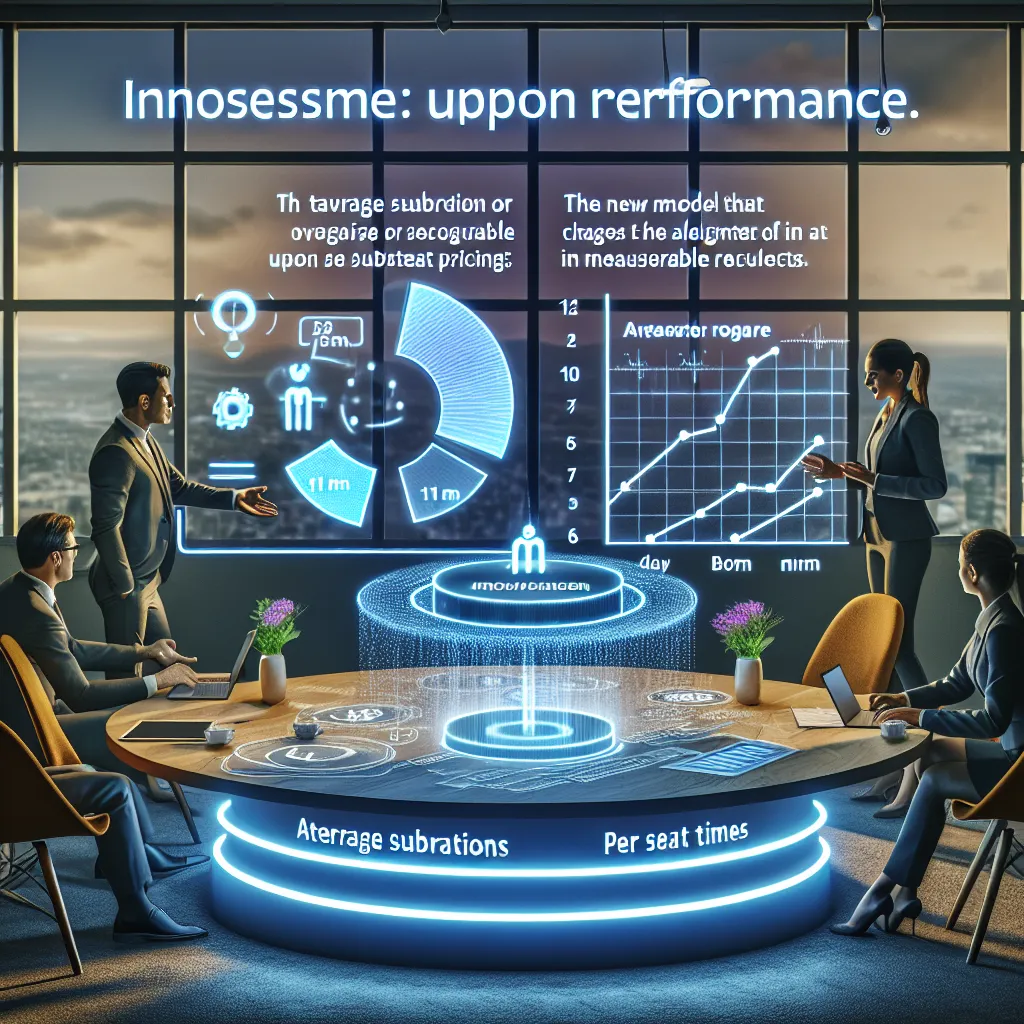
Enterprise AI software still relies on traditional pricing models—per seat or flat subscription—even when it generates tangible outcomes. This product flips the model by letting companies only pay when measurable results improve. A customer service team integrates the tool to reduce resolution time. If the average drops from 12 minutes to 7, the vendor gets paid. If it doesn’t, the company pays nothing. It aligns incentives and removes the upfront cost barrier.
Description
No additional description provided.
The Pitch
In the rapidly evolving digital landscape, enterprises are increasingly relying on AI software to drive various operational efficiencies. However, traditional pricing models often pose significant hurdles to adoption. Enterprises are wary of hefty upfront costs or per-seat fees associated with these tools, especially when the tangible benefits are uncertain. This document outlines a revolutionary solution that aligns vendor and client incentives by utilizing a results-based pricing model.
Backstory
The typical enterprise AI software market is dominated by several pricing models, such as per-seat licenses or flat-rate subscriptions. While effective in certain scenarios, these models do not always align with a client’s performance objectives. Companies often end up paying for tools that do not deliver the expected improvements, leading to dissatisfaction and potential contract terminations. The need for more flexible payment models has become critical as businesses look to optimize costs while boosting efficiency.
Problem
Enterprises face a significant challenge when integrating new AI solutions. The unpredictable nature of machine learning models often makes it difficult to guarantee improvements. This unpredictability is compounded by traditional pricing structures, where clients are required to pay regardless of the software's performance. Consequently, potential customers may be dissuaded from purchasing, thereby stunting innovation and competitive advantage.
Solution
The proposed solution is a results-oriented AI software platform that operates on a pay-for-performance model. This unique approach removes the financial burden from clients if the software does not deliver the promised results. By ensuring payment is tied directly to measurable performance improvements, clients are more likely to adopt and get genuine value from these AI tools.
Product Details
The core product is an AI software platform designed to integrate with existing enterprise systems to enhance specific metrics of interest. For instance, a customer service team using this tool could aim to reduce their average resolution time. If the software successfully decreases the resolution time from twelve minutes to seven, payment is made. Otherwise, the company incurs no cost. Key features include:
- Seamless integration with existing enterprise infrastructure. - Customizable machine learning models tailored to specific business objectives. - Detailed performance tracking allowing for real-time reporting and adjustments. - A flexible API that enables easy adaptation to multiple enterprise systems.
Tools for Easy MVP Launch
To launch a Minimum Viable Product swiftly, consider leveraging the following tools:
- AI and machine learning platforms like TensorFlow or Microsoft Azure AI to build core algorithms. - Microservices architecture deployed with Docker or Kubernetes for scalable application delivery. - Integration tools such as Zapier or MuleSoft for seamless interconnectivity with legacy systems. - Performance analytics dashboards using Tableau or Power BI for real-time insights.
Go-To-Market (GTM) Strategy
1. Pilot Program: Initiate a pilot program with a select group of enterprises to demonstrate the product’s value and gather valuable feedback for refinement. 2. Direct Sales: Develop a dedicated sales team focused on reaching enterprise decision-makers, highlighting the product's unique pricing model and risk mitigation. 3. Partnerships: Collaborate with IT consultancies that can endorse the software to their existing client base. 4. Thought Leadership: Publish whitepapers and case studies demonstrating successful implementations with measurable performance improvements. 5. Digital Marketing: Use targeted digital marketing campaigns to create awareness and generate leads, emphasizing the cost-saving and performance-tied advantages.
Business Model
The business model is anchored on a performance-based payment structure:
- Free Initial Integration: Enterprises pay no upfront costs for software integration. - Sliding Scale Payment: Payments are made according to the level of performance improvement achieved. - Annual Reviews: Regular performance assessments with clients to redefine payment structures as necessary and ensure continued value delivery. - Long-term Contracts: Encourage retention by offering reduced percentage fees through multi-year contracts for partners who consistently achieve high-performance metrics.
Conclusion
The result-oriented AI software platform presents a compelling alternative to traditional enterprise AI models. By aligning costs with results, it reduces the risk for clients while ensuring vendors are motivated to drive continual, demonstrable improvements. This innovative approach has the potential to revolutionize how AI software is offered and adopted across industries.